The Better Marketing Blog
Better tips, tools, and tactics for the AI era.
Better tips, tools, and tactics for the AI era.
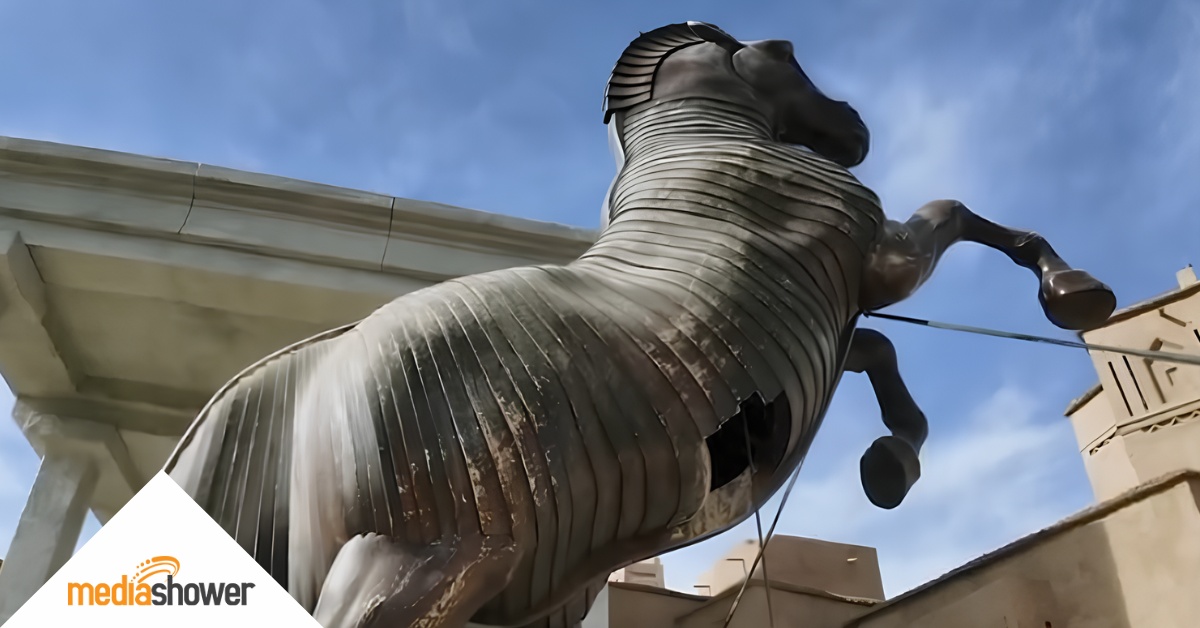
The Odyssey’s smartest marketing move was the oldest trick in the book.
Most actors walk into their talk show appearances from stage left. But when Matt Damon appeared on Jimmy Kimmel Live! as part of The Odyssey’s marketing campaign, he climbed out of a giant wooden Trojan horse.
It was exactly the kind of ridiculous stunt audiences expect from Damon and Kimmel’s two-decade fake feud. Instead of another celebrity interview promoting Christopher Nolan’s The Odyssey, viewers got a comedy sketch. The movie hitched a ride inside the joke.
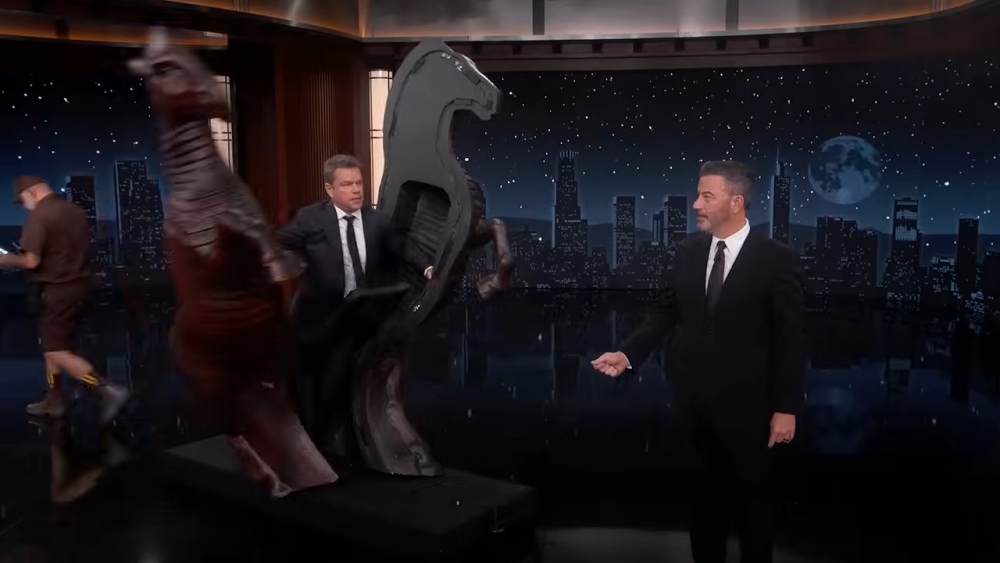
A suspiciously large wooden horse arrived at the studio. Kimmel’s friend and on-air sidekick Guillermo accepted it without much concern.
Moments later, Matt Damon climbed out, extending one of late-night television’s longest-running comedy bits. Viewers familiar with the Damon-Kimmel rivalry immediately understood the joke. Also, it was a movie star hiding inside an enormous horse.
A traditional press interview only matters if someone already cares about the movie. This moment worked as a standalone comedy sketch. Entertainment outlets covered it because it was funny, not because they were obligated to promote another blockbuster.
The entertainment became the advertisement.
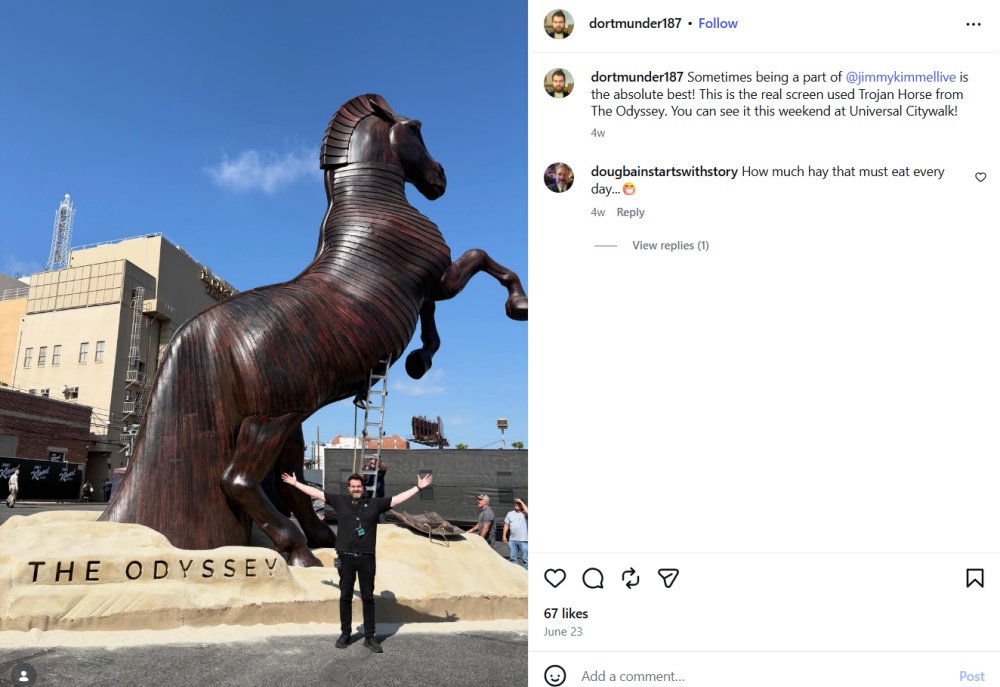
Outside AMC Lincoln Square in New York, a massive Trojan horse greeted fans attending the world premiere. Reporters didn’t have to invent a story. A forty-foot Trojan horse parked in Manhattan served it to them on a bronze platter.
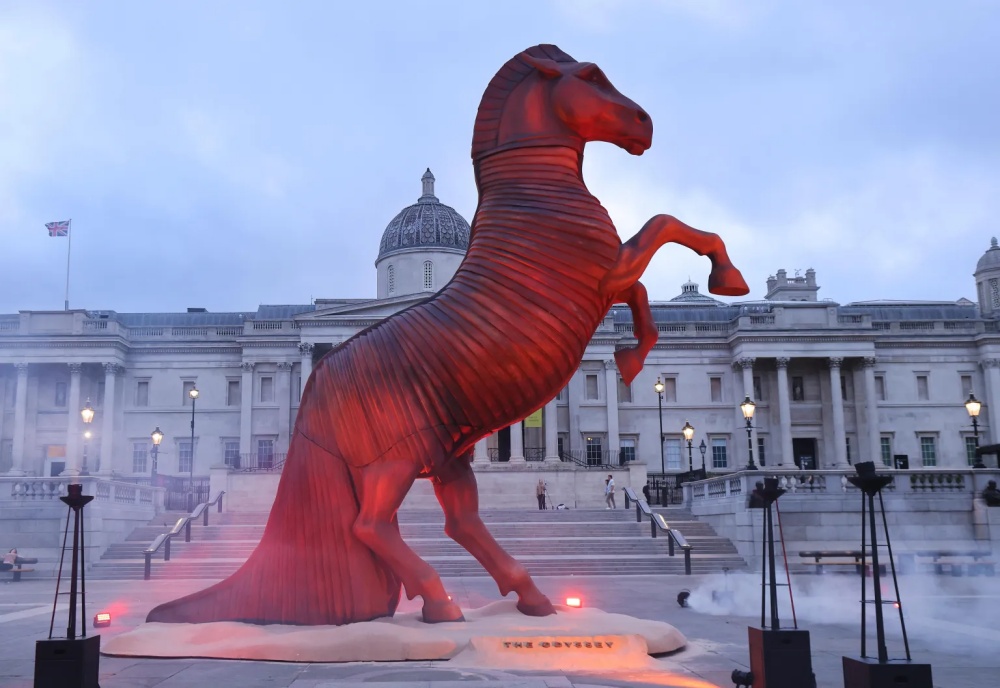
In London, another giant horse appeared in Trafalgar Square, transforming one of the city’s busiest public spaces into an extension of the film’s mythology.
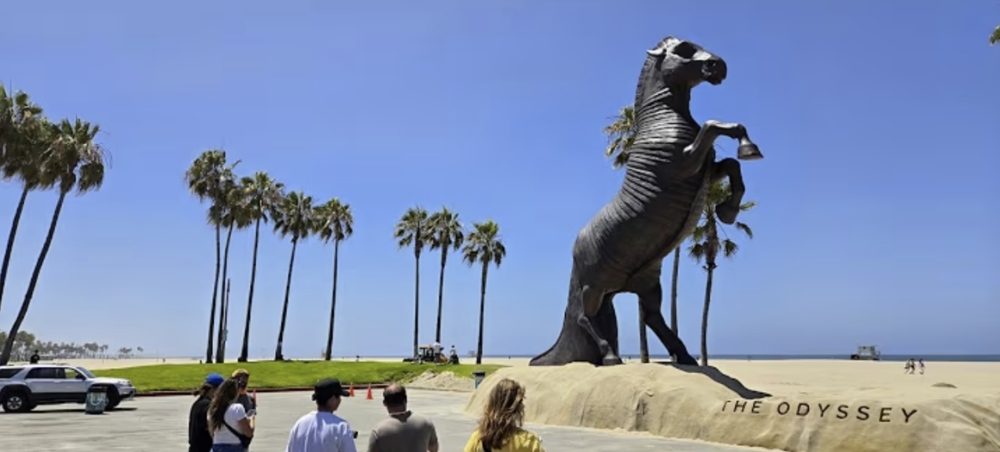
Venice Beach got its own version as well, tying the installation to the film’s collectible popcorn bucket and one of the most photographed stretches of Southern California. Against a backdrop of palm trees and skateboards, the horse looked wonderfully out of place, which made it perfect for Instagram.
The Odyssey isn’t an easy movie to sell.
It’s a three-thousand-year-old epic packed with gods, monsters, shipwrecks, kingdoms, and enough characters to make a fantasy football draft look manageable.
Universal could have tried to explain all of that. Instead, it pointed to the horse.
The Trojan horse is one of those rare symbols that arrives with its own backstory. Even if you’ve never read Homer, you know it means something big is about to happen.
The campaign never had to explain the movie because the horse had been doing that job for nearly 3,000 years.
The best brand assets work the same way. They become shorthand for something much bigger.
The Absolut bottle. The Nike swoosh. The Michelin Man.
And now, at least for one summer, a giant wooden horse.
The Trojan horse had an unusual résumé. It worked in late-night television, on red carpets, in city squares, and across social media. It traveled the world.
Most marketing ideas struggle to survive outside the meeting where they were born. This one kept finding new jobs. On Jimmy Kimmel Live!, it delivered a comedy sketch. Outside movie theaters, it created a spectacle. At premieres, it supplied theater. In public squares, it became an art installation.
Hidden inside the horse was another function: It was a global content machine.
Nobody walks past a forty-foot Trojan horse and thinks, I’ll just keep going. People stop, laugh, and pull out their phones. Universal supplied the backdrop. The audience put themselves in the campaign and published their own versions of it.
Every photo from Lincoln Square, Trafalgar Square, or Venice Beach carried the movie into Instagram feeds, TikTok videos, group chats, and family text threads. One physical prop produced thousands of personal advertisements, each attached to a real person rather than a studio account.
Universal built one recognizable object that could adapt to almost any channel. Every appearance offered people something they already enjoyed sharing: a joke, a spectacle, a photo, or a story. The marketing came bundled with it.
The original Trojan horse carried soldiers into Troy. This one carried a movie into the culture, one selfie at a time.
What we do know is that The Odyssey opened to roughly $264 million worldwide, the biggest global debut of Christopher Nolan’s career. IMAX contributed another $52 million, an unusually large share of the opening weekend.
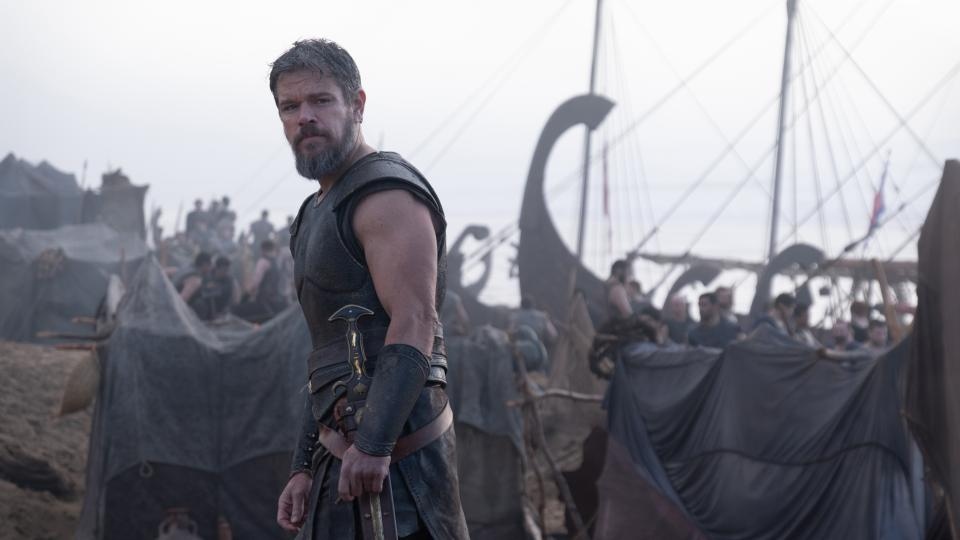
The horse didn’t accomplish this alone. Christopher Nolan and Homer brought the audience. So did an all-star cast, months of anticipation, and a global marketing campaign with a lot more moving pieces than one oversized prop.
But every blockbuster needs a face. For Jaws, it was the shark’s open mouth. For Barbie, it was a wash of impossible pink. For The Odyssey, it was a giant wooden horse that seemed to appear everywhere at once.
By opening weekend, audiences didn’t need to see the title card to know which movie they were looking at. The horse had already done the job.
Media Shower’s AI marketing platform helps brands create truly epic campaigns. Click here for a free trial.