The Better Marketing Blog
Better tips, tools, and tactics for the AI era.
Better tips, tools, and tactics for the AI era.
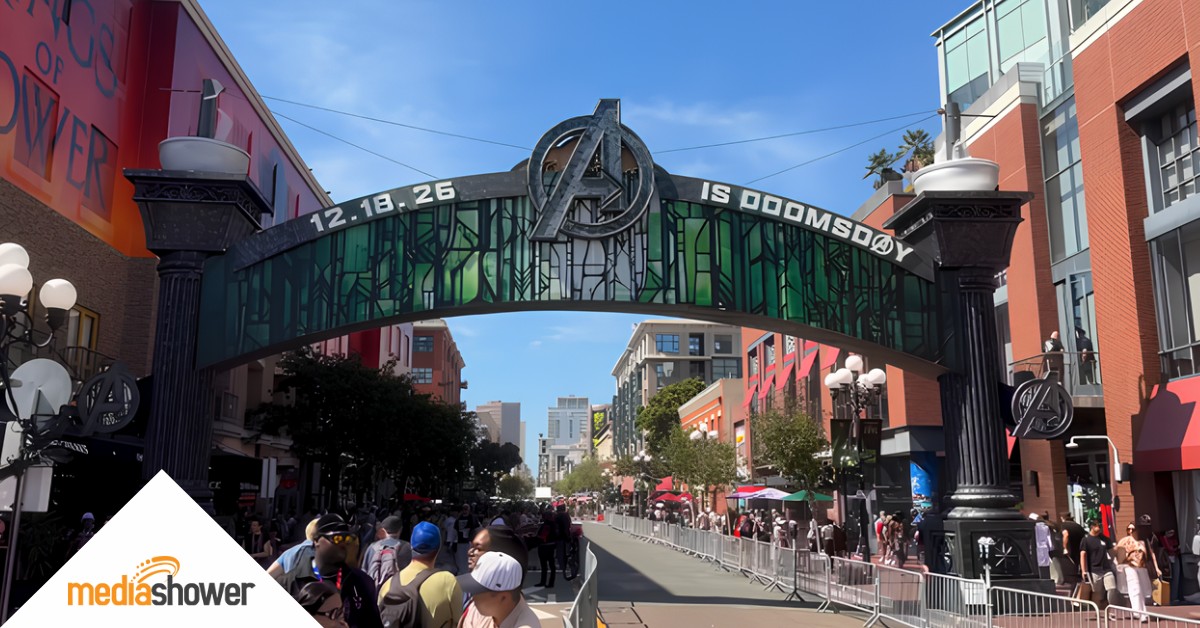
San Diego Comic-Con, the annual geekfest in San Diego, brings together more than 135,000 people to promote the latest movies, TV shows, and comic books to legions of superfans.
For attendees, it’s sensory overload: an environment filled with building wraps, costumes, celebrities, fabricated storefronts, and enough intellectual property to make a licensing attorney weep.
That density creates a problem for marketers. At Comic-Con, a giant screen, famous actor, or elaborate booth are table stakes, so marketers have to think bigger. The biggest campaigns become PR stunts that are still talked about years later. Here are the best.
Before audiences saw Dawn of the Planet of the Apes, Comic-Con visitors could be “vaccinated” against the fictional disease that devastated humanity.
At the 2013 convention, workers dressed as medical personnel distributed information, hand sanitizer, and mock Simian Flu vaccinations. Rather than describing the film’s premise, the street team behaved as though the outbreak had already begun.
The stunt borrowed the familiar imagery of public-health outreach and inserted one alarming fictional detail.
It was also remarkably mobile. Performers carried the campaign through crowds, turning sidewalks, lines, and nearby streets into extensions of the movie.
Fans became participants the moment they accepted treatment.
Warner Bros. transformed approximately 6,000 square feet of San Diego’s Hard Rock Hotel into Belle Reve penitentiary for Suicide Squad in 2016.
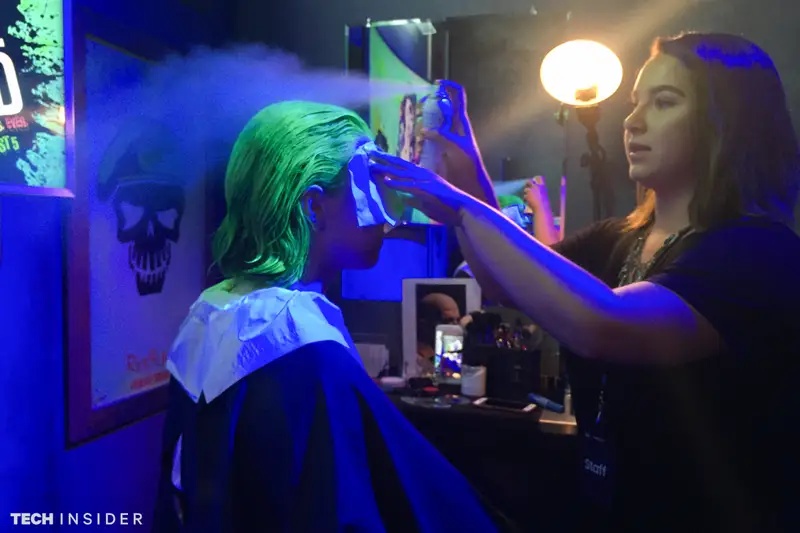
Visitors could enter a jail cell, try a virtual-reality experience, receive character-inspired makeovers, and visit Harley Quinn’s tattoo parlor. The activation arrived shortly before the film’s theatrical release, while Harley’s pigtails, makeup, and costumes were already highly visible among convention attendees.
The campaign built around a character fans clearly wanted to imitate.
Harley Quinn offered a complete visual vocabulary: hair, makeup, tattoos, wardrobe, props, and attitude. The experience gave existing fan behavior an official home and a branded backdrop.
For the show’s twentieth anniversary in 2016, Comedy Central installed life-size versions of 20 memorable South Park scenes around San Diego’s Gaslamp Quarter.
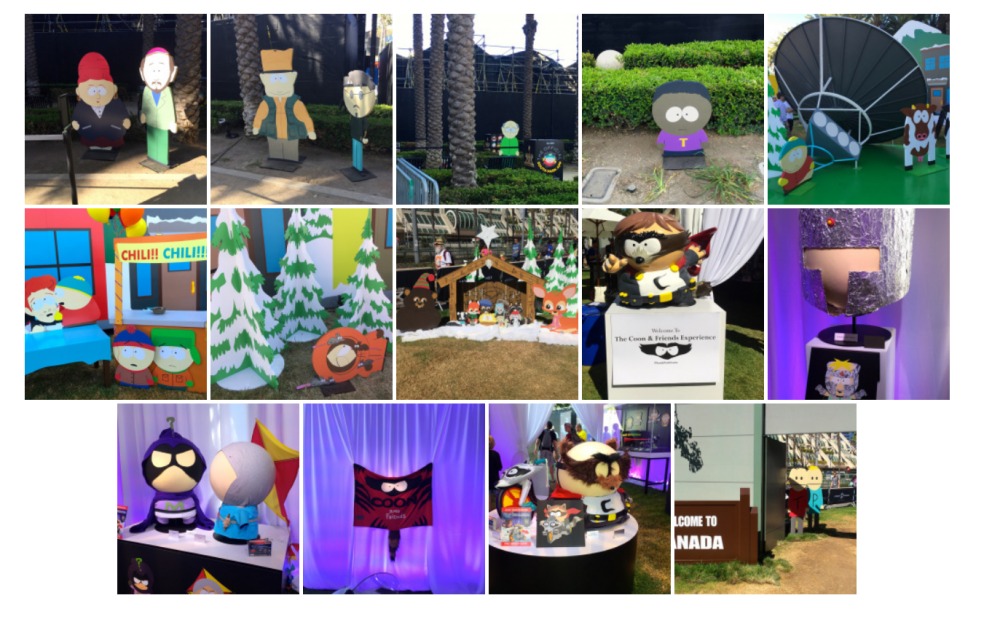
Fans could step inside the scenes, pose with characters, play games, watch episodes, and search the neighborhood for familiar moments from the series. Creators Trey Parker and Matt Stone also made a surprise appearance.
The activation turned the show’s back catalog into a physical archive.
Each display appealed to a different memory, rewarding longtime viewers who recognized an obscure scene while remaining visually accessible to everyone else. Twenty installations also produced twenty ready-made social images.
The city became the media plan.
FXX promoted its 2014 Simpsons marathon and Simpsons World streaming platform by placing a gigantic Homer Simpson head in Bayfront Park.
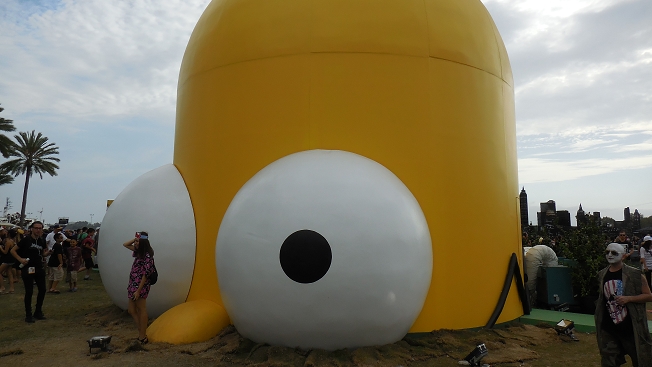
Visitors entered “Homer’s Dome,” where character illustrations, an ottoman-shaped brain, and a large projection surface created a tour through Homer’s mind.
The structure performed two jobs at once.
From across the convention grounds, the giant yellow head functioned as an instantly recognizable billboard. Inside, it became a participatory experience built around hundreds of episodes from the show’s history.
The campaign compressed an enormous content library into a simple invitation: Step inside Homer’s brain.
The Blade Runner 2049 Experience occupied 12,800 square feet outside Comic-Con in 2017.
Guests began in virtual reality and then emerged into a physical recreation of the film’s rain-soaked Los Angeles. Actors, vehicles, neon storefronts, food, and branded whiskey extended the environment in every direction.
Removing the VR headset created the campaign’s best reveal: The fictional world continued around the visitor.
The physical details worked together rather than competing for attention. Weather, costumes, products, performers, and vehicles all reinforced the same atmosphere.
It felt like a film set that had briefly forgotten the cameras.
HBO’s Westworld: The Experience operated by appointment from an undisclosed San Diego location during Comic-Con 2017.
Guests entered a recreation of the fictional Delos Corporation, answered a psychological assessment, interacted with performers, and received either a white or black cowboy hat based on their responses. The journey eventually led to a recreation of the Mariposa Saloon, complete with period drinks and a blood-stained player piano.
The experience treated personalization as theater.
Visitors were observed, questioned, classified, and guided by actors who behaved like employees of the fictional company. The campaign reproduced more than the show’s Western imagery. It recreated the uneasy feeling of being analyzed by Delos.
Limited appointments restricted physical attendance but increased curiosity. People who could not get inside wanted to know what happened. Those who did get in emerged with highly personal stories.
The Mr. Robot activation at Comic-Con 2017 began at the Bank of E, an institution connected to the show’s fictional corporate empire.
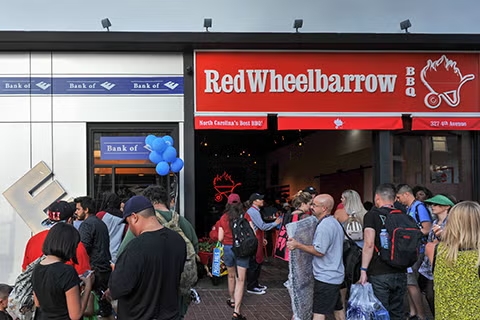
Visitors received E Coin cards accepted at more than 20 participating San Diego businesses. They could also eat at a functioning Red Wheelbarrow BBQ, solve puzzles, and uncover clues tied to the series.
Most activations construct a fictional place and ask visitors to remain inside it. Mr. Robot allowed the fiction to leak into the real city.
The E Coin card gave fans a useful object. Local merchants carried the campaign beyond its central installation. Each purchase also reinforced the show’s themes of digital currency and financial control.
The currency was fictional, but the lunch was real.
A 10,000-square-foot experience in San Diego’s Gaslamp Quarter appeared to have been ripped open by Godzilla’s claws. Inside, visitors wandered through a museum of franchise artifacts, comfortably absorbing the film’s history — until blaring alarms shattered the calm.
Suddenly, the exhibit became an evacuation.
Guests were rushed into an office overlooking the city just as Godzilla emerged outside the windows. Towering over downtown San Diego, the monster roared to life only feet away, turning spectators into survivors.
The campaign saved its strongest moment for the end.
Props and archival material first established a recognizable world. The alarms changed the visitor’s role. They started the experience touring an exhibition, and ended the experience trapped inside a monster movie.
The final window reveal supplied the essential ingredient of a great PR stunt: a moment people felt compelled to retell.
Visitors left saying they had seen Godzilla attack San Diego.
These campaigns varied enormously in footprint, budget, and capacity. Their strongest ideas followed a consistent pattern.
Each stunt reduced the distance between the audience and the story. Fans could enter Homer’s brain or seek treatment for the Simian Flu. Interactions made them part of the moment instead of a passing bystander.
The best concepts also produced a sentence that could travel:
A single sentence is the real souvenir. It carries the experience out of San Diego, through conversations, social feeds, and media coverage, to people who never stood in line.
Media Shower’s AI marketing platform helps you become a marketing superhero. Click here for a free trial.