The Better Marketing Blog
Better tips, tools, and tactics for the AI era.
Better tips, tools, and tactics for the AI era.
The Knicks spent 53 years losing, and somehow built a nearly $10 billion brand along the way.
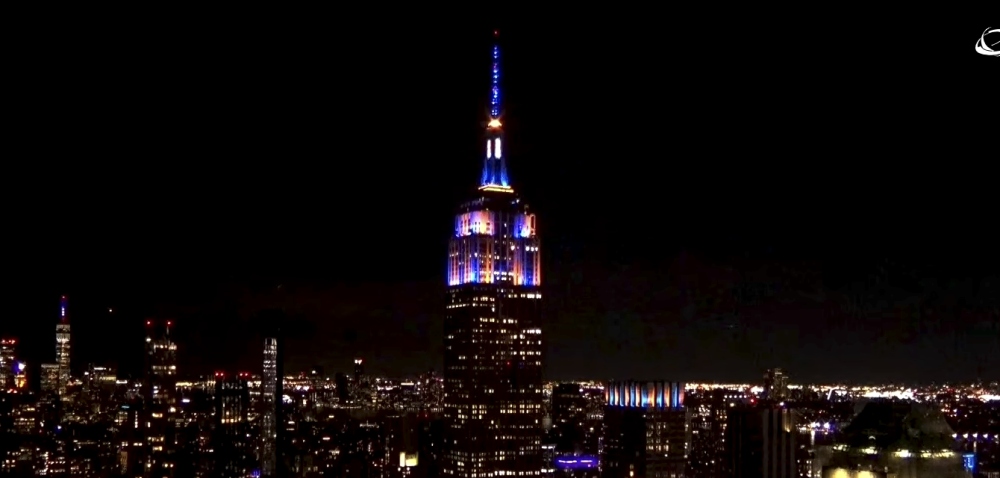
When the championship finally arrived on June 13, 2026, the city already knew what to do. Every borough activated without a single coordinating email. Bars filled before tipoff, vintage shops moved old gear like relics, and the Empire State Building went orange and blue while local brands were still rushing capsules to print.
New Yorkers had been building toward that moment for half a century.
That’s the Knicks’ real brand story. The organization owns the trademarks, but New Yorkers built the meaning. To understand how that happened, you have to go back to the beginning.
Most sports franchises build outward from a symbol: a bird, a predator, a warrior, something that looks useful on a helmet. The Knicks began with an old word for a New Yorker.
“Knickerbocker” originally referred to the Dutch families who had settled Manhattan in the 17th century, and it stuck as informal shorthand for anyone with deep New York roots. Washington Irving borrowed the word for his 1809 satirical history of New York, and the caricature took on a life of its own, eventually becoming “Father Knickerbocker,” the bearded civic mascot who showed up in newspapers and on city seals as a stand-in for New York itself.
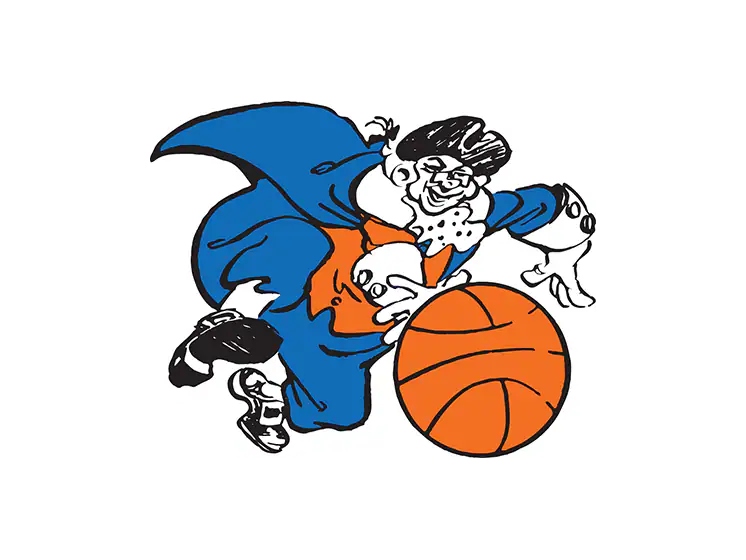
By the time the Basketball Association of America franchise adopted the name in 1946, “Knickerbocker” had completed a full loop. It started with real people, became a caricature, and landed back as a civic identity that actual New Yorkers claimed as their own.
The franchise borrowed its power from the city’s own origin story.
New York has two flagship sports brands, and they occupy completely different cultural territory. The Yankees are a global icon, polished by a century of winning, hip-hop, and visual discipline so consistent that a Yankees cap reads as “New York” in Tokyo as clearly as it does in the Bronx.
The Knicks built something harder to export and more deeply rooted. Their brand lives at street level, in the language fans coin outside the Garden, the gear that signals local knowledge rather than global recognition, and the neighborhoods that claimed the team long before the team gave them much reason to.
That’s a different kind of brand power, and in some ways a more durable one.
Orange and blue appear in New York’s civic palette and in other local sports identities, most famously the Mets and Islanders. The Knicks’ gift was making them feel immediate.
The game helped. No sport puts personality closer to the surface. Baseball gives you tradition and distance, and football hides people behind helmets. Basketball gives you faces, shoes, posture, arguments, grudges, and clothes.
Inside Madison Square Garden, orange and blue felt less like a uniform and more like a mood ring for the city.
The clearest proof of how deeply the brand had taken root came from a Sidetalk video shot outside the Garden in October 2021, when a fan dropped “Bing Bong,” two subway-coded syllables that slid into Knicks culture before anyone could sanitize them. Broadcasters picked it up.
Players played along. Nike and Sidetalk eventually turned the phrase’s energy into a Knicks-themed Air Force 1s launch.
The path ran from subway sound to street video to fan adoption to sneaker drop, with no campaign brief in sight. The brand voice came from people outside the building with a camera in their faces and no obligation to be useful.
Madison Square Garden is usually described as the Knicks’ home, which is true but too small. Most arenas are designed to contain the event. You drive in, park, scan a ticket, watch the game, buy the fries, and leave.
The Garden leaks. It sits on top of Penn Station, wedged into Midtown, surrounded by commuters, office workers, tourists, vendors, cops, camera crews, scalpers, celebrities, and people who came down without tickets because standing near the building felt better than watching alone at home.
That location gives the Knicks something almost no franchise can manufacture: a geography that’s inseparable from the team experience. People pass through the brand on the way to other lives. They walk under it while catching a train, step around it on the way to work, and hear the chants before they ever see the scoreboard.
The sidewalk outside the Garden where fans exit is where the Knicks become public property. Sidetalk understood this instinctively. So do the fans who linger after games, the camera crews looking for a quote, and the creators filming crowd reactions.
For a franchise with a losing record across most of its history, that kind of unavoidable presence turned out to matter enormously. And the people carrying it out into the city were already dressed for it.
In New York, sports gear doesn’t stay in the sports lane for long. It gets layered into daily life, styled for the train, argued over in group chats, thrifted, resold, bootlegged, and photographed on people who might not be able to name the full rotation but know exactly what the colors are doing for the outfit.
Kith founder Ronnie Fieg understood this instinctively. His Kith for the New York Knicks collaborations, like Nike City Edition uniforms, and playoff capsules worked because they drew from neighborhood aesthetics, city history, and 1990s nostalgia rather than generic basketball imagery.
They felt like they came from the same ecosystem that produced Lafayette Street lines and vintage satin jackets.
Nike and Sidetalk’s Knicks-themed Air Force 1s made the same point: the energy didn’t start with the shoe. It started with the crowd outside the Garden.
When Vogue eventually started covering Knicks courtside style with the enthusiasm once reserved for Fashion Week, it was catching up to a truth the street already knew.
The courtside runway and the sidewalk outside the arena belong in the same story. Different tiers of the same performance. One side had better seats, but the other had better quotes.
People wear Knicks gear as a way to communicate something about themselves. The logo says what every great club says: you’re either part of it, or you wish you were.
The problem with many sports brands is that they collapse when the winning stops. The Knicks became more local through the suffering, largely because the suffering had texture.
The 1990s teams moved through the league like a series of hallway fights. Patrick Ewing, Charles Oakley, Anthony Mason, John Starks, Larry Johnson, and Allan Houston gave New York a roster that felt carved out of arguments. They were physical, proud, and sometimes anything but elegant.
Fans recognized something of themselves in that. The team played the way the city liked to imagine it handled adversity: grimy, stubborn, and deeply unwilling to make it easy for anyone.
Spike Lee had courtside seats at the Garden since 1985 and never watched a game quietly. Wounded, loyal, dramatic, and personally offended by every bad call, he was the most visible New Yorker doing what New Yorkers had been doing all along.
Every spring seemed to end with the city furious and exhausted, swearing it was done, then quietly rearranging its schedule for next season. However, that era delivered something that might have been more valuable to the brand than a championship: inherited grievance.
Knicks fandom became a family condition. People passed down jerseys, stories, enemies, and bad habits. Someone too young to remember the 1994 Finals could still know John Starks as both a folk hero and a wound. The loyalty may not have been rational, but New Yorkers stayed because the team gave them a container for a familiar civic emotion: disappointment with no intention of surrender.
The Knicks are also one of the most valuable teams in sports, sitting inside a rare mix of basketball, fashion, media, street culture, and inherited civic emotion. But the real advantage is messier and more human.
The front office owns the marks, the contracts, the uniforms, the court, and the championship merch that’ll be worn until the stitching gives out.
New Yorkers own the rest: the grudges, the slang, the subway references, the family stories, the fits, the sidewalk interviews, the arguments, the viral clips, the bar noise, the old jerseys, and the irrational belief that suffering only counts if you keep showing up.
The Knicks have built something rare: a brand so woven into the city’s identity that fans stopped thinking of it as the team’s and started thinking of it as their own. For the past 53 years, they’ve loyally carried that brand through one crushing disappointment after another.
In 2026, the shared brand equity finally paid off.
Media Shower’s AI marketing platform helps your brand become a champion. Click here for a free trial.