The Better Marketing Blog
Better tips, tools, and tactics for the AI era.
Better tips, tools, and tactics for the AI era.
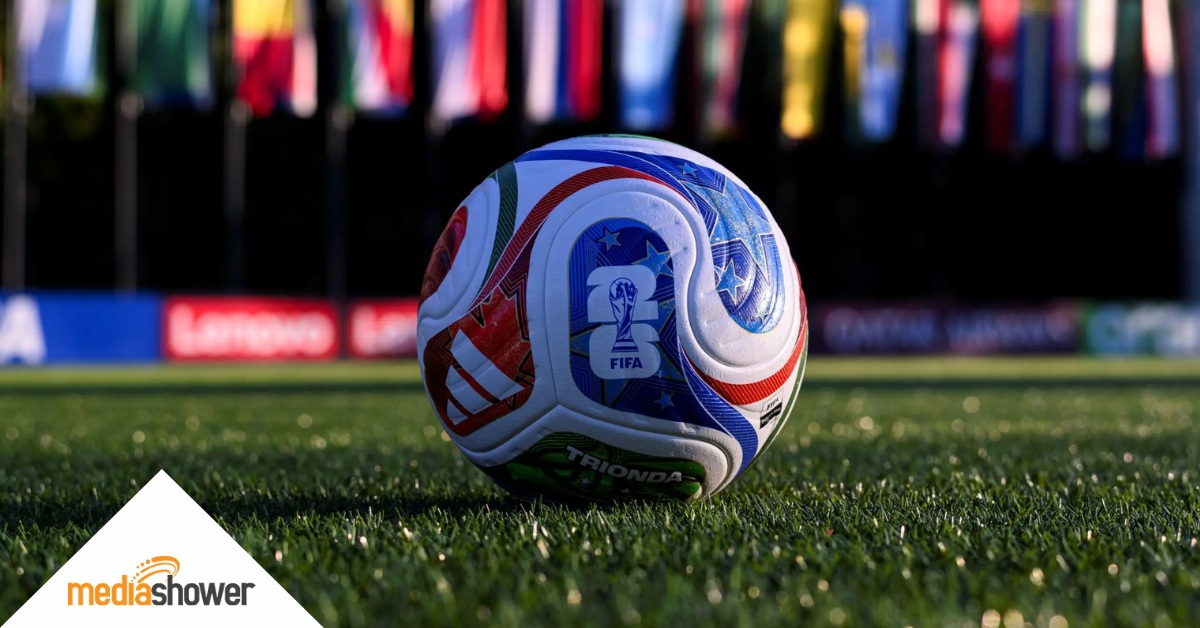
The 2026 FIFA World Cup has been circled on brand calendars since 2018, when FIFA handed the hosting rights to the United States, Canada, and Mexico. The tournament is the largest in history: 104 matches, 16 host cities, and roughly $850 million in projected ad revenue.
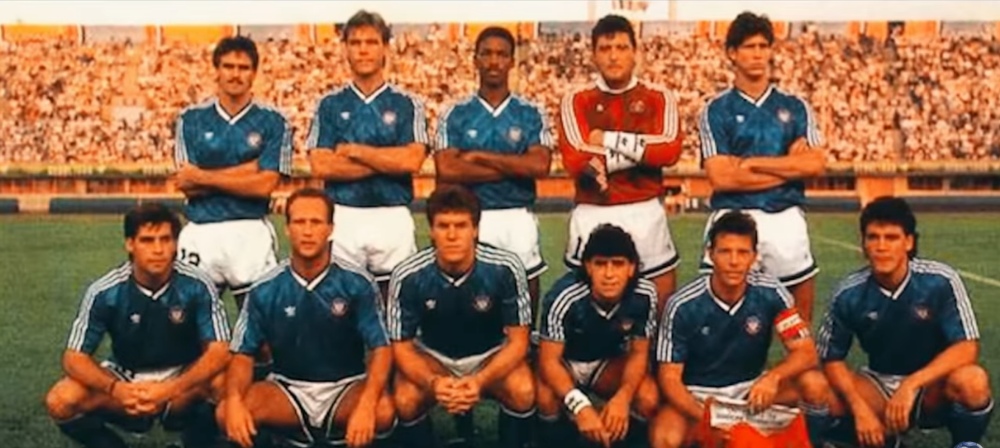
What nobody fully anticipated is the emotional weight of the moment. The World Cup returning to North America for the first time since 1994 gave brands access to an invaluable asset: a shared memory. If you were twelve in the summer of 1994, you probably remember exactly where you watched it.
A generation watched that tournament as kids and became soccer fans because of it. Their kids are now old enough to argue about Mbappé. That convergence, a nostalgic generation alongside a new one on a global stage reaching an estimated 6 billion people, created a unique creative opening.
That shared history is also what gives the idea its credibility. For a generation that watched the 1994 World Cup and grew up alongside it, the belonging was already real.
Flip through the campaigns from Adidas, Nike, LEGO, Coca-Cola, Visa, and Lay’s, and a single idea surfaces. It is sharper than “football is exciting” and more commercially interesting than “our brand believes in sport”: you already belong here.
The traditional aspirational sports ads (most of Nike’s, for example) put the viewer outside the action, looking in at greatness from a respectful distance. These campaigns pull viewers into the story as people who already have a seat.
The cage pitch in the Adidas spot is a place you recognize. The Will Ferrell bus in the Lay’s campaign is pulling up to your driveway. The American soccer audience has grown too large and too engaged to respond to being recruited, and the brands that understood this adjusted accordingly.
Adidas opened the tournament’s ad season in May with a five-minute film that made every subsequent spot feel like a response to it. Timothée Chalamet assembles Yamal, Bellingham, and Rodman for a cage match in New York, while Messi, Bad Bunny, Beckham, and Zidane watch from the sidelines.
The 1990s aesthetic hits specific notes: urban pitches, analog warmth, hip-hop, streetwear. Each one is a thread back to the last time the World Cup was home. The next-generation cast keeps it from becoming a tribute act, and the whole film carries an implicit argument: the legends here came up in backyards, just like everyone watching. It feels like a memory, not a campaign.
Nike played a different game from everyone else. “Rip the Script” anchors a campaign stretching across weeks and platforms, what Nike calls a “football universe,” treating the tournament as an ongoing cultural conversation, not a single media buy.
The six-minute anchor film places Mbappé, Ronaldo, Haaland, Ronaldinho, Putellas, Kardashian, and Travis Scott inside a fictional studio where the scripted production falls apart and instinctive play takes over.
The self-aware premise works because the follow-through is real. Marketing Dive noted that the Nike-Adidas rivalry is as much a creative competition as a commercial one, and on scope, Nike is playing the longer game.
LEGO produced the viral standout of the tournament with a 60-second film placing Messi, Ronaldo, Mbappé, and Vinícius Júnior around a table, each competing to crown their minifigure atop a trophy built entirely from bricks. The film is both playful and joyful, and hit 314 million Instagram views in the first 24 hours. The reported $8 million budget looks modest by tournament standards.
LEGO’s smartest move was staying entirely itself, applying its own sensibility to a football context without imitating what the sportswear brands would do. The generational subtext is also more gracious than most sports journalism manages: Messi and Ronaldo at the same table as Mbappé and Vinícius, literally building something together.
Coca-Cola set out to own the emotional territory in this tournament, not the creative territory. For a brand that has been making people feel things since 1886, it is both the smarter brief and the more honest one.
The multi-spot series captures the physical experience of watching football: the stomach-drop of a near-miss, the suspended agony of a VAR review, the eruption when a goal stands. The central idea is that a Coke’s effervescence mirrors the emotional carbonation of sport you care about. Marketing Dive observed that Coca-Cola’s focus on the experience of watching, not who’s playing, gives it room that player-focused campaigns spend entire budgets trying to manufacture.
Visa built its campaign around a pay-with-Visa, win-tickets sweepstakes, but the execution of “Tap In” is more emotionally astute.
Jason Sudeikis brings his usual warmth to the anchor role, though the smarter inclusion is broadcaster Andrés Cantor, whose calls were the sound of the 1994 World Cup for millions of Spanish-language fans. Using him in 2026 requires no explanation, and it earns Visa instant credibility.
Lay’s made the most crowd-pleasing bet of the tournament, which suits a snack brand that has never pretended to be something it isn’t. Will Ferrell drives a yellow Bandwagon across America with David Beckham and Marshawn Lynch, making the argument that soccer requires no credentials.
The joke is also a business strategy, and it holds up. Lay’s audience is the American consumer who is adjacent to soccer culture but not quite inside it, still the majority of US adults, and Lay’s is smart enough to show up where they already are.
Fox Sports had a different job from every other advertiser in this lineup: sell the football itself. The broadcast promo covers a lot of ground: fans jumping on cars, USMNT legends on dollar bills, national team players replacing celebrity faces on billboards. It is the most flag-waving execution of the tournament, and it lands.
ESPN noted that few campaigns planted a flag this directly. Fox’s job, after all, is to make you clear your calendar and find a friend with a bigger TV.
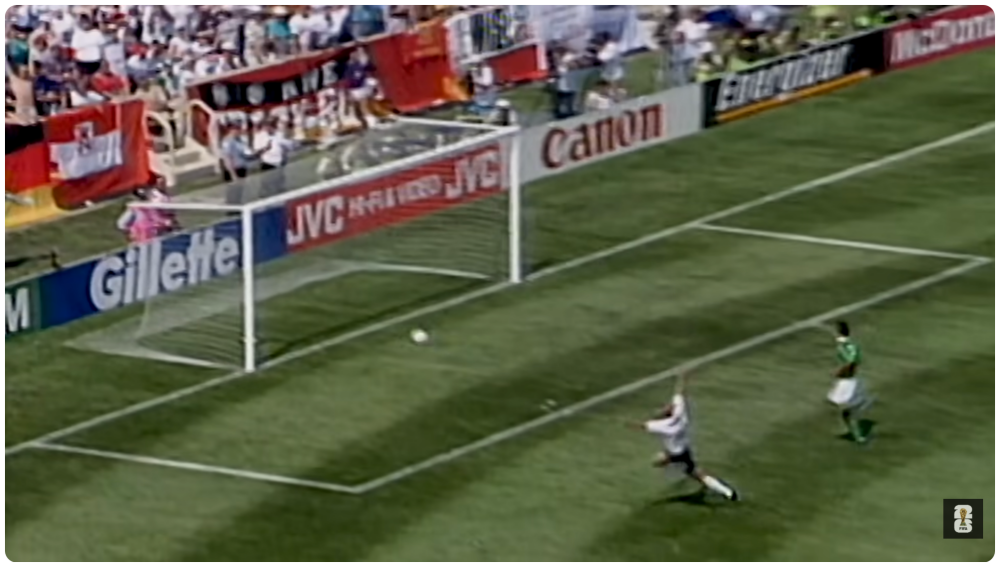
Messi and Mbappé get the headlines, but 1994 is doing the heavier creative lifting this tournament. The World Cup hasn’t been back in North America since that year, and because it only comes around every four years, that’s seven tournaments over thirty years for the memory to settle.
Fans who watched it as kids, often alongside a parent who’d never cared about soccer and became a fan because of it, have had nothing come along to replace it. Until now.
Morocco, Spain, and Portugal host in 2030. The World Cup won’t be coming home, and the emotional charge that makes this creative window possible won’t travel with it. The window is this summer, and all the major advertisers made the most of it.
Streaming now accounts for 43% of expected US viewership, and ads delivered through streaming are running at 66% higher effectiveness than cable and broadcast averages, according to Nexxen research.
Brands that took that seriously and moved budget accordingly are seeing returns that earlier tournaments simply could not deliver.
World Cup viewers are 63% more likely to respond to emotional advertising than the general population, which helps explain why Coca-Cola’s fan-emotion approach is disciplined thinking first.
It also explains why campaigns built around belonging and nostalgia tend to outlast the star-studded ones. FIFA tracked 811 million total engagements at Qatar 2022, a 448% increase over 2018. That sets the baseline for 2026.
Media Shower’s AI marketing platform keeps your brand in the game from kickoff to the final whistle. Click here for a free trial.