The Better Marketing Blog
Better tips, tools, and tactics for the AI era.
Better tips, tools, and tactics for the AI era.
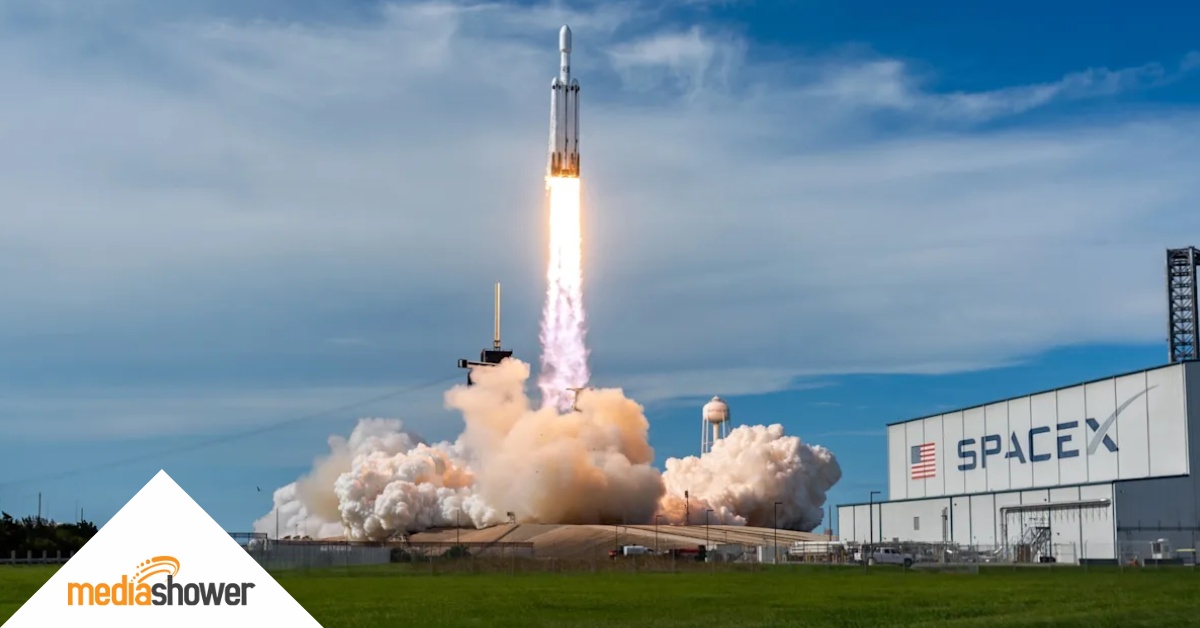
By the time SpaceX went public in June 2026 and made Elon Musk the planet’s first trillionaire, the financial story was surprisingly simple: markets had decided his Mars plan was no longer science fiction, but a real possibility.
For most of modern history, Mars sat in the same category as flying cars and lunar hotels — an irresistible dreamers’ destination with no obvious route. Musk changed that conversation by refusing to romanticize it and by treating Mars like a transportation problem instead of a fantasy.
That shift started long before the IPO, in a convention hall in Guadalajara, Mexico. In September 2016, thousands of aerospace engineers packed into the International Astronautical Congress expecting Musk to talk about Mars. His presentation, Making Humans a Multiplanetary Species, became the clearest public example of how he reframed the Red Planet from myth into a question of vehicles, fuel, and cost.
For nearly an hour at the International Astronautical Congress, Musk walked through methane production, orbital refueling, payload mass, launch frequency, manufacturing costs, and transportation economics. He brought diagrams and cost projections, things that weren’t exactly the ingredients of an inspiring keynote.
By the time he left the stage, something peculiar had happened: colonizing Mars no longer sounded like science fiction.
It sounded expensive. And difficult. Audience members probably felt like the goal was decades away. But it also sounded oddly plausible. Instead of trying to convince people that traveling to Mars would be easy, he convinced them that it could be engineered.
His presentation opened with an existential argument. Humanity, he said, faced two futures. One remained confined to a single planet. The other spread beyond Earth and became resilient enough to survive catastrophes that could end civilization.
Then he did something unexpected. He stopped talking about civilization and started talking about transportation.
The presentation quickly shifted the focus from Mars to the economics of reaching it. Musk argued that the real obstacle was cost, not distance. Sending cargo to Mars was simply too expensive. Reduce launch costs dramatically, and it became possible to answer even fantastical-sounding questions.
He assumed the audience already believed in Mars as a landing spot and started a conversation about launch costs. That’s a much easier argument to win.
Throughout the presentation, Musk kept shrinking seemingly impossible problems into manageable engineering challenges:
Each impossible idea dissolved into a series of practical decisions. It was the communication equivalent of zooming in. By the end of the talk, people debated propellant production instead of debating whether humans belonged on Mars to begin with you.
Every enduring movement eventually finds its shorthand. Apple had “Think Different.” Nike had “Just Do It.”
SpaceX settled on three deceptively simple words:
Making life multiplanetary.
It’s a remarkable slogan because it barely mentions space. There are no rockets or astronauts. It doesn’t reference Mars at all. Instead, the phrase shifts the frame from exploration to survival.
Exploration is optional, but survival isn’t.
Great communicators understand that repetition is architecture. When SpaceX repeats “making life multiplanetary,” it’s reinforcing a worldview. Every Starship test, engine firing, and booster landing becomes another chapter in the same story.
Musk has been repeating variations of the same message for years. The details evolve. The vehicles change names, from the Interplanetary Transport System to BFR and eventually Starship. But the destination rarely changes.
Ironically, the simplification of the hardware names mirrors the simplification of the story itself. “Interplanetary Transport System” sounds like an engineering proposal, but “Starship” communicates instantly. One belongs in a spec sheet. The other becomes history.
While other visionaries talk about destinations, Musk talks about bottlenecks.
Listen to enough interviews and a pattern emerges. He returns repeatedly to the same handful of technical constraints. Reusable rockets. Orbital refueling. Heat shields. Mass production. Methane. Launch cadence.
The repetition can feel obsessive until you realize what he’s doing. Every constraint is another reason the vision might fail, but it’s also another opportunity to explain how it won’t.
Take fuel, for example.
One of the least glamorous parts of the Mars plan became one of its most memorable. Rather than carrying enough fuel home from Earth, Musk proposed manufacturing methane and oxygen on Mars using carbon dioxide from the atmosphere and water ice beneath the surface through the Sabatier process.
It’s hardly cinematic, but it transformed an impossible logistics problem into industrial chemistry.
Likewise, Musk often compares Starships not to spacecraft but to commercial aircraft. Airliners don’t fly once a year; they fly constantly. That’s the economic model he wants audiences to picture.
The comparison does something clever. It replaces Apollo-era thinking — one magnificent mission — with airline thinking: frequent departures, routine maintenance, lower costs, and eventually affordable tickets.
At one point, Musk floated the possibility that tickets to Mars might someday cost roughly the price of an expensive house, perhaps even less as space transportation matured.
Whether or not those numbers prove realistic misses the point. The estimates gave people something to imagine, something that no longer felt impossible.
If the spreadsheets built credibility, the launches supplied emotion.
In February 2018, Falcon Heavy lifted off carrying one of the strangest payloads in aerospace history: Musk’s own Tesla Roadster, complete with a mannequin nicknamed Starman drifting toward deep space while David Bowie’s “Life on Mars?” played in the livestream.
It was absurd and full of theatrics. It was also unforgettable.
The image of a sports car floating above Earth reached millions who had never watched a rocket launch before.
Then came Starship.
Unlike the carefully choreographed missions of earlier space programs, Starship development has unfolded almost entirely in public. Delays became engineering updates. Test flights generated as much attention as successes. Explosions became livestreams.
The defining image wasn’t a launch at all. It was the moment giant mechanical arms reached out from the launch tower and caught a descending Super Heavy booster in midair, a breakthrough widely framed as a dramatic step toward rapid reusability.
Watching it felt less like aerospace engineering than science fiction refusing to stay fictional. Every successful demonstration shortened the distance between promise and proof.
People don’t remember the specifications, but they remember what they saw.
None of this means Musk has escaped criticism. Quite the opposite, in fact.
His timelines have become famous for slipping, and the technical challenges remain immense. Radiation, life support, long-duration human health, and the economics of building a self-sustaining city on another planet remain unsolved problems. Even supporters acknowledge the scale of the undertaking.
Public opinion reflects the same tension. Americans consistently say leadership in space matters, yet only a small minority rank sending astronauts to Mars as one of NASA’s highest priorities. At the same time, many believe humans could realistically reach or even settle Mars within the coming decades.
That’s an unusual combination: skepticism about the priority paired with optimism about the possibility.
Musk has leaned into that ambiguity rather than avoiding it. He rarely argues that Mars is inevitable. Instead, he asserts that it’s worth attempting.
That ambiguity didn’t disappear when SpaceX went public; if anything, the company’s June 12, 2026, IPO made the contrast sharper by turning a debated dream into a stock with a ticker symbol and a multitrillion‑dollar market cap.
Marketers don’t need to build rockets to borrow Musk’s communication playbook.
Media Shower’s AI marketing platform helps brands turn moonshots into marketing maps. Click here for a free trial.