The Better Marketing Blog
Better tips, tools, and tactics for the AI era.
Better tips, tools, and tactics for the AI era.
Book tours are not supposed to need parking attendants.
A successful author might fill an independent bookstore. A bestselling author graduates to a theater, or if everything goes spectacularly well, perhaps a performing arts center. Michelle Obama booked basketball arenas.
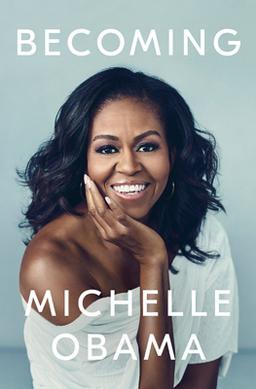
More than 17 million copies of Becoming have sold worldwide, making it one of the bestselling memoirs in publishing history. During her book tour, tens of thousands of people gathered night after night to hear Obama discuss growing up on Chicago’s South Side, navigating Princeton, raising daughters, and trying to figure out who she was becoming.
Despite the scale, the conversations retained an unusual sense of intimacy.
That combination has defined Michelle Obama’s public communication for nearly two decades. As her audience has grown, her stories have become more personal rather than more polished.
While many public figures respond to success by emphasizing expertise and accomplishment, Obama repeatedly returns to experiences that audiences immediately recognize: feeling out of place, worrying about whether you belong, struggling through major life transitions, and trying to live up to expectations.
The result is a communication style that creates intimacy at a scale where intimacy should be impossible. In this article, we’ll explore the techniques she uses to consistently narrow the distance between herself and her listeners, no matter how large the arena.
Most commencement speakers begin with achievement. The audience is reminded why the speaker deserves the microphone before hearing what they have to say.
Obama usually begins somewhere else. In her 2016 commencement address at the City College of New York, for example, she spent little time establishing her credentials. She opened with her own uncertainty as a student entering unfamiliar environments, allowing the larger themes of education, opportunity, and perseverance to emerge from lived experience rather than personal accomplishment.
The same instinct appears throughout her public life. Obama frequently draws from family dinners, conversations with her parents, and the insecurities that followed her into elite institutions. The details rarely sound remarkable in isolation, which is precisely why they work.
The larger themes emerge gradually from those stories. By the time Obama begins talking about education, opportunity, or perseverance, the audience is already invested because the conversation feels connected to their own experiences.
The same instinct shaped some of Obama’s most successful public initiatives.
When Let’s Move! launched in 2010, childhood obesity was already the subject of endless statistics, policy proposals, and expert recommendations. Obama could easily have built the campaign around speeches and awareness efforts.
Instead, she planted a vegetable garden on the White House lawn.
Children helped dig, plant, and harvest, while families and schools across the country could see a version of the project they could replicate themselves. The campaign became something people could participate in rather than simply observe.
That preference for participation appears again and again throughout Obama’s work. The Becoming tour was structured as a conversation rather than a lecture. Her podcasts often feel more like exchanges than performances.
Even the recently opened Obama Presidential Center has been designed as a civic gathering place rather than the traditional monument to a single individual.
The specifics change from project to project, but the approach remains remarkably consistent. Rather than asking people to watch, she finds ways to bring them into the experience.
The title Becoming captures an idea that runs through much of Michelle Obama’s public communication.
Most public figures eventually settle into a finished narrative. The obstacles have been overcome, the lessons have been learned, and the destination has been reached. Becoming points in another direction. The title itself suggests a process rather than an arrival.
Obama returns to that idea repeatedly when discussing her own life. Whether she is talking about education, motherhood, public service, or life after the White House, she tends to focus on adjustment rather than achievement. New opportunities bring new uncertainties. Accomplishment creates new expectations. One transition simply leads to another.
The message resonates because it mirrors how most people experience their own lives. Growth is rarely linear, and confidence rarely arrives all at once. By presenting herself as someone who is still learning, Obama remains relatable even while discussing extraordinary experiences.
The title Becoming works for the same reason her broader communication style works. Rather than presenting a completed story, it invites people to see themselves somewhere within the process.
Michelle Obama’s communication is frequently described as warm, but warmth alone doesn’t explain why audiences trust her.
Many public figures are approachable, but far fewer are willing to pair empathy with accountability. Obama’s speeches often follow that sequence. She begins by acknowledging obstacles, frustrations, and fears. Once she’s established common ground, she raises expectations.
Her 2015 commencement address at Tuskegee University illustrates the approach. Obama spoke candidly about criticism and prejudice she experienced as First Lady. After acknowledging those realities, she challenged graduates to move forward despite experiencing them in their own lives.
Because the audience felt understood first, the challenge felt fair and credible. She had demonstrated that she understood the difficulty of what she was asking.
That balance may be one of the most overlooked aspects of her communication style. Empathy earns attention; expectations give the message weight.
It would be easy to attribute all of this to charisma.
Michelle Obama is an unusually gifted communicator. Yet charisma alone does not explain the consistency of her approach. The same instincts appear whether she is speaking to graduates, discussing family life on a podcast, promoting a memoir, launching a public initiative, or helping to shape a civic institution.
Across those very different settings, the underlying approach remains remarkably consistent. Obama tends to start with experiences that audiences recognize from their own lives, whether that means uncertainty, transition, family relationships, or the challenge of finding a place where you belong.
Rather than positioning herself above the audience, she creates opportunities for people to see themselves somewhere within the story.
That consistency is what turns a collection of successful appearances into a communication style. Audiences may not consciously recognize the pattern, but they feel its effects. They know what to expect when Michelle Obama takes the stage: honesty, self-awareness, and a perspective grounded in everyday life rather than personal mythology. That predictability creates trust.
Michelle Obama’s remarks at the June 2026 opening of the Obama Presidential Center offered a fitting summary of the communication style she has practiced throughout her public life.
The occasion could easily have become a celebration of achievement. The Center represents years of planning and one of the most significant presidential legacy projects in modern history.
While Obama delivered the obligatory introduction that celebrated her husband Barack’s accomplishments, she spent more time talking about others.
Her remarks framed the Center less as a monument to a president and more as a place where neighbors could gather, learn, and build relationships. Again and again, she returned to the community that would use the space and the opportunities it could create.
The focus remained on the lives that would unfold there rather than the names on the building.
The message echoed themes that have appeared throughout her speeches, books, and public initiatives. Even during a ceremony centered on a presidential legacy, Obama returned to belonging, opportunity, and connection. She invited the audience to see themselves as part of the Center’s future.
That approach mirrors many of the communication choices Michelle Obama has made throughout her public career. The goal is not simply to attract visitors; it’s to create reasons for people to return, participate, and become part of the story themselves.
Those themes have appeared repeatedly throughout her career because they reflect a broader belief about human connection. Whether she is speaking to graduates, planting a garden, touring arenas, or helping shape a civic institution, Obama consistently finds ways to make people feel included in the conversation.
The larger the audience becomes, the more deliberately she returns to experiences that feel personal and familiar.
Media Shower’s AI marketing platform helps your brand connect with its most human voice. Click here for a free trial.



#/media/File:Becoming_(Michelle_Obama_book).jpg)