The Better Marketing Blog
Better tips, tools, and tactics for the AI era.
Better tips, tools, and tactics for the AI era.
Guerrilla marketing is easy to admire and hard to do well.
At its weakest, it’s a brand doing something weird in public and hoping people notice. At its best, it turns the environment into part of the idea: A bus shelter becomes a portal, a staircase becomes a piano, a manhole becomes a cup of coffee.
That’s the difference between a stunt and a marketing campaign worth studying.
So instead of ranking these campaigns by fame alone, we ranked them by marketing value: how useful they are for marketers to study and learn from.
The goal is to understand the creative move behind each stunt, which you could adapt (with a little creativity) for a different brand, audience, and moment.
We started with a long list of contenders, compiled from multiple “Top 10” and “Best of” lists across the Internet. We then assigned each campaign a score out of 100 points, based on seven factors:.
And here they are: our nominations for the 12 greatest guerrilla marketing campaigns in history, along with what ideas you can swipe for yourself.
Score: 93/100
Risk Level: Low
Metric Confidence: Strong
Swipeable Idea: Turn the environment into the reveal.
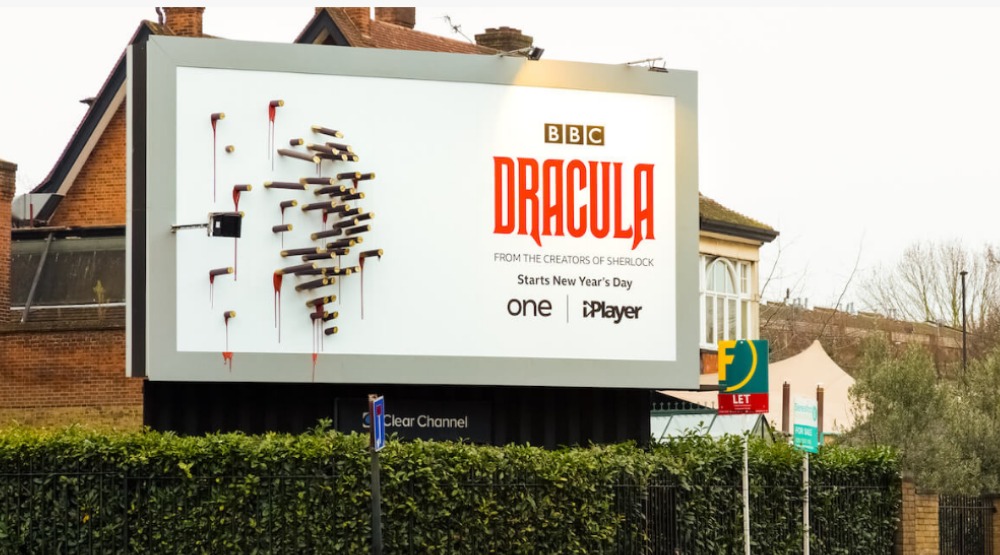
To promote BBC One’s Dracula, BBC Creative built a billboard that looked almost too simple during the day: a white board pierced by bloody wooden stakes. But once the sun went down, the stakes cast a perfectly arranged shadow of Dracula himself.
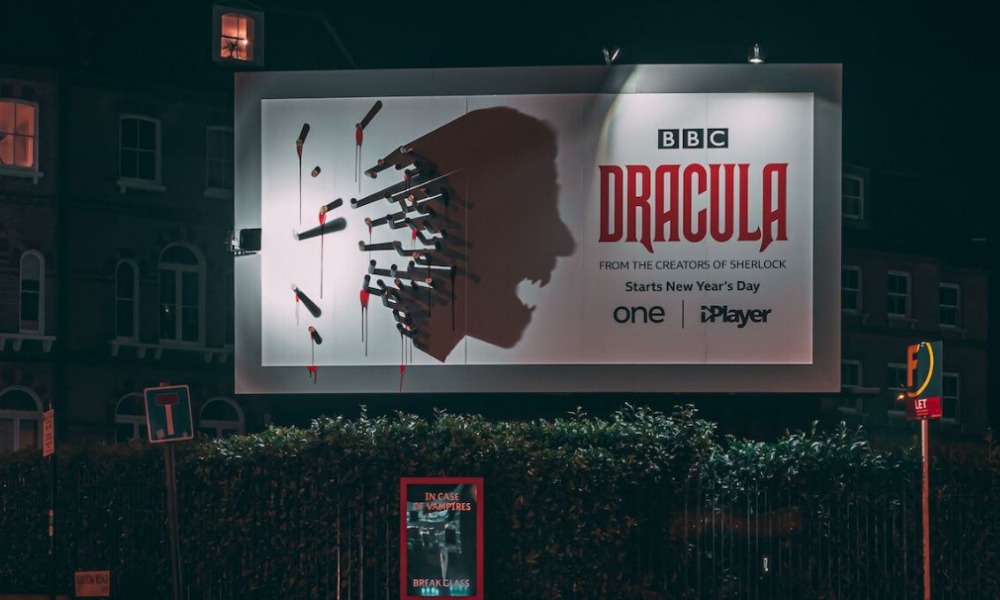
The reveal came from the media placement itself: the stakes, the lighting, the timing, and the night.
Talon reports that the campaign generated more than 7 million video views and over 40 articles or content pieces. The execution also received coverage from creative and OOH industry outlets.
The campaign used timing, light, and physical space as the creative engine. It didn’t need a paragraph of copy. It needed nightfall.
Use the environment as the reveal mechanism. Think lighting, weather, movement, shadows, location, sound, time of day, or audience behavior.
A visual trick has to deepen the idea. Dracula appearing only at night is thematically perfect. A random shadow gag for tax software probably won’t hit the same.
The campaign has a natural transformation, mystery, before-and-after, or reveal moment.
Score: 91/100
Risk Level: Medium
Metric Confidence: Strong
Swipeable Idea: Make the impossible appear in an everyday place.
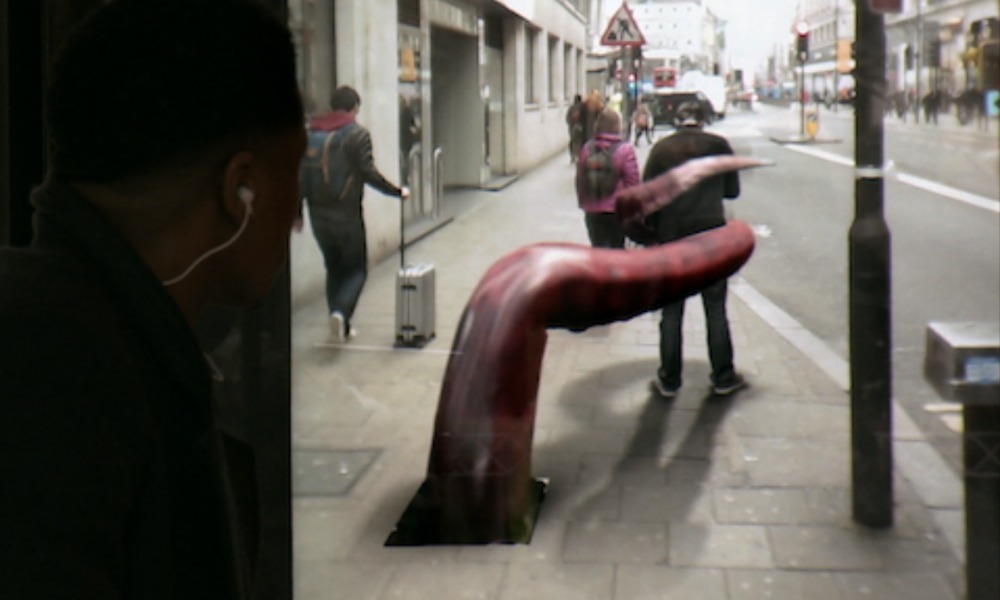
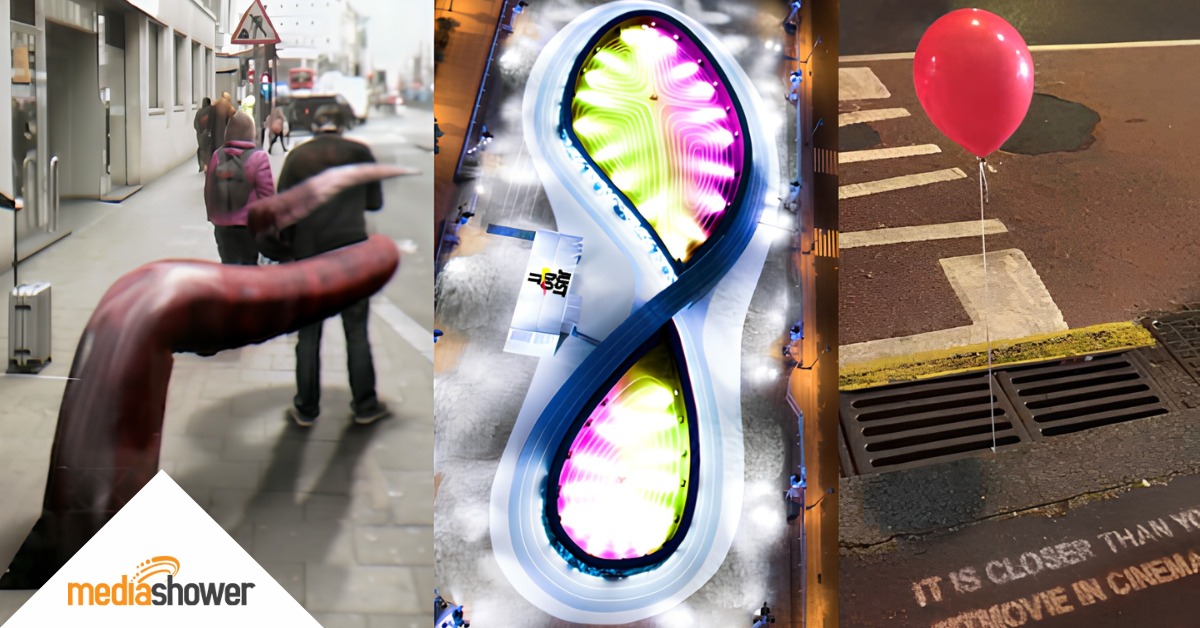
Pepsi Max turned a London bus shelter into an augmented-reality window. Commuters appeared to see alien abductions, robots, meteors, tentacles, tigers, and other impossible scenes unfolding on the street in front of them.
The stunt made the brand’s “unbelievable” message literal. A bus shelter is one of the dullest places in modern life. Pepsi made it ridiculous.
Grand Visual reports that the campaign earned more than 8 million YouTube views, reached 3 million views in five days, generated PR coverage as far away as Brazil and Australia, and reached more than 385 million people.
Grand Visual also reported that Pepsi Max sales were up 35% year over year during the month the campaign ran.
The technology served the concept. AR created the experience, while the strategic idea was simple: unbelievable things happening in an ordinary place.
Use technology to make the brand promise tangible, surprising, and easy to understand.
AR, AI, projection, and other tech need a clear job. If the effect doesn’t strengthen the message, it’s just a budget with a software license.
The product promise involves surprise, imagination, entertainment, transformation, or breaking from the ordinary.
Score: 88/100
Risk Level: Medium
Metric Confidence: Moderate
Swipeable Idea: Prove the product claim in public.
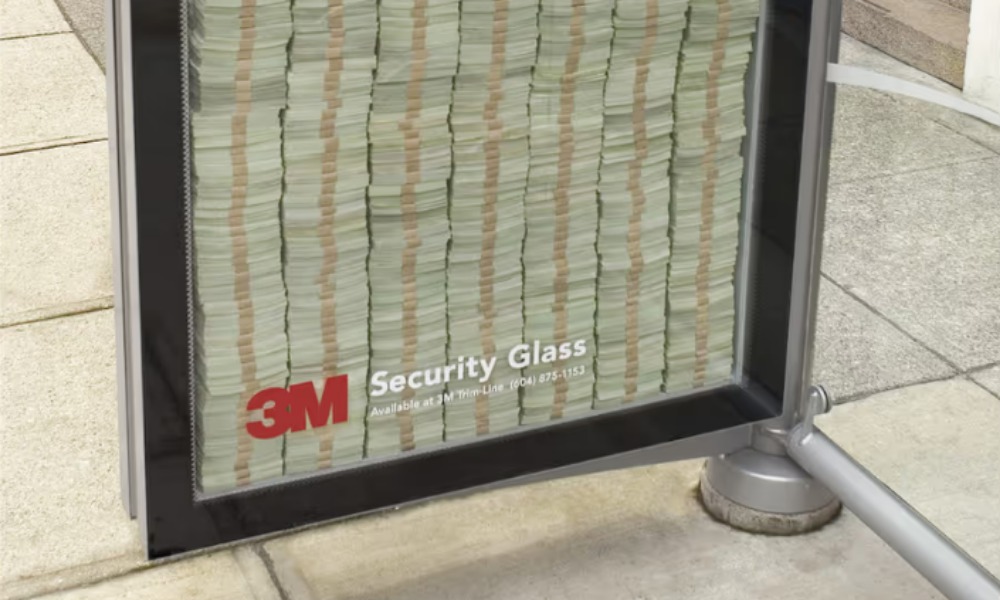
3M’s Scotchshield stunt placed what looked like millions of dollars in cash behind reinforced glass in a Vancouver bus shelter. Passersby were invited to try to break the glass using only their feet. If they could break it, the money was theirs.
That’s a product demo with teeth.
The real story is a little less mythic than the version that circulates online. The display did not contain $3 million in fully redeemable cash. Reporting and fact-checking indicate that only a smaller amount of real cash sat on top of fake bills, with a security guard nearby.
Even with that caveat, the strategic idea holds: the campaign turned a strength claim into a public challenge.
Daily Hive reports that more than 100 people tried to break the glass, that the stunt generated an estimated $1 million in free publicity, and that the client saw a reported three-month order backlog.
Snopes verifies the core stunt while flagging the oversimplified “$3 million in bulletproof glass” version as mixed.
A good product claim is abstract. A public test makes it concrete.
Turn a product promise into a proof point people can understand instantly.
Avoid exaggerating the premise. Also avoid public challenges that could become unsafe, misleading, or legally messy. The line between “irresistible product demo” and “please don’t kick our bus shelter” is thinner than it looks.
The product benefit can be demonstrated simply, safely, and publicly.
Score: 87/100
Risk Level: Low
Metric Confidence: Strong
Swipeable Idea: Connect the ad to the live world around it.
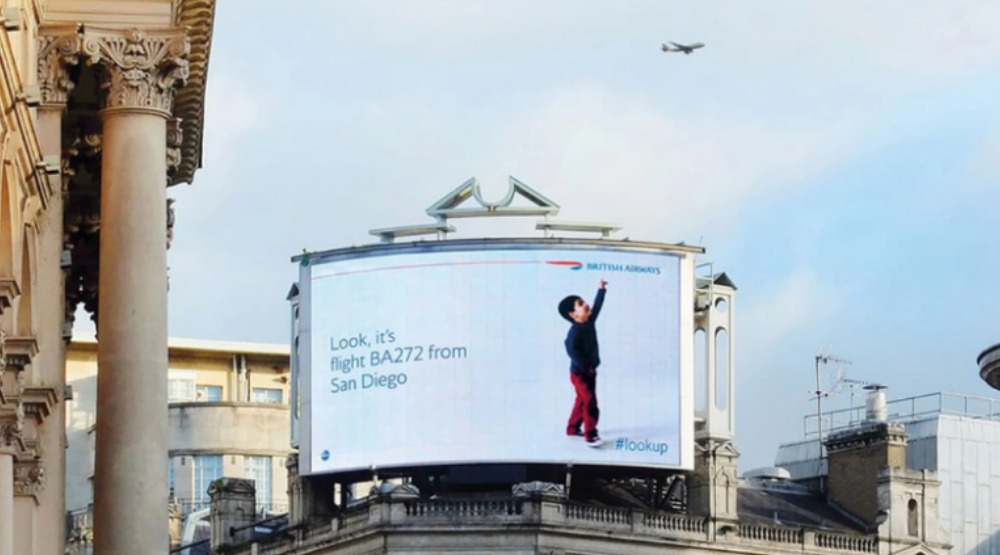
British Airways created digital billboards that reacted to actual BA planes flying overhead. When a plane passed, a child on the billboard pointed up at it while the screen displayed the flight number and destination.
It was outdoor advertising that felt awake.
The campaign connected the ad to a real moment happening above the audience. The sky became part of the placement.
WPP reports that the campaign received 1.36 million video views, generated 45 million earned social impressions, and led to more than 364 news articles across 118 countries. WPP also reports that the campaign received 60 awards, including Grand Prix wins at the Clios and Cannes Lions.
Context made the message emotional. The billboard pointed at the magic in real time.
Connect the ad to something happening in the real world at that exact moment.
Live data should add meaning. Data for data’s sake is just a dashboard in public.
A brand can connect its message to location, timing, weather, movement, events, or real-time behavior.
Score: 86/100
Risk Level: Low
Metric Confidence: Strong to moderate
Swipeable Idea: Make the desired behavior more fun than the default.
Volkswagen’s “Piano Stairs” transformed a staircase at Stockholm’s Odenplan subway station into a working piano keyboard. Instead of riding the escalator, commuters could climb the stairs and play music with their feet.
The campaign was part of Volkswagen’s larger “Fun Theory,” built around a simple behavioral idea: people are more likely to change behavior when the better choice feels enjoyable.
Stanford Social Innovation Review reports that the Fun Theory videos earned about 13 million YouTube views within a couple of months, while the piano staircase video earned about 10 million views on its own. SSIR also reported that during the one-day test, 66% more people than usual chose the stairs over the escalator.
The campaign turned behavior change into a reward.
Make the desired behavior more fun than the default behavior.
Novelty and behavior design are different. The experience has to make the desired action easier, more appealing, or more rewarding.
The campaign goal involves behavior change, participation, public interaction, or making a good choice feel more attractive.
Score: 85/100
Risk Level: Low
Metric Confidence: Strong
Swipeable Idea: Let people experience the product promise.
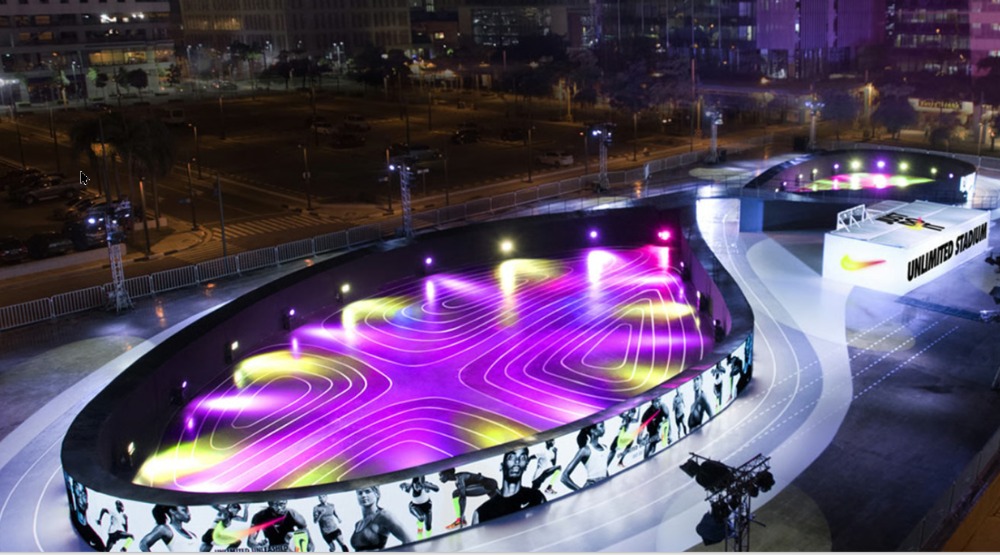
Nike built a full-sized LED running track in Manila shaped like the sole of the Nike LunarEpic running shoe. Runners could race against a digital avatar of themselves, turning a product launch into a physical challenge.
This is the high-budget end of guerrilla-inspired experiential marketing. It’s polished and ambitious. It also shows what happens when the physical environment becomes the campaign.
The audience didn’t just watch the product story. They ran inside it.
Let people experience the product promise physically.
Scale is not strategy. This worked because the installation dramatized personal progress and competition.
The brand promise is experiential, performance-based, competitive, or tied to personal growth.
Score: 82/100
Risk Level: Low
Metric Confidence: Limited
Swipeable Idea: Let the audience complete the visual.
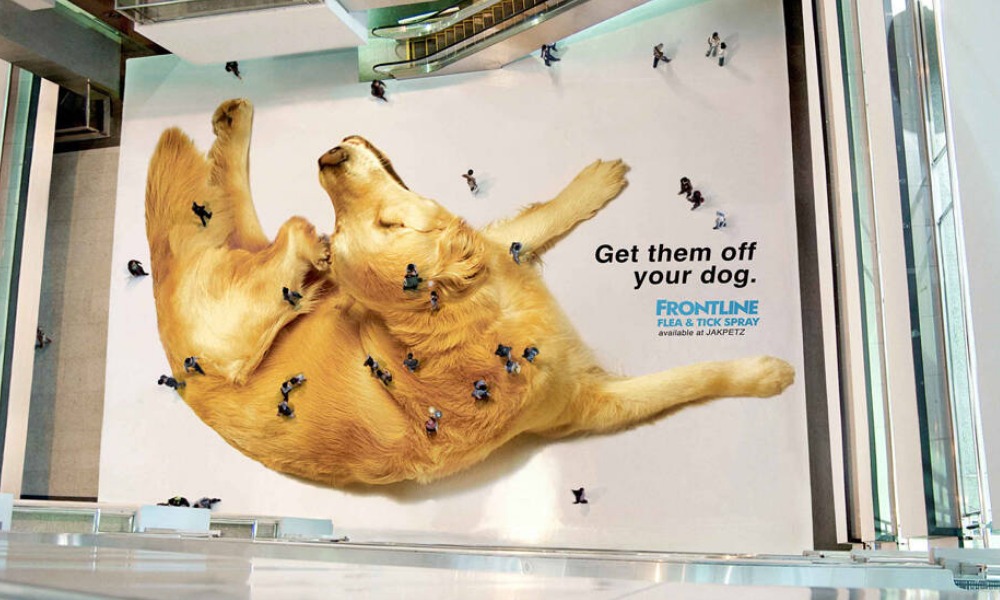
Frontline placed a giant image of a scratching dog across the floor of a Jakarta mall. From the ground level, shoppers saw a dog. From the upper floors, the people walking across the image looked like fleas crawling over the dog’s body.
The best part: the audience didn’t know they were part of the ad.
Ads of the World documents the campaign as a 2009 ambient campaign in Indonesia created by Saatchi & Saatchi for Frontline. Public performance metrics are limited, which is why it ranks below campaigns with stronger documented results.
The placement changed the meaning of ordinary audience behavior. Shoppers became the visual punchline.
Design the campaign around how people will encounter it from a specific angle, distance, or vantage point.
The brand and product connection need to click quickly. Forced perspective works best when the product benefit lands fast.
The campaign can use scale, perspective, movement, or audience presence to complete the idea.
Score: 81/100
Risk Level: Medium
Metric Confidence: Moderate to strong
Swipeable Idea: Put a known symbol in the perfect physical context.
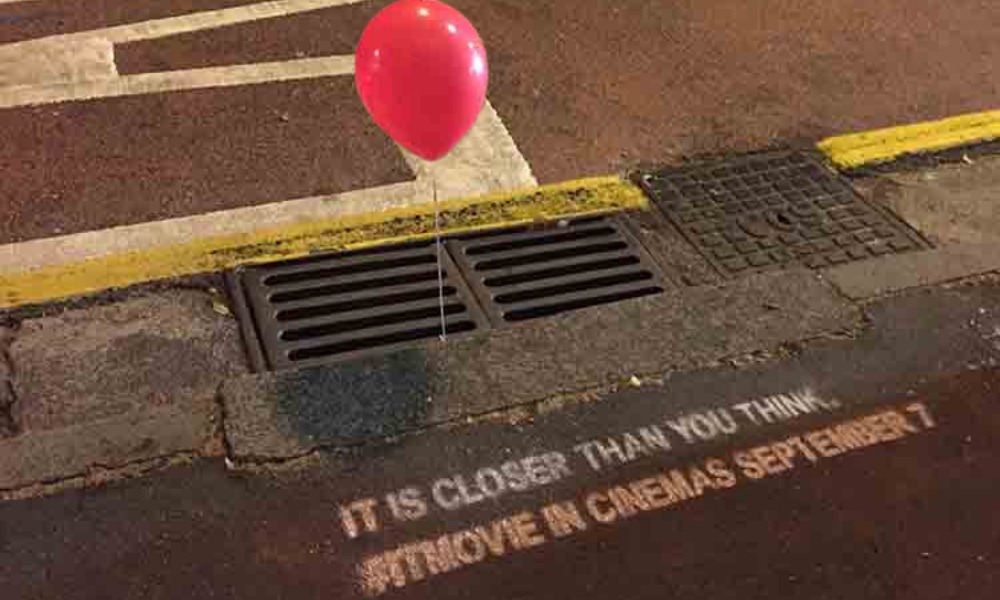
To promote the 2017 film IT, red balloons were tied to storm drains in Australian cities. The reference was immediate for anyone familiar with the character Pennywise. The placement made it worse — in the best possible way.
This was minimalist horror marketing: one object, one location, one collective shiver.
Agency Mr. Glasses reports a conservative reach of 6.5 million in 24 hours, with images of the balloons spreading through news media, radio, TV, and social channels.
The campaign trusted the audience to make the connection. It placed the symbol where it would feel most unsettling.
Use one unmistakable cultural cue in the right physical context.
Fear, ambiguity, and public unease need a brand-fit reason and a controlled risk plan. Creepy is a strategy only when creepy is the point.
The audience already recognizes the symbol, character, color, phrase, sound, or object being used.
Score: 79/100
Risk Level: Low
Metric Confidence: Moderate
Swipeable Idea: Make an abstract problem physically tangible.
UNICEF’s “Dirty Water” vending machines sold bottles labeled with diseases such as cholera, typhoid, and dysentery. The point was to make unsafe drinking water feel immediate.
For $1, passersby could donate to help children living without access to clean water.
UNICEF USA documents the “Dirty Water” vending machine as part of the broader UNICEF Tap Project and notes that nobody drank the dirty water, but many donated. UNICEF USA also reports that the Tap Project helped bring safe water to more than 500,000 people.
The campaign made a distant problem visible, physical, and hard to ignore.
Turn an abstract issue into a specific physical experience.
Shock and discomfort should create empathy, understanding, and action. Guilt alone is a weak conversion strategy.
The campaign needs to make a distant, invisible, or abstract issue feel immediate.
Score: 77/100
Risk Level: Low to medium
Metric Confidence: Moderate
Swipeable Idea: Reframe an existing environmental cue.
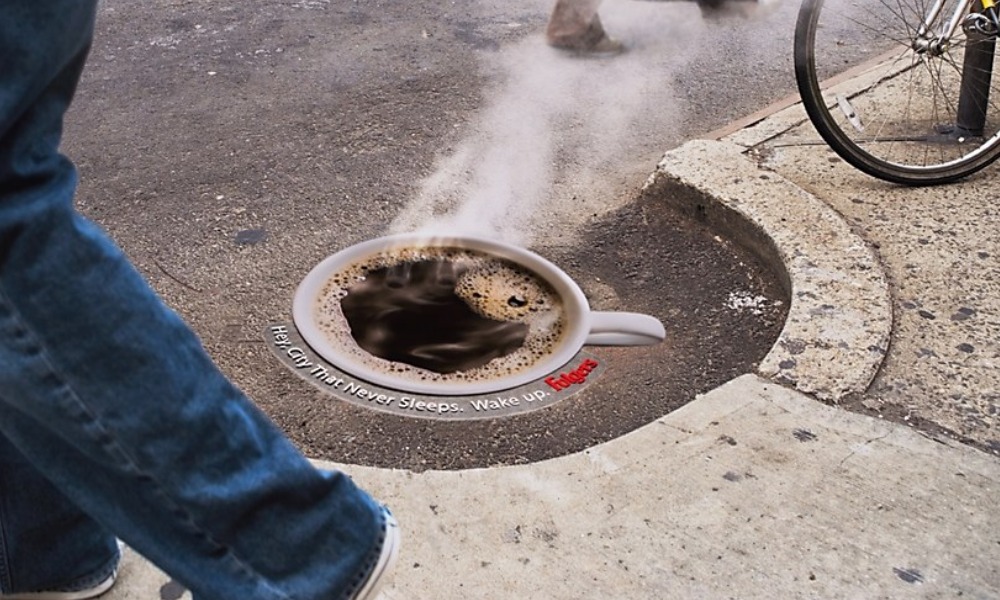
Folgers placed coffee-cup graphics over steaming New York City manholes so the steam appeared to rise from a hot cup of coffee. It was simple, funny, and instantly legible.
Of course, this is New York steam. The visual said “fresh coffee.” The nose may have had notes of subway dragon.
Communication Arts reports that the Folgers manhole image and online discussion spread across hundreds of websites and blogs within two weeks of its appearance.
The campaign noticed something already happening in the city and reframed it as a brand cue.
Look for existing environmental behavior the campaign can reinterpret.
Sensory reality matters. If the smell, sound, temperature, or context fights the message, the joke may be on the brand.
The environment already contains a physical cue that can be reframed into the campaign idea.
Score: 75/100
Risk Level: Low
Metric Confidence: Limited
Swipeable Idea: Make the placement’s shape or motion do the work.
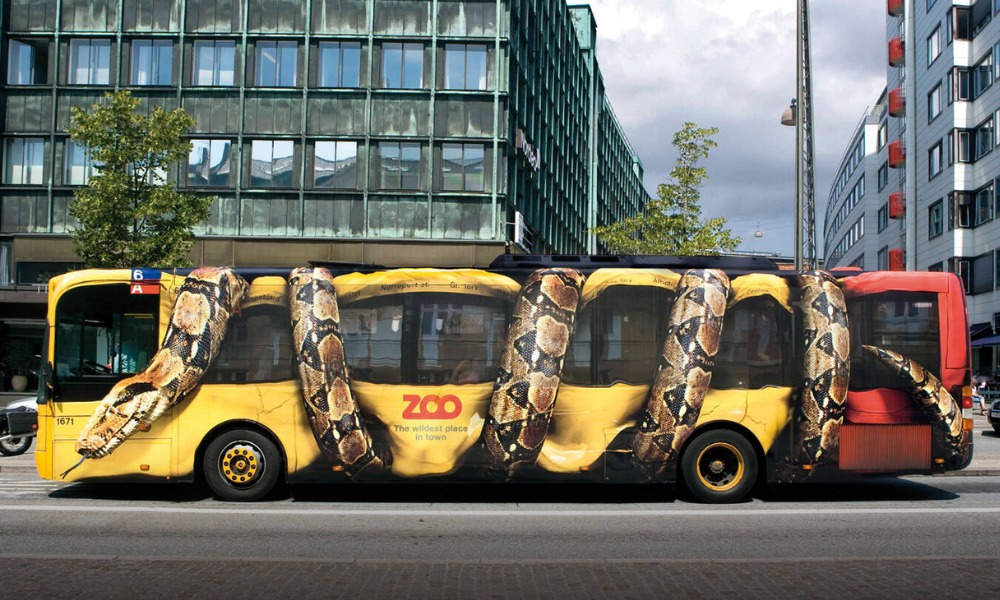
Copenhagen Zoo wrapped a city bus so it looked like a giant constrictor snake was crushing the vehicle. The idea was wonderfully direct: zoo animal meets city transit, and the bus becomes the visual.
No heavy copy. No complicated setup. Just a snake squeezing a bus.
Ads of the World documents the campaign as a 2009 Denmark ambient campaign created by Y&R for Copenhagen Zoo. Hard performance metrics are limited, which keeps this lower in the ranking despite its strong visual impact.
The campaign used the media format as part of the illusion. A flat poster could not have done the same job.
Use the shape, movement, or function of the placement as part of the idea.
A spectacular visual still needs a measurable objective and a clear brand connection. A cool wrap is not automatically a campaign.
The vehicle, object, or placement naturally supports the illusion.
Score: 72/100
Risk Level: Medium
Metric Confidence: Moderate
Swipeable Idea: Make the product joke impossible to miss.
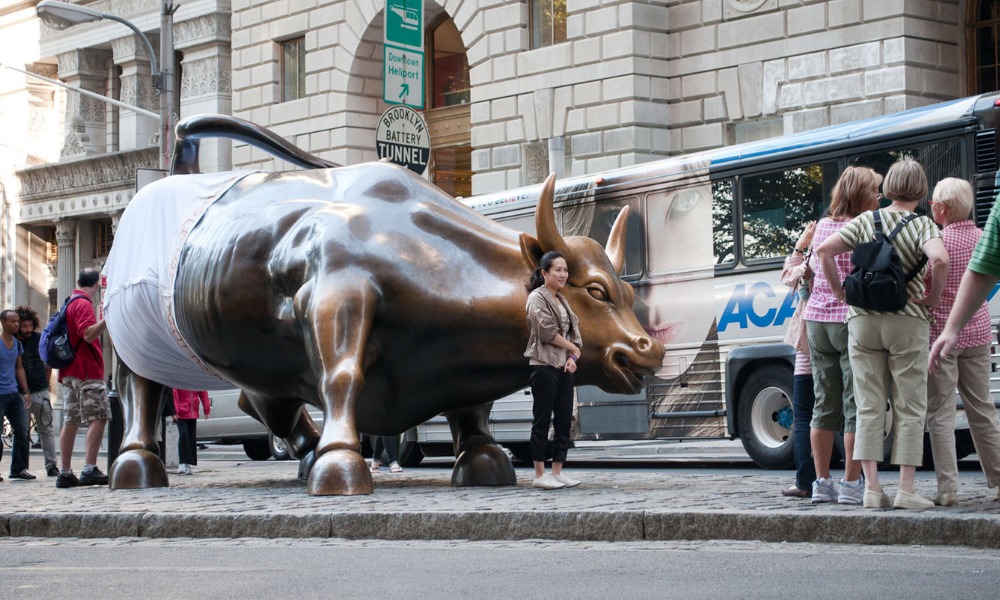
To launch a new underwear line, GoldenToe dressed public statues in New York City — including the Wall Street Charging Bull — in oversized underwear.
It was ridiculous, it was product-relevant, and it was very hard to ignore.
PR Newswire confirms that GoldToeMoretz gave the Wall Street Bull a pair of branded underwear as part of the product launch. Event Marketer reported that the wider activation included underwear-clad brand ambassadors around the city and a launch event at Herald Square Park.
The campaign made the product the joke. The underwear was the gag.
Use absurdity when the joke is immediately tied to the product.
Random spectacle drains the idea. “People will take photos of this” is a starting point, not a strategy.
The product is simple, visual, and easy to exaggerate in a way people instantly understand.
Before you borrow from a guerrilla campaign, ask a harder question than, “Can we do something like this?”
Ask: “What made this work, and does that idea fit our brand, audience, objective, and risk tolerance?”
The best guerrilla campaigns make the environment part of the concept. If the same idea could run anywhere, the placement probably is not doing enough work.
Public-space campaigns do not get much attention time. If the setup needs a paragraph of explanation, it may not survive contact with actual pedestrians.
Awareness, participation, donations, store visits, app downloads, social sharing, and press coverage all require different campaign choices.
A stunt without a measurement plan is just expensive theater. Define the success signal before the stunt goes live.
Surprise, ambiguity, physical interaction, hidden cameras, and public participation all introduce risk. The sharper the stunt, the more carefully the downside needs to be planned.
The goal is to understand the underlying idea well enough to adapt it to a different brand, audience, and moment.