The Better Marketing Blog
Better tips, tools, and tactics for the AI era.
Better tips, tools, and tactics for the AI era.
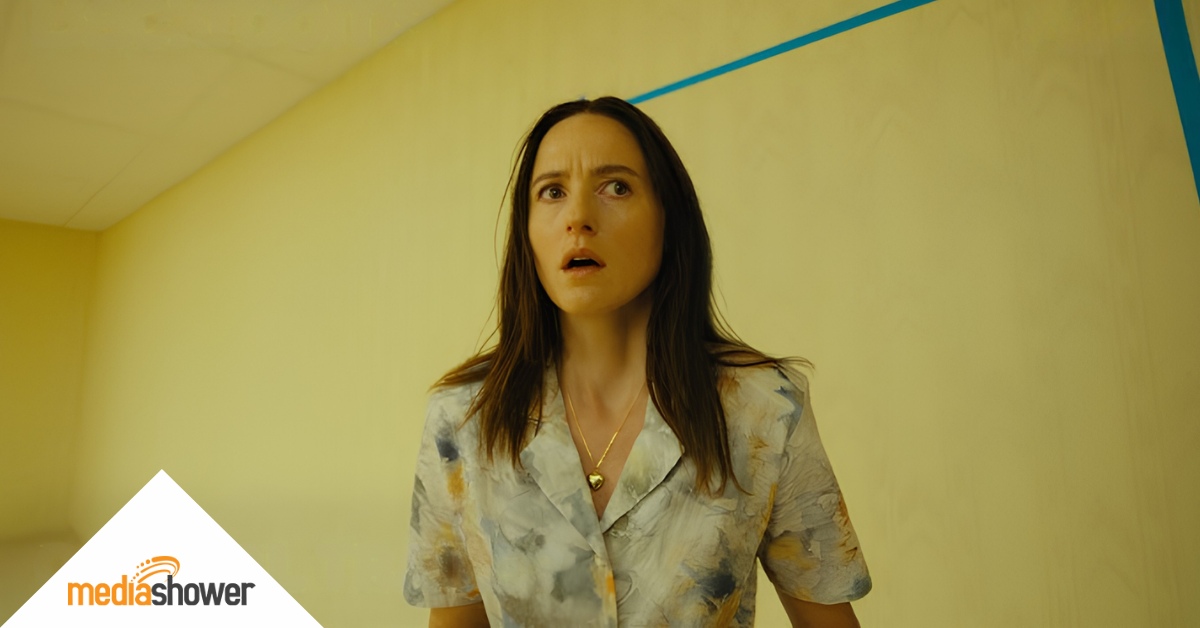
In January 2022, a teenager uploaded a nine-minute horror short to YouTube. It looked like found footage from a place you had visited in a dream, or possibly a poorly managed office park.
That short, The Backrooms (Found Footage), transformed an internet creepypasta into a full mythology. Four years later, Kane Parsons’ strange yellow maze became an A24 feature film starring Chiwetel Ejiofor, Renate Reinsve, and Mark Duplass.
Parsons was just 20 years old when the film debuted, making him the youngest director to helm an A24 feature.
Kane Parsons discusses the unlikely path from creating Backrooms videos on YouTube to becoming the youngest director to helm an A24 feature film.
The Backrooms image had already achieved a rare status online. Like Slender Man before it, the concept escaped its original post and evolved into a collaborative piece of internet folklore.
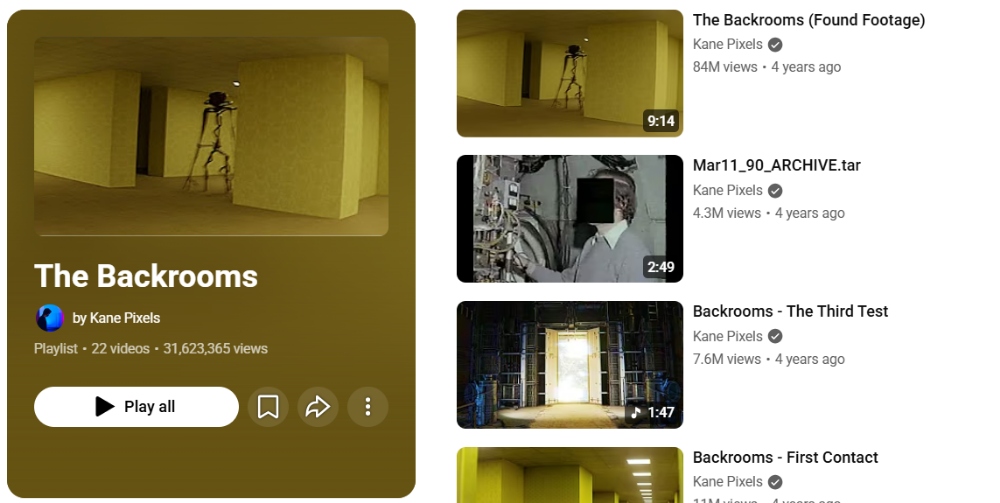
The nine-minute short that transformed a niche internet creepypasta into one of YouTube’s most successful horror franchises.
Before the film had a trailer, it had a community.
Parsons expanded the original folklore through a long-running YouTube series that introduced new characters, organizations, timelines, and mysteries. By the time A24 announced the adaptation, audiences had spent years exploring a mythology that stretched far beyond the original concept.
The videos accumulated nearly 190 million views, but view counts tell only part of the story.
Fans built timelines, created lore explainers, and debated everything from missing-person files to the significance of a particular wall texture. Entire YouTube channels emerged to document the mythology. Reddit communities cataloged evidence. Discord servers became archives of screenshots, theories, and research.
Some fans maintained detailed lore documents that tracked events across multiple episodes.
Following the series felt less like watching a show and more like joining an ongoing investigation. Viewers paused episodes, scrutinized background details, compared notes, and assembled evidence across platforms.
Those habits shaped everything that followed. Long before A24 began its marketing campaign, the audience had already learned to approach Backrooms as a puzzle waiting to be solved.
The campaign centered on preserving mystery rather than explaining the phenomenon.
Instead of launching a traditional horror-marketing push, A24 released material that felt native to the world Parsons had built: degraded video, local-commercial awkwardness, continuity clues, and institutional weirdness.
The centerpiece was Cap’n Clark’s Ottoman Empire, a fake furniture-store commercial featuring Chiwetel Ejiofor’s Clark dressed as a pirate-themed retailer. The ad looked like it had been recorded onto a VHS tape sometime in the late 1990s.
A24 disguised its marketing as a piece of Backrooms lore, inviting fans to do what they had been doing for years: search for clues.
The commercial reportedly aired on Pluto TV and included a phone number. Fans quickly discovered that faxing the number returned an in-universe sales flyer tied to the film’s mythology.
The stunt worked because it introduced friction.
Calling a number takes seconds. Faxing a number requires effort or access to increasingly rare technology. That extra step concentrated attention among the most dedicated fans, who immediately shared their discoveries online.
The returned flyer became content. Screenshots circulated across Reddit. Analysis videos appeared on YouTube. Horror communities began comparing details and searching for connections to earlier episodes.
Every new clue created two audiences. One audience discovered it. The other learned about it through screenshots, videos, posts, and explanations. In that way, investigation became distribution.
The act of solving the mystery helped spread the campaign.
Fan-created analysis became an important part of the Backrooms experience, encouraging viewers to compare evidence and build theories together.
Much of the campaign’s power came from rewarding people who had already invested years in the mythology. Casual viewers saw a strange commercial, while fans saw a furniture store, a number, a date, a document, a location, and possible connections to earlier Kane Pixels episodes.
The campaign trusted viewers to notice details rather than explaining them.
Within fandom communities, recognition becomes a reason to participate publicly. Discovering a reference, spotting a familiar location, or identifying a recurring symbol gives fans something valuable to contribute to the conversation.
The trailer followed the same philosophy. It rewarded longtime fans without excluding newcomers. Rather than outlining the plot, it established the setting and tone while preserving the sense of dread that defined the original series.
Familiar imagery, locations, and visual references gave longtime viewers fresh material to examine while leaving plenty of room for speculation. Shared knowledge became part of the experience.
Once fans began sharing what they found, the campaign entered a new phase. Discoveries that started with a handful of dedicated followers quickly spread through Reddit threads, YouTube breakdowns, and social media discussions. The community wasn’t just participating in the campaign anymore. It was helping distribute it.
Reddit threads documented the fax number and the flyer it produced. Users shared screenshots, highlighted details, and debated potential implications for the film’s story.
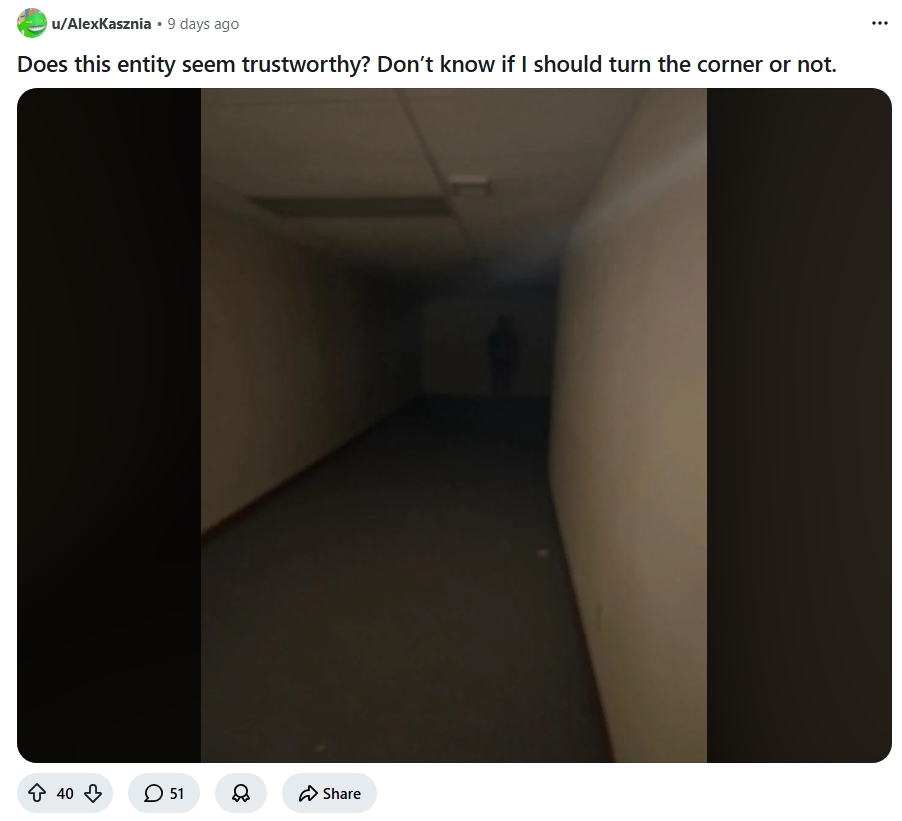
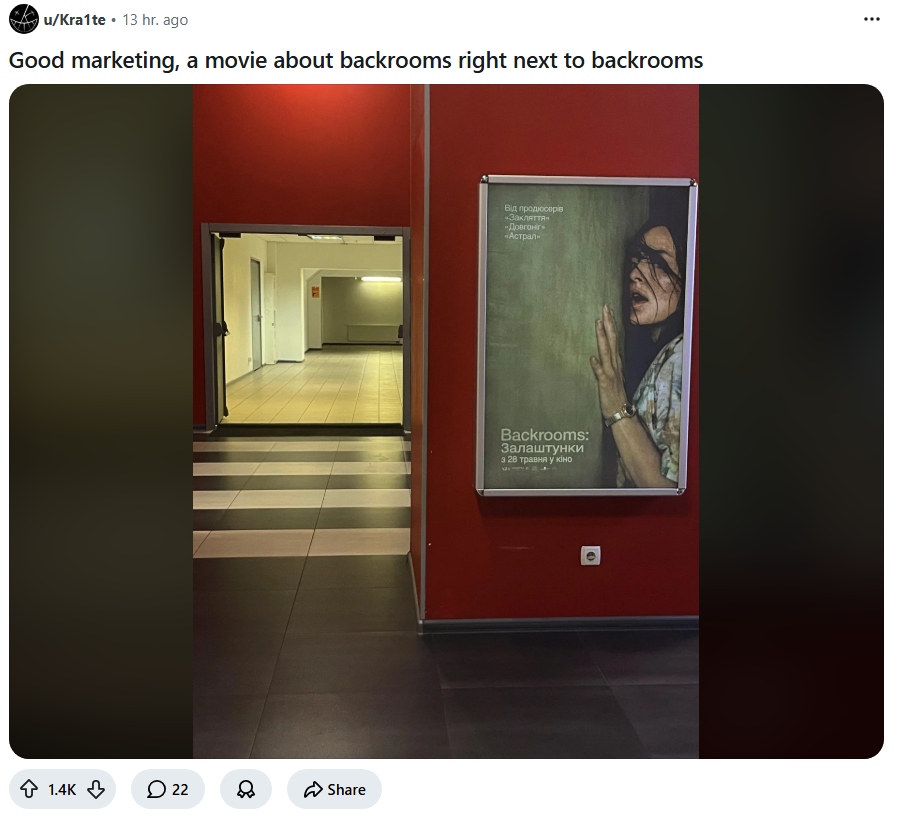
YouTube creators published breakdowns explaining the clues to wider audiences. Social-media accounts reposted discoveries and added their own interpretations. Information moved through the community in stages, with each person contributing context, speculation, or supporting evidence.
The process closely resembled the way the Backrooms mythology had expanded over the previous four years. A24 released material into the world, and fans expanded its reach by investigating, interpreting, and sharing it.
Community explanations helped distribute the campaign far beyond its original release channels. The most important marketing activity happened after the assets were released.
Years of community-building eventually translated into commercial success. Backrooms reportedly earned $38 million on opening day and was projected to reach roughly $90 million during its opening weekend. Even more impressive when you factor in a production budget estimated at around $10 million.
Industry tracking earlier in the release cycle had projected a significantly smaller opening. As awareness grew and fan activity intensified, expectations climbed dramatically.
The original YouTube ecosystem remained a major asset throughout the campaign. The first Found Footage upload alone attracted tens of millions of views, while the broader series accumulated nearly 190 million views across episodes.
The campaign’s visibility extended well beyond paid media. Horror websites covered the clues. Social platforms amplified discoveries. Fans generated their own analysis content, creating additional exposure without direct involvement from the studio.
The audience that had spent years building the mythology became one of the film’s most effective marketing channels.
Kane Parsons explains how he turned his Blender hobby into a #1 film
Media Shower’s AI marketing platform helps brands create content that can fuel your next viral campaign. Click here for a free trial.