The Better Marketing Blog
Better tips, tools, and tactics for the AI era.
Better tips, tools, and tactics for the AI era.
Quick Summary
Don’t chafe at the idea for this campaign.
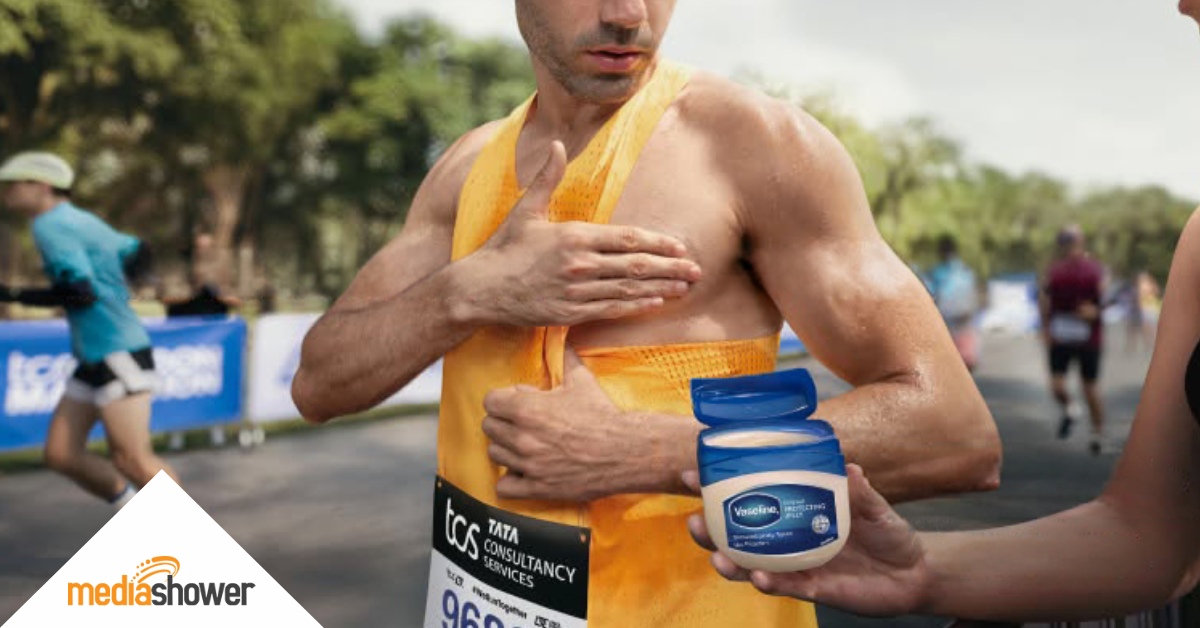
92% of marathon runners experience nipple pain, from the constant friction of fabric on sensitive skin. Most use Vaseline Jelly to reduce the discomfort.
So it was a stroke of genius when Unilever – Vaseline’s parent company – sponsored the 2026 TCS London Marathon. Alongside the course’s water and fuel stops, Vaseline set up “Nip Stops” where runners could get help preventing this painful form of chafing.
The stations belonged to the marathon’s newly designated Official Nipple Protector, a sponsorship title built for attention. Most sponsorships begin with a brand searching for something to sponsor. This campaign grew from a new use for a very old product.
For more than 150 years, consumers have treated Vaseline as a product with a thousand uses. They have used it to moisturize lips, add shine to beauty looks, condition leather, and solve countless small problems that never appeared on the label.
Social media gave those unofficial uses a much larger stage. A hack once passed between family members, friends, or fellow runners could suddenly reach millions of people and inspire hundreds of variations.
Vaseline separated the genuinely useful ideas from fleeting internet lore. In 2025, the brand launched the Vaseline Verified campaign, which put popular beauty, lifestyle, and sports hacks in front of Unilever scientists.
Hacks that worked earned an official Vaseline Verified seal and promotion from the brand.
The results suggest customers were onto something. Unilever credits the wider platform with double-digit brand growth and record engagement, views, and impressions. Vaseline also gained a repeatable system for turning the experiments already happening in bathrooms, gym bags, and social feeds into products, partnerships, and campaigns.
Distance runners expect sore muscles, tired legs, and the occasional lost toenail. Few training plans spend much time preparing them for the moment a sweaty shirt begins rubbing their nipples raw.
Many runners have learned to protect themselves with a quick swipe of petroleum jelly before the starting gun. Vaseline saw how common that habit had become and claimed a place in running culture that the product had already earned.
The runners’ solution became the next phase of Vaseline Verified. After confirming that Vaseline Jelly helped reduce friction, the brand turned the proven hack into a sponsorship.
As the Official Nipple Protector of the 2026 TCS London Marathon, Vaseline brought its solution to approximately 50,000 runners. “Nip Stops” along the course offered Vaseline Jelly at the precise moment a little friction protection could save several painful miles.
The campaign traveled well beyond London. Creator partnerships, Reddit conversations, social storytelling, and outdoor advertising spread the idea online, while races, expos, and running clubs carried it into communities in Barcelona, Caracas, Singapore, Sydney, Rotterdam, and Hong Kong.
The Nipple Sponsorship looked like a bold new campaign, but Vaseline had a head start: runners had already identified the problem, chosen the product, and built it into their race-day routines. Vaseline’s smartest move was recognizing the marketing potential in a behavior happening without the brand’s encouragement.
Here’s how the company turned that customer-created habit into something official.
Traditional campaigns ask customers to learn a new message or adopt a new habit. Vaseline found runners applying petroleum jelly before races and realized they had already done the difficult work of connecting the product to the problem.
Event sponsorships end with a logo on a banner and a mention in the program. Vaseline earned a more useful place on the course by helping runners protect their skin while they were still running.
The “Nip Stops” turned brand visibility into a practical race-day service. A runner feeling the first sting of a chafed nipple could reach for the sponsor’s product and keep moving. Vaseline played a role in the marathon experience that signage alone can’t provide.
“Official Nipple Protector” sounds funny because most sponsorship titles hide behind safer, more polished language. Vaseline said exactly what the product was there to protect and created a title few runners or marketers would forget.
The joke also delivered the product benefit in a few words. Runners already understood the use, so the playful name made a familiar solution easier to discuss and share.
Social media can make a few enthusiastic posts look like a cultural movement. Vaseline Verified gave the brand a way to determine which customer hacks deserved a larger investment.
The running habit came with unusually strong evidence. Vaseline’s research found a widespread problem, a well-established workaround, and a product that runners already trusted to reduce friction.
According to Unilever, the wider Vaseline Verified platform produced results across brand growth, product sales, industry recognition, and live activation. The reported figures apply to different initiatives within that platform:
Together, these company-reported results show how Vaseline extended customer-discovered product uses into campaigns, products, and partnerships.
Every customer hack looks promising when it racks up views, but that’s not always an accurate measure of lasting customer interest. This Media Shower scoring rubric helps marketers distinguish a durable customer insight from a passing online obsession.
Rate the behavior from one to five across each criterion before investing in a campaign, product, or partnership.
As a working guideline, scores from 40 to 50 indicate a strong candidate for formalization. Ideas scoring from 30 to 39 may justify a limited pilot, while those scoring from 20 to 29 need more observation and evidence.
A score below 20 suggests that the behavior does not yet support further investment.
Source: Media Shower original framework, informed by Unilever’s runner research and campaign report
The Vaseline example performs strongly on the criteria supported by public evidence. The behavior was widespread, the product addressed the problem, runners formed an identifiable community, and “Official Nipple Protector” gave the practice a memorable name.
Other criteria, including persistence and attribution potential, would require internal data to assess responsibly.
A promising customer hack still needs evidence, a suitable format, and a responsible activation plan. Use this framework to move from an observed behavior to a campaign, product, partnership, or other formal brand offer. Record the decision and evidence produced at each phase before moving forward.
A promising customer hack still needs evidence, a suitable format, and a responsible activation plan. Use this framework to move from an observed behavior to a campaign, product, partnership, or other formal brand offer. Record the decision and evidence produced at each phase before moving forward.
Vaseline followed this general path by identifying runners’ established use of Vaseline Jelly, confirming the prevalence of chafing and product use, and selecting a sponsorship tied to the community where the behavior occurred. The Nip Stops then made the product useful during the race, while local running activations adapted the idea for communities in different cities.
Media Shower’s AI marketing platform helps you spot the next great marketing idea … and run with it. Click here for a free trial.