The Better Marketing Blog
Better tips, tools, and tactics for the AI era.
Better tips, tools, and tactics for the AI era.
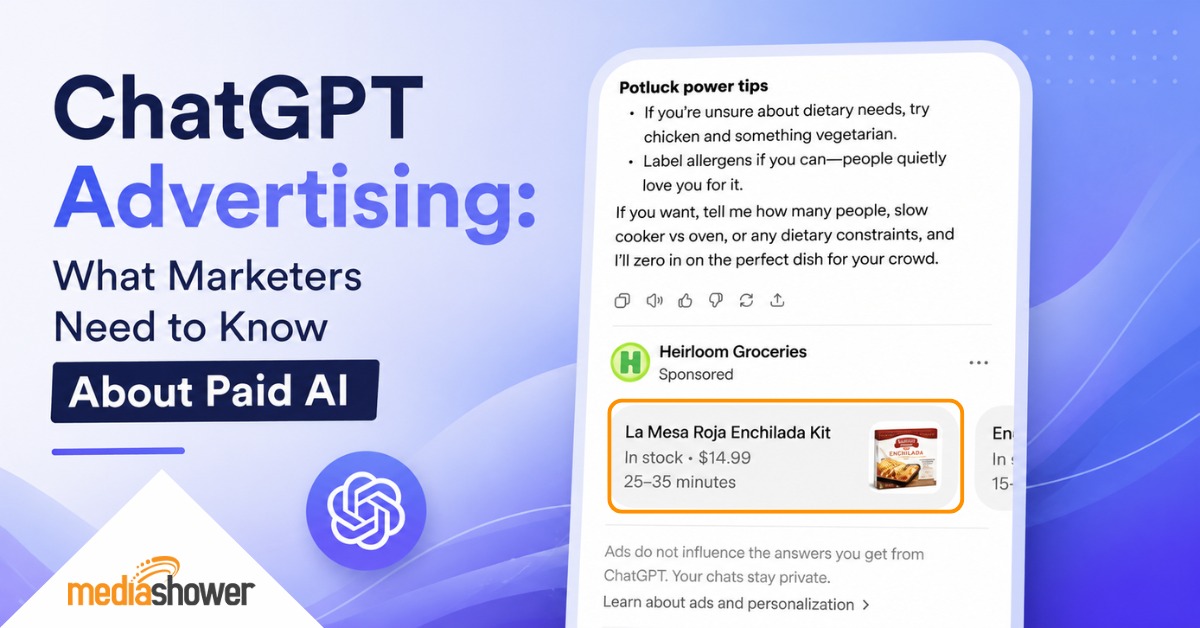
OpenAI announced its advertising plans in January 2026, and launched the first live ad test in February.
The financial logic was straightforward: the company is projected to lose roughly $14 billion in 2026, with infrastructure costs burning through an estimated $115 billion by 2029.
With approximately 90% of ChatGPT’s 800 million weekly active users on the free tier, advertising was the obvious business choice.
CEO Sam Altman had previously called advertising a “last resort.” He reversed course, but published a set of guiding principles for OpenAI: ads exist to fund broader AI access, not just profit, and they will never influence ChatGPT’s organic answers.
User chat data will not be sold to advertisers. Users can opt out of personalization or dismiss ads. And OpenAI will not optimize for time spent on platform, a direct departure from the engagement-maximizing models at Meta and TikTok.
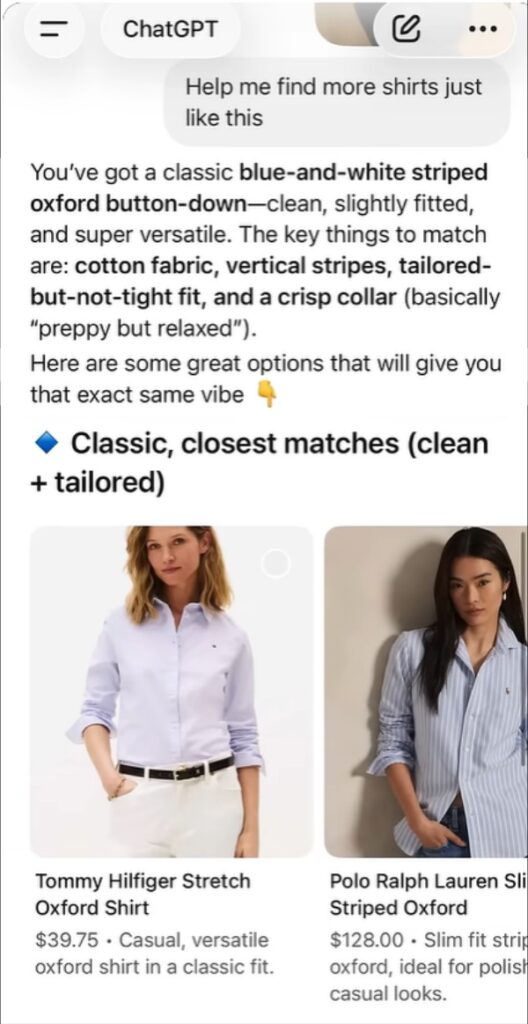
The current format is deliberately low-key. Ads appear below the AI-generated answer as a clearly labeled “Sponsored” unit, visually separated from the organic response and never woven into it. The unit includes a brand favicon and short ad copy.
Who sees them depends on which plan a user is on:
Currently, roughly 85% of free and Go users in the US are eligible to see ads, though fewer than 20% are shown an ad on any given day.
OpenAI excludes ads from conversations involving health, mental health, and politics, and blocks advertisers in dating, financial services, and political verticals from the platform entirely (for now).
Eligible categories include consumer products, local services, travel, entertainment, digital products, and education, with more verticals expected to open as OpenAI’s compliance systems develop.
ChatGPT advertising runs on conversational context, not keywords.
OpenAI calls the targeting inputs “context hints”: signals drawn from the current conversation topic, the user’s past chat history, and their previous ad interactions. (In other words, it’s going to remember everything about you.)
A user asking about project management software for a remote team might see a sponsored placement for a SaaS platform that fits the conversation, not a tracked demographic profile.
For paid search teams, this requires a real shift in how campaigns are built. Keyword match types, negative lists, and query sculpting don’t apply here. Instead, you describe the conversational contexts where your product is relevant and let the platform match from there. Context hints guide placement but don’t guarantee delivery in specific conversations.
Early data suggests this kind of intent signal may be commercially meaningful in ways traditional search keywords aren’t.
A Google query squeezes the user’s intent into a few words (like “best CRM small business”), while a ChatGPT prompt can carry company size, existing tools, decision timeline, and specific constraints, all in a single exchange.
That’s where ChatGPT ads may end up blowing Google Ads out of the water.
As of May 2026, the self-serve Ads Manager beta is open to any US-based business. Here’s how it works:
If you work through a media company (Dentsu, Omnicom, Publicis, WPP) or ad-tech platforms including Adobe, Criteo, Kargo, or StackAdapt, you can also buy ChatGPT inventory through those existing partners … if they know what they’re doing.
Measurement is the biggest problem with ChatGPT advertising right now.
The Ads Manager beta reports impressions, clicks, spend, CTR, average CPC, and conversions through a live conversion pixel.
Granular user-level data, CPA bidding, and third-party attribution are all still in development.
One early industry report noted a 0.91% CTR with no full conversion attribution yet available.
In the meantime, there are practical workarounds:
Every major platform had a measurement gap in its early phase. The brands who have their reporting infrastructure in place (pixels, UTM hygiene, attribution frameworks) will be better positioned when paid AI reporting catches up.
Since launch, CPMs have already dropped from $60 to $25–$60 depending on category, and competitive dynamics will continue to shift as more advertisers enter. Year-over-year growth in AI ad auction competition is already running at 35%.
The brands that build audience learning, creative baselines, and targeting data before the competition will have a competitive advantage as paid AI scales. Getting there first is less about budget than about willingness to act when the data is still thin.
One more factor worth noting: paid placement and organic AI visibility reinforce each other. The kind of organic AI improvement that we do here at Media Shower – structured guides, comparison pages, and great case studies – also strengthen your paid AI.
If you’re still in the preparation phase, our earlier overview covers the groundwork on ChatGPT ads, before you spend your first dollar.
The Media Shower AI marketing platform is a perfect companion to your ChatGPT ads account, helping you develop better creative and target better conversational intent. Click here for a free trial.