The Better Marketing Blog
Better tips, tools, and tactics for the AI era.
Better tips, tools, and tactics for the AI era.
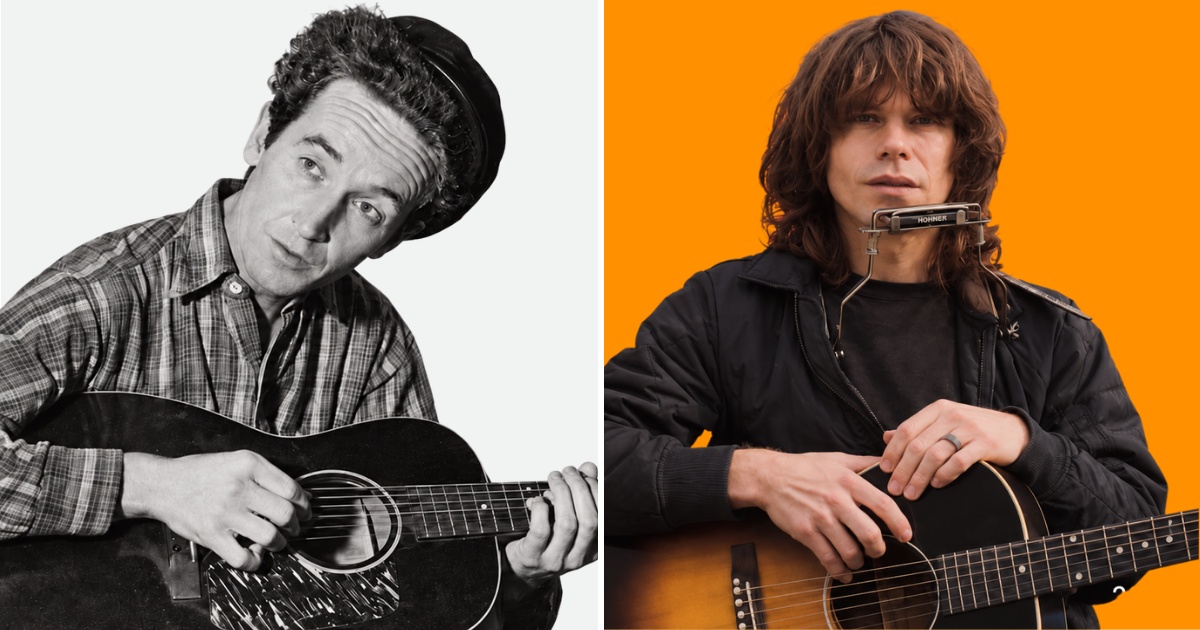
Some of America’s most familiar patriotic songs began as arguments with America.
Woody Guthrie wrote “This Land Is Your Land” in 1940 as a response to “God Bless America.” Its familiar melody and inclusive refrain helped turn it into an American standard, even as verses about private property and hunger often disappeared from public performances.
The protest entered the culture so successfully that many listeners stopped hearing the protest.
That tension reveals the shared craft of protest music and marketing. The best protest songs compress complicated issues into a story, image, or hook people can remember and carry.
Great marketing works the same way.
The ten songs below (plus honorable mentions) span protest, satire, counter-protest, and cultural criticism across the political spectrum, tracing how that craft evolved over 85 years from folk performance and collective singing to hip-hop, networked protest, and social video.
Marketers can learn something from every one of them.
Guthrie adopts the familiar story of America as a shared land, then asks how widely that promise applies. The commonly omitted verses introduce private property and Depression-era hunger, placing a national contradiction inside a landscape listeners already recognized.
The song traveled through records, songbooks, schools, political events, and public ceremonies. Its familiarity created extraordinary reach, even as that reach softened its original criticism.
Enter through the story your audience already knows. Start with the familiar promise, then reveal where experience falls short. The existing story does the work of orientation. The new interpretation makes it memorable.
Bob Dylan arrived in New York in 1961 deeply influenced by Woody Guthrie. On “Blowin’ in the Wind,” recorded in 1962 and released the following year, he turned that folk inheritance into a series of simple questions about freedom, war, dignity, and indifference.
Because the song was not tied to one event, different audiences could hear their own struggle in it.
Peter, Paul and Mary’s 1963 recording carried the song into the pop mainstream, while Dylan became closely associated with the civil-rights era. Its influence spread to other songwriters as well; Sam Cooke cited it as an inspiration for “A Change Is Gonna Come.”
Dylan helped make protest songwriting more poetic and portable, giving audiences questions that could travel beyond the circumstances that produced them.
Turn the argument into a question people cannot easily shake. Dylan does not explain every injustice behind the song. He gives listeners a series of questions large enough to contain those injustices and simple enough to remember.
That is one of the most powerful forms of compression: instead of supplying the whole argument, give people the question that keeps the argument alive.
With roots in African American hymns, “We Shall Overcome” appeared on a Charleston tobacco workers’ picket line in 1945 and later became an anthem of the civil rights movement. Its language could be adapted to new places, groups, and immediate goals. It was adapted by many, including Pete Seeger in 1948 and Joan Baez in 1963, when she performed it at the March on Washington.
The song turned listeners into performers. A crowd needed little preparation and no professional singer to carry it forward. Singing the hook became a public demonstration of unity.
Reduce the message to language people can use themselves. A campaign line, hashtag, template, or ritual becomes more powerful when people can adopt it without carrying the entire strategy deck along with it.
Country Joe and the Fish packaged an antiwar argument as a jaunty mock celebration. Instead of explaining every political and economic force behind the Vietnam War, the song follows the system’s incentives until their logic reaches a grotesque conclusion. Its Woodstock performance brought that satire to a vast countercultural audience.
Humor turned an enormous argument into an absurd proposition people could instantly understand. There’s incredible power behind a message that can make people laugh and cry at the same time.
Use a comic premise to make the contradiction visible. A good joke can expose an irrational system faster than a page of explanation. And the juxtaposition of conflicting emotions sticks.
Stevie Wonder released “You Haven’t Done Nothin’” in 1974, as the Watergate scandal closed in on President Richard Nixon. Wonder was tired of politicians making promises without delivering results, and the song addresses that frustration directly. Its sharp accusation rides a forceful funk arrangement, and the Jackson 5 join the chorus.
The song reached No. 1 on both Billboard’s soul and pop charts. Wonder brought a pointed political criticism into a hit people could dance and sing along to. The title made his argument easy to grasp and repeat, while the music ensured people kept listening.
Hold your claims up to the evidence. Marketers making a claim should be ready to show what they’ve delivered.
Dead Kennedys confront privileged complacency by transporting their target audience into an extreme imagined “holiday.” The abrasive sound, grotesque destination, and confrontational tone work together as a single provocation.
“Holiday in Cambodia” became a defining work of American hardcore punk because listeners could immediately picture its central contrast. The song’s hostility also strengthened its subcultural identity. It knew exactly whom it wanted to unsettle.
Choose the image that makes your position unmistakable. A concrete comparison or visual metaphor can make an argument legible before the audience has finished hearing it.
Created for the Spike Lee film Do the Right Thing, Public Enemy’s 1989 track layers historical references, samples, cultural criticism, and political demands around an unmistakable command. The Library of Congress added it to the National Recording Registry in 2004.
The song can reward repeated listening without losing its direction. Samples, historical references, film, and cultural criticism keep adding layers, while the title keeps telling listeners what those layers add up to.
Give complexity a governing idea. A campaign may include dozens of assets, channels, proof points, and audience segments. Each should strengthen the same core message. Compression gives complexity structure.
Released in 2004, Green Day’s song attacks the media environment surrounding post-9/11 fear, war, and political division. The wider album explores media coverage, government action, apathy, and moral confusion through a rock-opera narrative.
Its title gave a young mass audience a provocative label for a much larger unease about politics, media, fear, and national identity. The phrase made that environment easier to recognize and argue about.
Name the force your audience already feels. Once people can name the problem, they can discuss it.
Janelle Monáe and members of her Wondaland collective released “Hell You Talmbout” in August 2015 amid Black Lives Matter protests over police violence. Built around a drum line and the repeated names of Black Americans killed by police or in racially motivated attacks, the song turns remembrance into a chant: say the names aloud.
The song moved quickly from recording to protest tool. Monáe and Jidenna performed it around Black Lives Matter demonstrations, and Wondaland later released the instrumental so listeners could create their own versions.
That adaptability made the song especially useful in marches and collective actions, where people could add names and carry the structure forward themselves.
The audience will reveal what sticks. Pay attention to what people quote, repeat, repost, or carry into another context. Their choices show which language has escaped the campaign and entered customers’ vocabulary.
Jesse Welles released “United Health” on December 11, 2024, delivering a healthcare-industry critique through a short folk performance suited to YouTube, TikTok, and Instagram. His topical songs gained attention through direct, lightly produced social videos self-recorded in a field beneath a power line.
Welles’ stripped-down performance let “United Health” enter a fast-moving public conversation without waiting for a polished production. It’s one song in a prolific run of modern folk tunes that reach millions online and have drawn comparisons to Bob Dylan.
Build a format people recognize. A consistent voice and presentation make each new piece faster to produce and easier for an audience to recognize, leaving more room to respond to the moment with something specific to say.
Jesse Welles & Friends, including The Guthrie Family Singers, perform “This Land Is Your Land”
Guthrie and Welles stand more than eight decades apart, each armed with a voice, a guitar, and an argument too urgent to leave alone.
Guthrie’s song traveled through performances, records, songbooks, schools, and public ceremonies. Welles can publish while the news cycle is still moving. Across 85 years, each new medium changed how quickly a song could spread and who could hear it.
What endured was the craft underneath: taking a sprawling argument and reducing it to something people can recognize, remember, and repeat.
As marketers, we need to find the story, image, joke, question, or hook that contains the whole argument in a few words—and gives people a reason to carry it forward.
The best messages don’t just land. They travel.
Media Shower’s AI marketing platform helps brands simplify their message. Click here for a free trial.