The Better Marketing Blog
Better tips, tools, and tactics for the AI era.
Better tips, tools, and tactics for the AI era.
Nestlé brand KitKat just won the PR Grand Prix at the 2026 Cannes Lions International Festival of Creativity for a KitKat campaign built around something most brands would rather keep quiet: a stolen shipment.
Cannes Lions is advertising’s most prestigious global award show, drawing entries from agencies and brands around the world every year. A Grand Prix marks the top honor in its category, given to the single campaign judges consider the sharpest expression of an idea that year.
When thieves made off with a truckful of KitKat bars, the brand turned the heist into a public mystery with a simple job attached: check your wrapper. What happened next says as much about the industry’s judgment as it does about KitKat’s instincts.
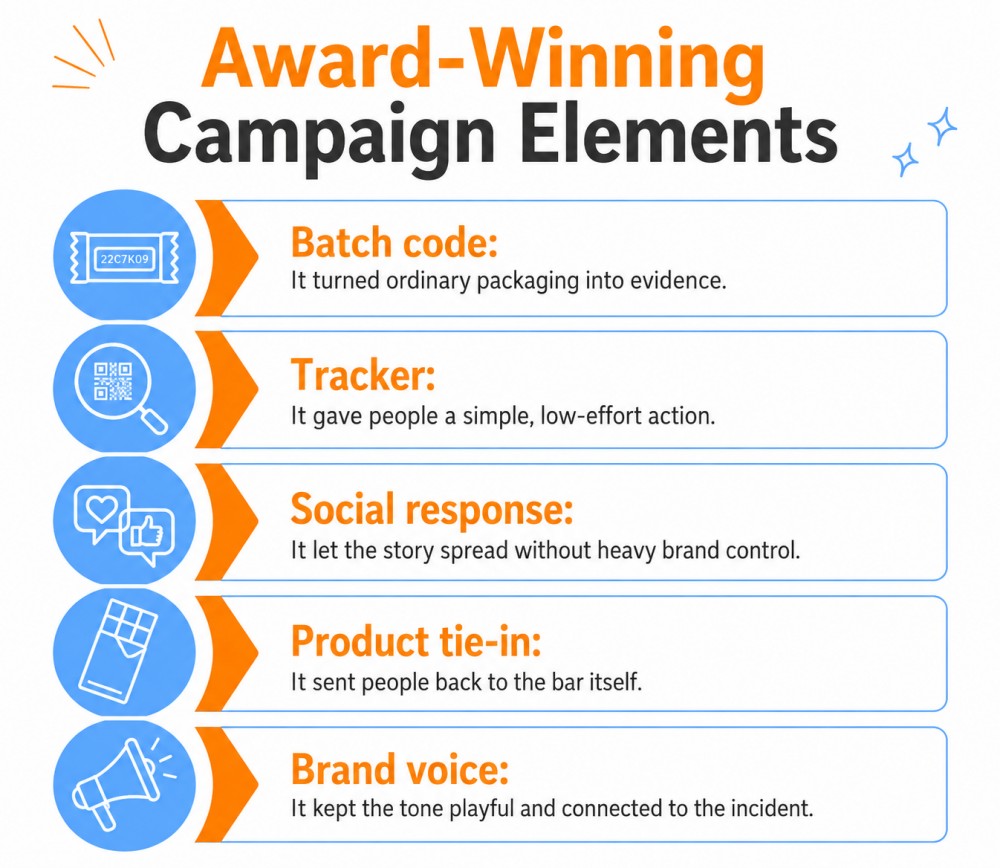
A product people usually eat without a second thought became part of a mystery they could help solve. KitKat made the wrapper a clue and the batch code a reason to participate.
KitKat’s sharper move was to give the public a role that fit both the product and the moment. The language already sounded like the brand.
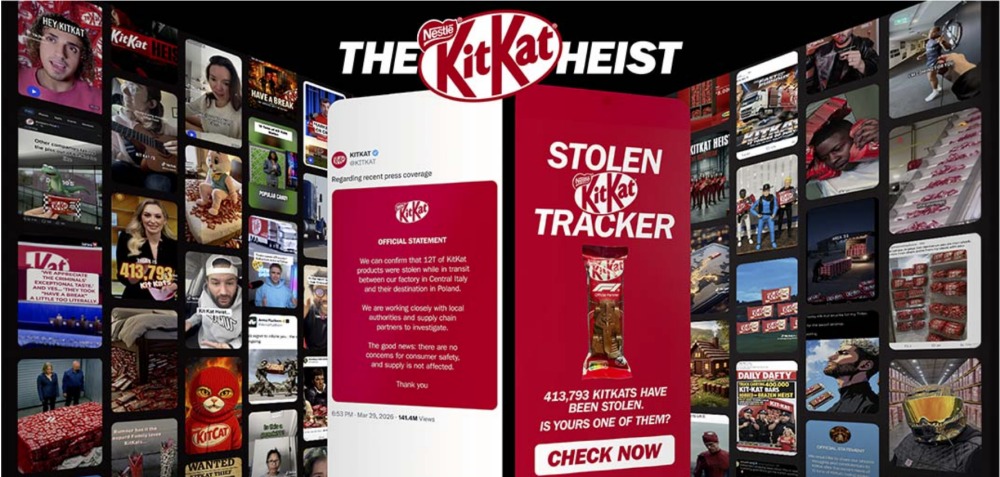
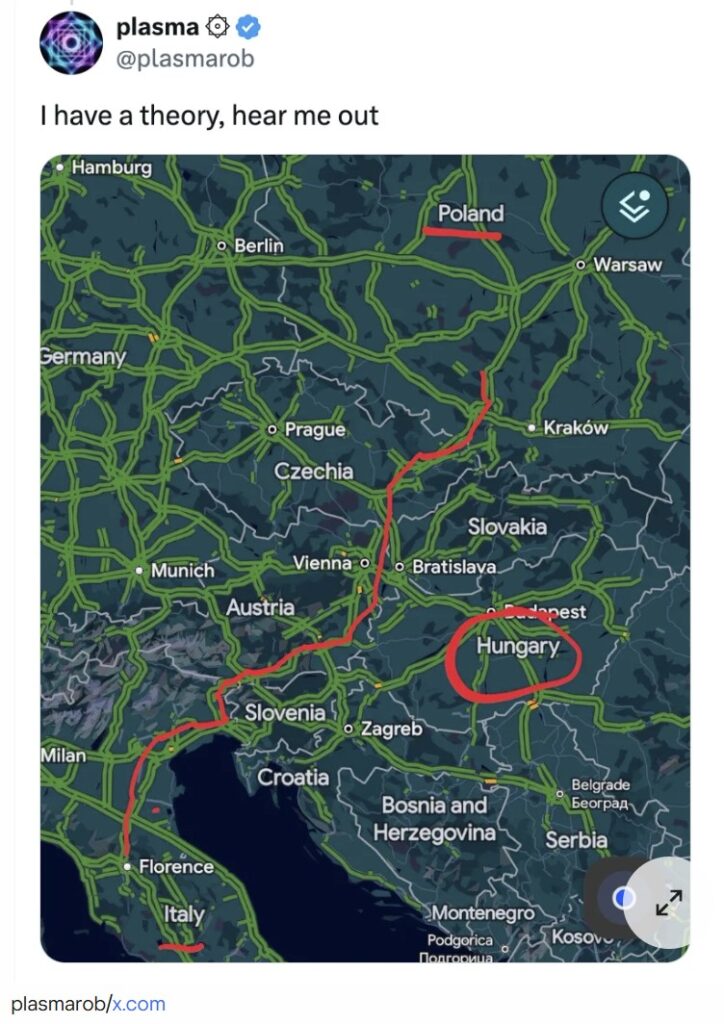
The campaign, created by VML, began with a real operational problem. Shortly before Easter, about 12 tons of KitKat products were stolen while the shipment traveled from Italy to Poland. The missing haul totaled 413,793 bars, including Formula 1-themed KitKats, an oddly specific detail that made the story easier to remember.
Nestlé confirmed the theft on March 28, 2026, stressing that the announcement was no April Fool’s joke.
Police, insurers, distributors, and retailers all had a role to play once the theft became a logistics problem. KitKat managed that side quietly, the way any company would.
But the public-facing story had a different shape entirely. A truckload of missing chocolate sounds like a caper before a brand says a word. KitKat spotted the opening:
What if the missing bars were already out there?
KitKat made the product itself part of the story. The theft created the premise, and the tracker gave people a way in.
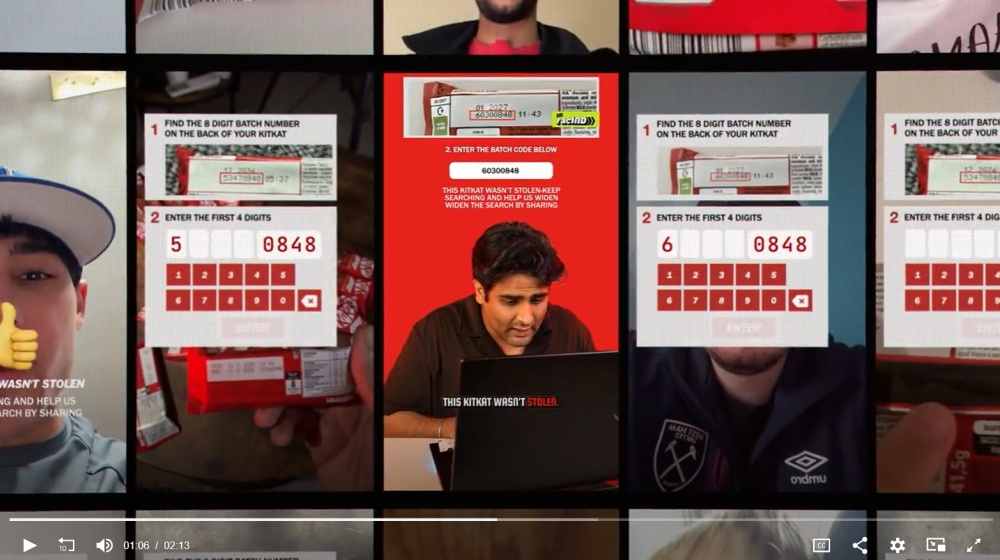
The Stolen KitKat Tracker invited consumers to enter the batch code on their KitKat wrapper to see whether their bar was connected to the stolen shipment. A match triggered instructions for alerting KitKat, who then handled the evidence with law enforcement.
The mechanic itself was simple. What changed was the audience’s relationship to the campaign. A small piece of supply-chain information became the joke, the invitation, and the proof all at once.
A stolen truckload of chocolate was always going to get noticed. KitKat’s smarter move was giving that attention somewhere to go.
A weaker version of this campaign would have stopped at the funny headline. That might have carried the story for a day; people do love a good heist story.
But awareness fades fast when the audience has nothing to do. The Tracker gave the story a second life. Now there was a reason to pick up a bar, find the code, enter it, and share the result. The story moved from “did you hear what happened to KitKat?” to “Check your wrapper!”
Attention only asks the audience to look, while participation hands them a role. KitKat’s role for the audience was clear and playful: help us solve the mystery.
KitKat already had a natural way to talk about this. Decades of “Have a break” positioning gave the brand ready-made language for an unusual moment.
“Have a break” gave the brand a built-in bridge. A theft involving KitKats could be framed as thieves taking the slogan a little too literally. That framing was easy to understand because it was specific to KitKat.
The tone stayed close to the brand’s existing idea rather than reaching for something new. KitKat sounded like itself, reacting to a genuinely strange situation the world had handed it.
Humor in a public brand moment carries real risk. Sound too cautious, and a brand misses the opening entirely. Push the joke too far, and it looks careless. KitKat found the narrow lane between the two by keeping the joke anchored to its own language and the actual facts of the theft.
Fast response only helps when the brand already knows what kind of joke it’s allowed to make. That discipline, more than the speed itself, kept this from leading to the kind of screenshot brands regret.
The interactive layer asked very little of the audience. One ordinary product detail became a small, satisfying action.
Interactive marketing often gets buried under technology before the underlying idea can carry it. KitKat needed exactly one action that made sense. A batch code, ordinary on any other day, became a clue in this one.
For marketers, the useful question is where participation is already hiding, in the product, the data, the packaging, or the buying process. In KitKat’s case, it had been sitting on the wrapper the whole time.
The campaign spread because it was easy to understand and easy to repeat. KitKat handed people a clean premise they could pass along without translation.
The tracker gave consumers something to do. It also gave media outlets, creators, and other brands an easy way to explain the campaign in one line. “Check whether your KitKat is stolen” already has the shape of a headline, a social post, and a group chat message.
That clarity is easy to undervalue. A campaign can have a sharp internal strategy and still fail if the audience has to work to understand the idea. KitKat’s idea needed no translation.
The mechanic also gave people a safe way to play along. Checking a code required no personal disclosure and no public stance, which made participation low-risk for the audience and easy to share.
As you might expect, the internet had fun with this one.
“Nearly 70 years of ‘Have a Break. Have a KitKat’ gave people a simple idea to make their own – and our teams moved boldly and fast to turn that moment into global conversation.” – David Rennie, Executive Vice President and Head of Nestlé’s Strategic Business Units and Marketing and Sales
The best interactive campaigns start with a clear audience role.
Media Shower helps brands build AI-powered marketing tools, interactive apps, and content systems that turn audience behavior into smarter campaigns. Every app and AI tool we build includes feedback loops, so brands learn from real engagement instead of guessing at what worked.
When you turn participation into strategy, every message, tool, campaign, or piece of content gets smarter.
Media Shower’s AI marketing platform helps brands create award-worthy campaigns that steal the show. Click here for a free trial.