The Better Marketing Blog
Better tips, tools, and tactics for the AI era.
Better tips, tools, and tactics for the AI era.
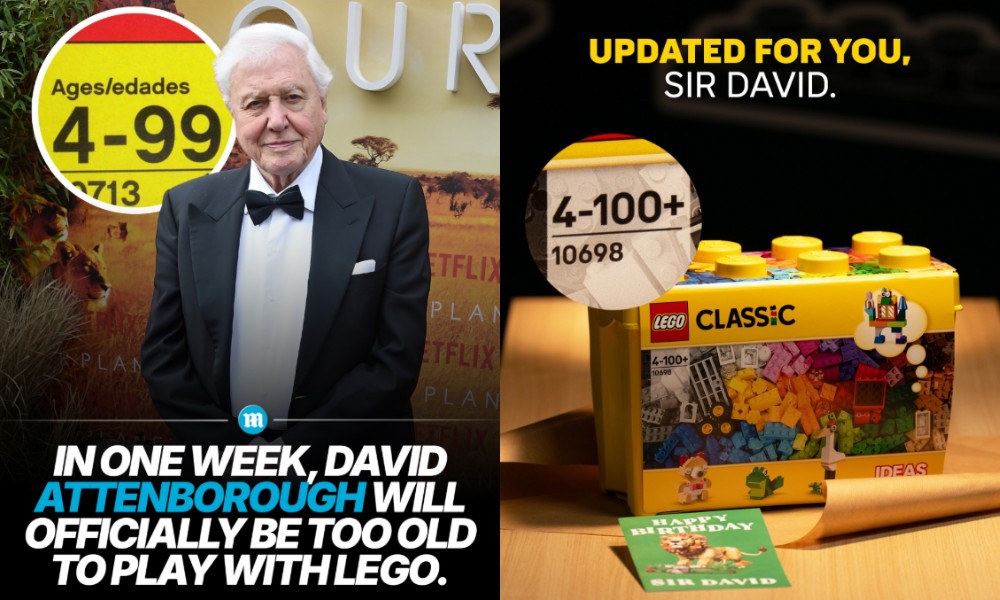
Lego altered one small detail on its packaging this week and unexpectedly created one of the internet’s warmest moments.
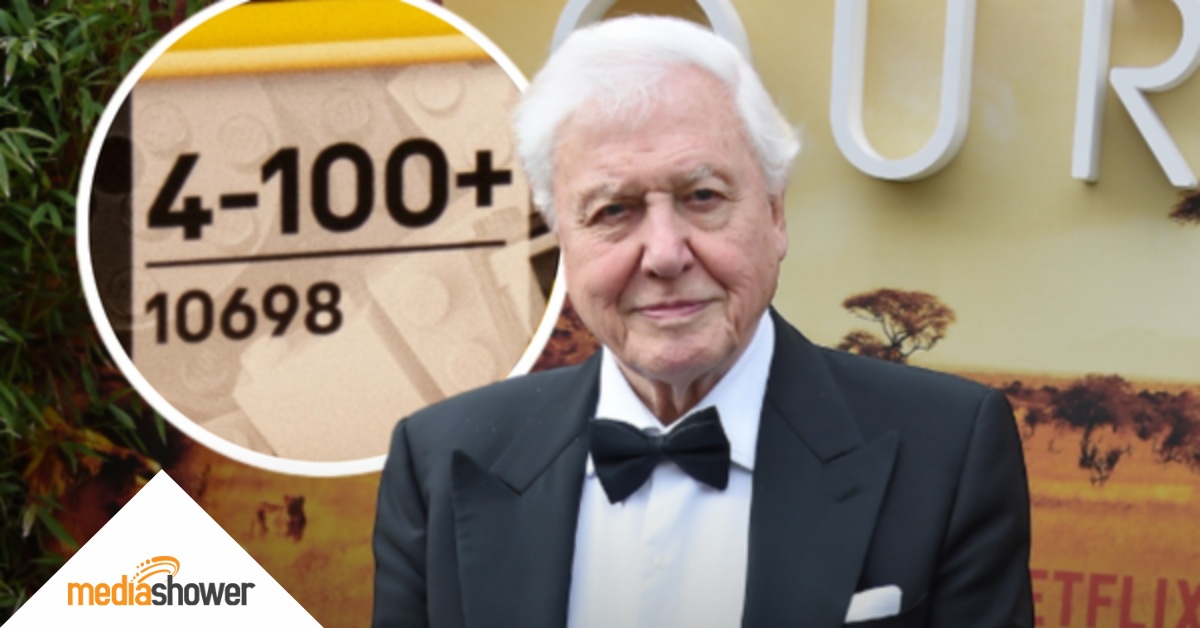
To celebrate Sir David Attenborough turning 100 on May 8, 2026, the company updated its familiar “Ages 4–99” label to read “4–100+” after social media users joked that the broadcaster was now too old to play with Lego.
The internet adored it.
While the ad was ingenious, its viral impact had less to do with LEGO than with Attenborough himself. It acknowledged something millions of people already felt — genuine affection for an international treasure.
Very few public figures inspire this kind of uncomplicated goodwill after spending most of a century in public life. Public trust usually erodes over time, especially across changing generations and media environments. Yet Attenborough has somehow remained a rare exception.
For more than seventy years, audiences have associated his voice with curiosity, intelligence, patience, and calm observation. In an era dominated by interruption, outrage, and performance, he still communicates with an almost unfashionable restraint.
Part of what makes Attenborough feel so distinctive is that he rejects many of the assumptions modern media now runs on. His documentaries aren’t built around urgency, emotional escalation, or constant stimulation. They rely on something quieter.
Watch almost any sequence from Planet Earth or Blue Planet and the pacing immediately feels different from most contemporary content.
The camera lingers longer than current editing conventions usually allow. Modern editors are trained to fear dead air, but Attenborough leaves it in. A glacier gets to look cold for a few seconds before anyone tells you how to feel about it.
When Attenborough speaks, the narration rarely sounds theatrical or overdetermined. He doesn’t narrate scenes as though he’s competing with a second screen. Instead, he guides viewers through moments of discovery with remarkable restraint, allowing the material itself to carry emotional weight.
Even after decades of broadcasting, he still sounds less like someone lecturing an audience and more like someone observing the wonders of the natural world alongside them. His narration invites viewers into curiosity rather than positioning them as passive recipients of information.
Part of what makes Attenborough’s style so effective is that it now contrasts sharply with the broader media environment around it.
Social platforms reward urgency, emotional certainty, rapid pacing, and constant stimulation. Content competes for attention by becoming louder, faster, and more exaggerated. Every headline arrives sounding important. Every opinion arrives at full volume.
Attenborough never adapted to that rhythm.
His documentaries unfold patiently because they assume viewers are willing to stay engaged without being manipulated into it. A migration sequence can develop gradually. A landscape can remain still. The narration can pause without the pacing feeling anxious or restless.
Rather than overwhelming the audience, the documentaries create room for attention to deepen naturally.
One of Attenborough’s most overlooked communication strengths is his understanding of rhythm. Pace isn’t just a stylistic choice in his work; it shapes how viewers experience meaning.
Constant intensity eventually flattens itself. When everything arrives with maximum urgency, audiences stop distinguishing between what matters and what doesn’t.
Attenborough understands something many marketers forget: pacing creates meaning. He knows instinctively that silence can generate anticipation more effectively than noise. Restraint creates contrast, and quiet moments make dramatic moments feel larger.
His documentaries continue to hold audiences in an era dominated by fragmented attention because they refuse to behave like content trapped in an endless competition for stimulation.
That confidence changes the relationship between storyteller and audience. The viewer never feels cornered or pushed around. They feel trusted.
Many brands unintentionally weaken good storytelling by refusing to slow down.
Every frame becomes overloaded with messaging, movement, captions, emotional cues, and strategic emphasis. The result is communication that feels anxious about losing attention rather than confident enough to guide it.
Attenborough’s work demonstrates that calmness itself can become persuasive. Audiences tend to trust communicators who don’t appear desperate for attention.
Attenborough’s documentaries have become culturally influential not simply because people watch them, but because people change their behavior afterward.
That’s what makes his communication style particularly relevant for marketers.
This became especially visible in Blue Planet II, the BBC series that helped bring global attention to plastic pollution in 2017.
The program showed seabirds feeding plastic fragments to their chicks, turtles swimming through polluted water, and ecosystems visibly damaged by waste. The material was emotionally devastating, but the series avoided the kind of heavy-handed moralizing that often weakens issue-based communication.
Attenborough didn’t need to shout the message; he trusted that the images would do most of the work.
That restraint gave the series unusual persuasive force. Viewers didn’t feel cornered by activism or instructed how to interpret every scene. Instead, they experienced the environmental damage directly and reached conclusions on their own.
The effect spilled far beyond TV ratings.
Researchers later documented what became known as the “the Attenborough Effect”: major increases in public concern surrounding plastic pollution, spikes in recycling-related searches, and substantial increases in engagement with environmental organizations.
One study found that 88% of viewers reported changing their behavior after watching the series.
Few marketing campaigns produce measurable behavioral change on that scale. Fewer still accomplish it without relying on outrage, fear, or overt persuasion.
The timing of Attenborough’s environmental advocacy turned out to be just as important as the messaging itself.
For decades, Attenborough focused primarily on genuine wonder.
Audiences first encountered oceans, rainforests, insects, birds, deserts, glaciers, and coral reefs through his narration long before he spoke directly about ecological collapse or climate change.
Attenborough spent decades building emotional attachment before asking audiences to confront environmental decline. By the time the warnings became more explicit, viewers already felt emotionally invested in the natural world he was describing.
Many institutions attempt the reverse approach, beginning with alarm before establishing any meaningful emotional connection to the subject itself.
Attenborough understood that persuasion works best when attachment comes first.
Modern communication often feels exhausting.
Platforms reward immediacy, emotional certainty, and constant reaction. Brands and public figures compete to sound urgent enough to interrupt the scroll, creating an environment where every message arrives carrying the emotional energy of a fire alarm.
Yet, Attenborough’s narration remains calm and measured. His documentaries still allow room for silence, ambiguity, patience, and awe. He communicates as though audiences are capable of sustained attention and independent thought.
That assumption changes the emotional texture of everything he does.
At 100 years old, Sir David Attenborough remains one of the few global media figures whose voice consistently creates quiet rather than competition.
He simply kept speaking quietly while everyone else got louder, and somehow people kept listening.
That quiet consistency has earned Attenborough something almost no public figure achieves anymore: near-universal affection. He may be the only person in history to receive tributes from a child’s toy and the King of England in the same week.
A message of thanks from Sir David
Media Shower’s AI marketing platform helps brands create content with a voice people actually want to hear. Click here for a free trial.