The Better Marketing Blog
Better tips, tools, and tactics for the AI era.
Better tips, tools, and tactics for the AI era.
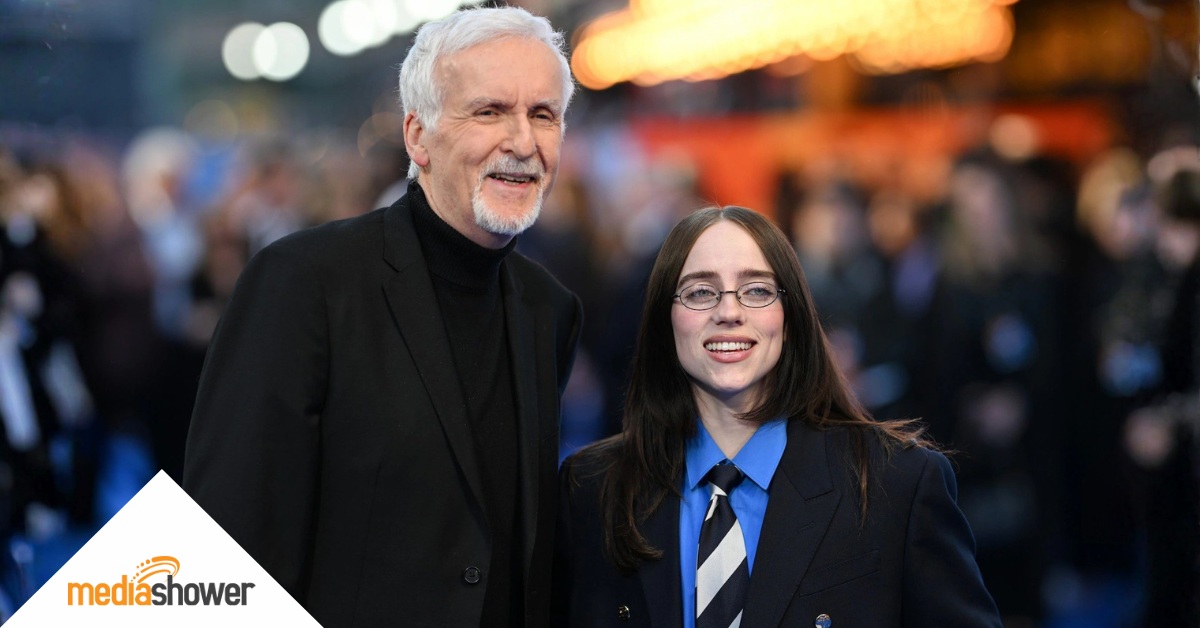
Billie Eilish and James Cameron make very little sense together.
One built a career filming sinking ships and giant blue extraterrestrials with billion-dollar budgets. The other became one of the world’s biggest stars whisper-singing bedroom confessions over minimalist production.
Cameron specializes in spectacle. Billie specializes in vulnerability.
And yet the pairing feels inevitable.
Their new concert film, Billie Eilish – Hit Me Hard and Soft: The Tour (Live in 3D), reveals where modern entertainment — and modern marketing — now head next.
The real innovation is the emotional strategy driving them.
Competitive advantage is gravitating toward something that’s hard to manufacture: emotional presence.
The Eilish-Cameron collaboration offers a blueprint for that future.
James Cameron has spent decades chasing immersion.
Titanic submerged audiences inside catastrophe. Avatar transported moviegoers to Pandora. Cameron built his reputation around scale, technology, and sensory overwhelm.
Billie Eilish built her career in the opposite direction.
Her music feels close enough to overhear. Songs like “When the Party’s Over” and “Everything I Wanted” succeed because they sound emotionally exposed. Fans feel unusually close to her.
Intimacy became her brand moat.
Which makes this collaboration far more strategically coherent than it first appears.
Both creators solve the same problem:
How do you make millions of people feel personally inside an experience?
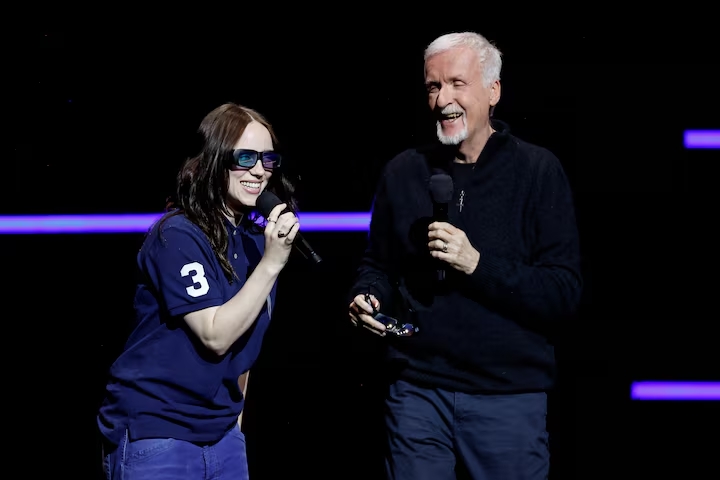
Cameron attacks the problem technologically; Eilish attacks it emotionally. The concert film combines both approaches.
The film crew embedded 17 cameras throughout the venue, even among the fans, to recreate the emotional chaos of being there in person. That detail reveals the entire strategy.
Traditional concert films treat audiences like witnesses. This project pulls viewers directly into the emotional atmosphere of the performance.
The psychological objective completely changes.
For most of the social media era, scale dominated. Brands optimized for algorithms. Marketing turned into a content treadmill: publish constantly and interrupt the scroll before audiences disappear again.
Then audiences adapted. Consumers now drown in content abundance and starve for emotional connection.
That’s why participation has evolved into a powerful strategic lever.
Taylor Swift’s Eras Tour succeeded partly because fans went beyond the concert. They built friendship bracelets, decoded Easter eggs, documented outfits, and collectively shaped the experience itself.
In other words, the audience drove the narrative.
Billie Eilish mastered a similar dynamic for years. Her fandom behaves less like a traditional audience and more like an emotionally networked community.
The Cameron partnership amplifies that dynamic technologically.
As Cameron explained in recent interviews, the goal centered on reinventing the concert experience through immersive storytelling instead of straightforward documentation.
The takeaway for marketers? Audiences have grown tired of content that talks at them. They want experiences that psychologically include them.
Technology is often where many brands lose the plot. Whenever immersive media arrives — VR, AR, 3D, spatial computing — marketers fixate on the hardware.
But consumers rarely care about the hardware itself. They care whether the experience feels emotionally different.
3D movies became gimmicks whenever filmmakers used them simply to throw objects at the screen. Cameron succeeded with Avatar because the technology created emotional transportation.
The Billie Eilish film follows the same philosophy.
Reviews consistently emphasize emotional closeness: backstage footage, fan interactions, vulnerable moments between performances, and conversations with Cameron himself.
Emotional immersion makes the technology disappear. It signals enormous implications for brands experimenting with experiential marketing.
Instead of trying to use more technology, the lesson is: “Use technology to reduce emotional distance.”
One surprising creator-economy trend reshaped marketing is that production quality no longer serves as the primary trust signal.
Authenticity became more persuasive than perfection.
TikTok accelerated this change dramatically. Consumers now associate overproduced marketing with emotional distance. The more polished something feels, the less human it appears.
Billie Eilish understands this instinctively.
Even while performing in giant arenas, her persona retains emotional closeness. She speaks casually. She shares discomfort. She leaves imperfections visible.
The Cameron partnership works because it preserves intimacy while dramatically expanding scale.
Marketing now moves in the same direction.
Brands no longer need to choose between mass reach and emotional specificity. The strongest campaigns combine both.
You can already see this nuance in other campaigns:
The strongest formula now looks simple: Massive distribution paired with emotionally human storytelling.
The Eilish-Cameron rollout generated interest because the promotion mirrored the emotional tone of the film itself.
Social clips highlighted creative conversations, backstage moments, and fan connections rather than technical innovations.
Interview clips featuring Eilish and Cameron discussing connection and immersion became highly shareable social assets on their own.
The campaign understood something modern marketers routinely miss: Audiences spread emotional framing faster than technical framing.
Nobody reposts camera specifications. People repost feelings.
Attention alone has lost value. Consumers can pay attention while emotionally disengaged. Doomscrolling proves this every day.
Presence creates psychological involvement. This is what immersive entertainment now sells.

Increasingly, that is what effective marketing sells, too.
Even emerging VR concert research points in the same direction. Immersive concert environments become dramatically more engaging when audiences feel collective emotional co-presence instead of isolated observation.
Humans prefer emotional environments over content, and that difference defines what the Billie Eilish-James Cameron collaboration actually represents: a prototype for emotionally immersive communication.
It’s easy to dismiss projects like this as celebrity entertainment experiments. But entertainment regularly predicts broader consumer behavior shifts.
Hollywood discovered long ago that audiences crave immersion. Creator culture later proved that audiences crave intimacy.

Now those two instincts are converging. Brands that recognize this shift early gain a major advantage.
The future belongs to marketers who can create experiences that feel simultaneously massive and personal, big enough to command attention but human enough to sustain a connection.
That challenge is far harder than simply producing content at scale.
It’s also far harder to commoditize.
Media Shower’s AI marketing platform helps brands scale intimacy without losing the human signal. Click here for a free trial.