The Better Marketing Blog
Better tips, tools, and tactics for the AI era.
Better tips, tools, and tactics for the AI era.
Think “AI marketing campaign,” and you probably picture weird AI-generated video like Coca-Cola’s famous holiday remake. (The top YouTube comment called that ad “the most profitable commercial in Pepsi’s history.”)
Marketers are now using AI for far more interesting things. The best campaigns use the technology to create an experience, solve a problem, or invite the audience into the idea.
We selected the following campaigns for their meaningful use of AI, creative originality, cultural impact, audience utility or participation, and measurable results.
Here are 10 campaigns where we feel AI earned its place in the pitch.
Few neighborhood shops could afford an endorsement from Shah Rukh Khan, one of India’s biggest movie stars. So Cadbury used AI to let thousands of local retailers feature him in personalized ads.
It used machine learning and synthetic-media technology to produce localized ads in which the Bollywood star promoted individual stores, with geotargeting showing viewers versions featuring businesses near them. Shop owners could also generate and share their own ads through a self-service website.
The campaign began with a real problem: local retailers needed visibility they couldn’t afford. AI gave Cadbury a way to share its celebrity relationship and media reach, turning one endorsement into a platform thousands of businesses could use.
The campaign produced approximately 130,000 ads for more than 2,000 stores and attracted a reported 94 million Facebook and YouTube views. Ogilvy also credited the work with 35% growth for Cadbury Celebrations compared with Diwali 2019.
Pedigree and Nexus Studios replaced anonymous animal models in its advertising with real dogs available for adoption near each viewer.
AI converted basic shelter photographs into polished, production-ready images, while location and household data helped match dogs with likely adopters. Once a dog found a home, the system could replace it with another.
Pedigree’s advertising budget served a higher purpose: to help shelter dogs find homes. AI made that idea work at scale, because one dog could quickly replace another as adoptions happened.
The pilot increased traffic to the featured shelter profiles sixfold. Half of the dogs featured in the pilot found homes within two weeks.
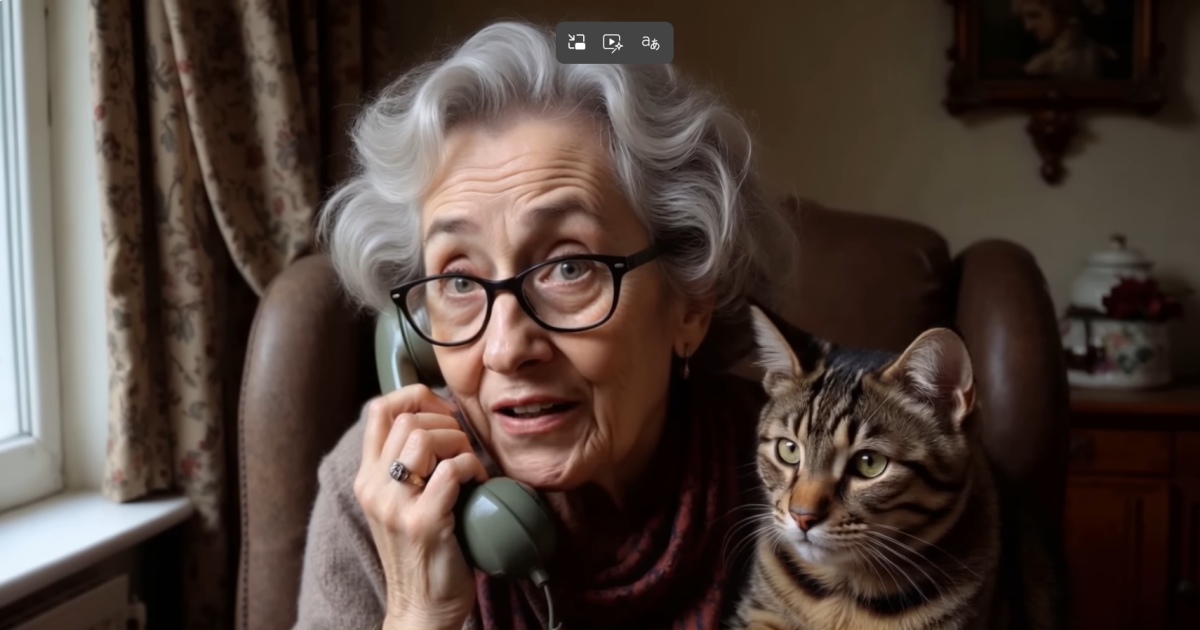
A scammer calls. Daisy answers and wastes their time — sometimes a lot of time.
O2 created the 78-year-old “granny” by combining call transcription, a custom language model, character instructions, and a synthetic voice. The team trained her using anonymized scam calls and the speech patterns of a real grandmother.
There’s something deeply satisfying about hearing a scammer lose patience with a sweet old lady who has all day. The entertainment also served a practical purpose: Daisy tied up scammers while making O2’s anti-fraud work tangible and shareable.
Unprompted campaign recall reached 17%, O2’s highest result of 2024. A £20,000 paid-media investment reportedly produced £36 million in advertising-value equivalency.
How would Serena Williams at age 17 compete against Serena Williams at age 35?
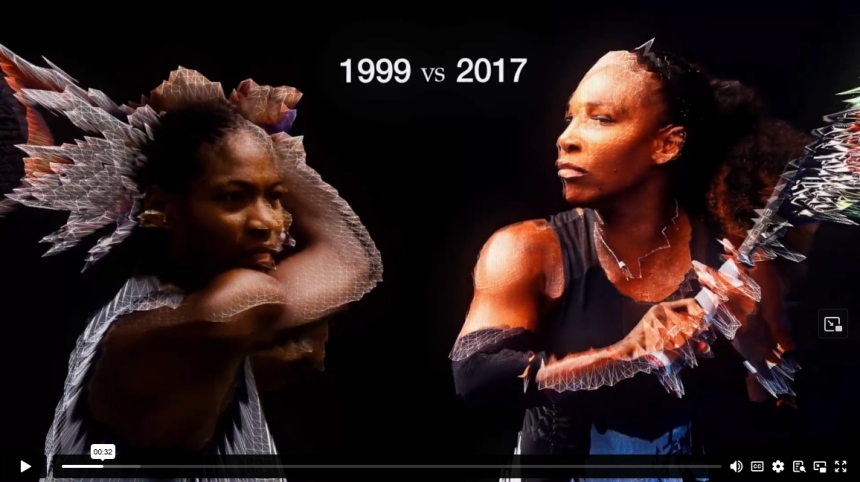
Nike and AKQA turned that hypothetical into a virtual match using archival footage from 1999 and 2017. Machine learning analyzed Williams’ decisions, reactions, shot selection, movement, recovery, and agility. The resulting models generated more than 130,000 games and 5,000 matches before the team presented the contest as a live-style broadcast.
AI made the campaign’s central idea possible: Serena Williams could play her younger self. The matchup turned athletic development into something viewers could watch, with every serve and return showing how her game had evolved across nearly two decades.
The campaign reached more than 12 million media impressions and broke Nike’s previous organic YouTube viewing records. AKQA put the increase in organic views at 1,000%.
Heinz began with a simple experiment: ask OpenAI’s image generator, DALL-E 2, to “draw ketchup.”
Again and again, the model generated images resembling the familiar Heinz bottle, even when the prompts omitted the company’s name. Heinz then turned consumers’ prompts and selected outputs into social posts, outdoor ads, print creative, packaging, and gallery pieces.
Heinz had a sharp brand idea before it opened DALL-E: Ketchup is so closely associated with Heinz that even an AI image generator would make the connection. The technology supplied playful new proof of the brand’s category dominance.
The work generated a reported 1.15 billion earned impressions. Its earned-media value exceeded the investment by more than 2,500%, while engagement ran 38% above previous campaigns.
Football fans submitted stories about friends’ embarrassing mistakes, or “own goals,” and received personalized videos of José Mourinho roasting them.
Before Snickers gave fans that control, it built eight layers of protection around its AI version of Mourinho. The authorized system combined language generation, voice cloning, lip synchronization, multiple safety filters, and human oversight.
The technology served an idea Snickers had spent years establishing: hunger makes people behave out of character. Mourinho’s sharp, unimpressed persona gave that familiar promise a personalized form fans immediately understood.
The campaign generated more than 10,000 videos, with average brand dwell time exceeding two minutes. Mars also reported click-through rates four times above average and double-digit sales growth.
A PODS truck made its product a geo-customized billboard as it moved through New York City.
Google Gemini combined the truck’s location with weather, time, traffic, transit conditions, and local information to generate headlines that could vary by neighborhood and real-time conditions.
PODS began with its most recognizable physical asset: the storage container itself. Real-time intelligence gave that asset a useful creative purpose, allowing the campaign idea to change with the street around it.
Tombras generated more than 6,000 potential ads and displayed approximately 1,600 unique messages. The agency reported a 59% increase in web traffic, 33% growth in leads, and a 51% year-over-year increase in search volume.
Burger King received more than one million ideas for its next Whopper, creating mass participation before the product existed.
Participants entered their preferred ingredients for a chance to see their creation sold nationally. An AI companion named Grilliam brought each submission to life with a generated burger image, custom background, jingle, and shareable advertisement.
The campaign’s strongest idea was mass participation in product development. AI gave every entrant the immediate satisfaction of seeing and promoting an imagined Whopper, even if the recipe never reached a restaurant.
Burger King selected three finalists from the million-plus submissions and released all three as limited-time menu items at participating U.S. restaurants, turning “Have It Your Way” into a national product-development event rather than just a promise printed on the wrapper.
Jennifer Lopez may know plenty of people. She probably doesn’t know your cousin Steve, but Virgin Voyages made “Jen AI” invite him anyway.
Virgin Voyages created an authorized synthetic version of Lopez that generated personalized video invitations for different names, recipients, and occasions. Generative video and voice technology adapted her recorded performance into thousands of messages.
The campaign used AI to deliver its central joke: Jennifer Lopez could personally invite someone she’d never met. Putting personalization onstage made the technology part of the entertainment, including Jen AI’s occasional struggle with an unusual name.
VML reported more than 25,000 personalized invitations and close to 200,000 interactions with the microsite. More than half of the invitations came from new prospective customers, and the campaign generated nearly 20 million organic impressions.
A bottle of Coke escapes from an Andy Warhol painting and travels across a gallery as some of the world’s most famous artworks pass it along.
The ad combined live action, conventional visual effects, generative adversarial networks, and Stable Diffusion. AI helped the team animate each vignette while preserving the style and texture of artists ranging from Van Gogh to Munch. According to the production team, 60% to 80% of the film’s vignettes included some use of AI.
The campaign began with a strong idea: A Coke bottle could travel through art history to deliver a lift to a tired student. AI helped the bottle move convincingly between radically different visual worlds. The technology served the story without becoming the story.
The nearly two-minute film anchored a global campaign that included an online gallery, 3D billboards, and digital collectibles. “Masterpiece” also earned a D&AD Yellow Pencil for Visual Effects and helped establish a more convincing model for AI-assisted advertising: experienced artists using new tools to execute an idea that already deserved attention.
AI can be useful for marketing campaigns when it makes the idea more useful, participatory, or impossible, rather than simply less expensive to produce.
Media Shower’s AI marketing platform helps you turn ideas into marketing masterpieces. Click here for a free trial.