The Better Marketing Blog
Better tips, tools, and tactics for the AI era.
Better tips, tools, and tactics for the AI era.
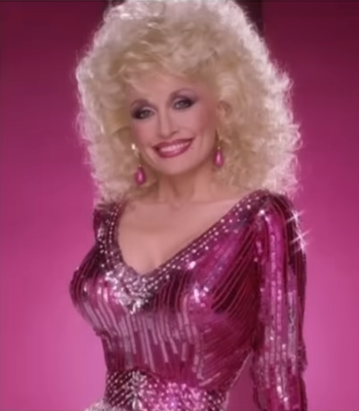
Dolly Parton never asked us to believe the hair was real. She asked us to trust her heart and her stories — and then spent a lifetime proving that we could.
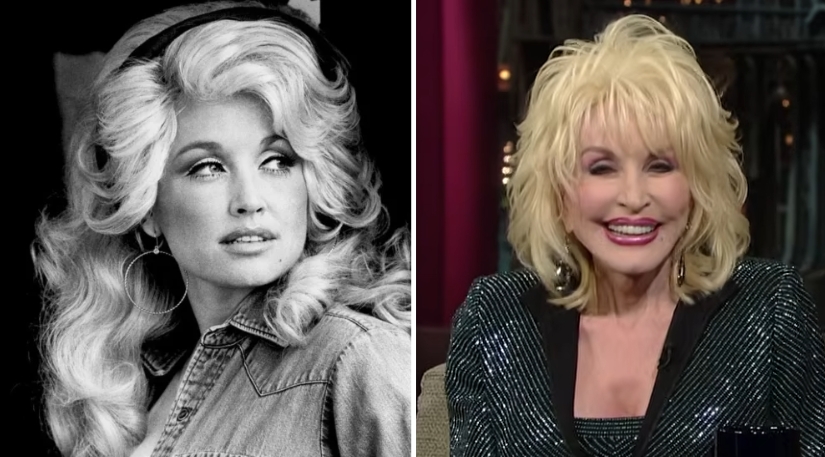
Her towering wigs, acrylic nails, rhinestones, cosmetic procedures, and spectacular stage clothes were deliberate. She chose every element and spoke openly about the work involved.
“I’ve created this and played it up — the makeup, the whole persona,” she told The New York Times in 2002. She hoped people could see “beneath the hair to know there’s a brain, beneath the boobs to know there’s a heart and behind all the other stuff to know there’s some talent.”
“I look so artificial but I am so totally real.” – 2010 Fresh Air Interview
Dolly Parton built an artful persona to capture attention, told emotionally truthful stories that helped millions feel seen, and turned that compassion into action.
ABC News Interview with Barbara Walters
Dolly Rebecca Parton chose her image early.
In an essay for Time about developing her glitzy personal style, she traced the look to a woman in her hometown whose heels, tight clothes, bleached hair, and red lipstick struck young Dolly as beautiful.
Dolly explains her inspiration
She carried that vision into a culture inclined to underestimate women who looked and sounded like her. Blond hair, heavy makeup, tight clothes, and a country accent became the materials of a style she controlled.
A lot of people said, “Dolly, you need to dress down. Nobody’s ever going to take you serious as a songwriter or a singer if you look like that, because you look more like a hooker than you do a singer.” I said, “Well, tough. This is who I am. They’ll get used to it!”
Parton discussed her wigs, clothes, body, and cosmetic procedures freely and called her style “a country girl’s idea of glam.”
In the lyrics of “Backwoods Barbie,” she tells listeners, “Don’t judge me by the cover cause I’m a real good book.”
The line captures how she used her image: it drew people into a story that extended well beyond appearance.
She remained faithful to that image for seven decades. The values it expressed lasted just as long: loyalty to working people, affection for East Tennessee, acceptance of others, and commitment to children and families.
Parton has said that she expected people to laugh at her. But she usually got to the joke before anyone else could.
Dolly tells all
During a 1995 Late Show with David Letterman “Top Ten” segment, Parton named “accountants who don’t understand how much it costs to make me look this cheap” among her mostly self-deprecating pet peeves.
The line acknowledges the spectacle and the business behind it while placing Parton in control. Her self-directed humor made room for conversations about poverty, sexism, sexuality, faith, and exclusion without turning every exchange into a confrontation.
A 1987 television appearance with Patti LaBelle offers a perfect visual example. Long nails were part of the exaggerated feminine image people often mocked, so Dolly gave them a job.
The joke worked because Dolly was fully aware of the caricature and completely unthreatened by it. Instead of defending the image, she invited someone else to play along. Her humor turned scrutiny into participation.
For all her gifts as a singer, performer, actor, and businesswoman, Parton considered herself a songwriter first.
“Writing’s just as natural to me as getting up and cooking breakfast,” she told The New York Times in 2002. “I ain’t never far away from a pencil and paper or a tape recorder. I write every day, even when I’m on a plane, in the tub or on the bus. It burns in me.”
She wrote approximately 3,000 songs during her lifetime. Hundreds were recorded by other performers, including Whitney Houston, Tina Turner, the White Stripes, Merle Haggard, Norah Jones, and RuPaul.
“Songwriting is my way of channeling my feelings and my thoughts,” Parton told The Times. “Not just mine, but the things I see, the people I care about.”
Coat of Many Colors First Performance, 1970
Parton was a natural storyteller. Her process began with people, places, and predicaments.
“Coat of Many Colors” gives us a child hurrying to school in a coat her mother made from scraps. The child arrives full of pride and encounters ridicule. Within that small scene, Parton explores poverty, bullying, parental love, difference, humiliation, and dignity.
“That little song is like a world of things,” she said in Dolly Parton, Songteller: My Life in Lyrics.
The phrase describes much of her work. She compressed a world of meaning into a coat, a workplace, a farewell, or a woman’s name.
“Jolene” lets the listener inhabit jealousy and fear. The narrator recognizes Jolene’s beauty and confesses how much she stands to lose. Her vulnerability gives the song its force.
“9 to 5” turns workplace sexism and economic exploitation into a story millions of people can sing together. Even the clicking of Parton’s acrylic nails evokes the sound of an office.
“In the Good Old Days (When Times Were Bad)” recalls her father’s hands breaking open from work and her mother needing a doctor the family could not afford. The details hold love of home and the reality of deprivation in the same frame.
Her language was plain, but her emotional range was enormous. The simplicity made the complexity shareable.
Parton’s music moved through mountain bluegrass, country-pop, gospel, disco, rock, film, and musical theater.
“I Will Always Love You” offers the clearest example. Parton wrote it as a farewell to Porter Wagoner when she left his television program to pursue her solo career.
According to Billboard, Parton’s original recording topped Hot Country Songs in 1974, and her 1982 rerecording returned to No. 1.
Whitney Houston’s 1992 version then spent 14 weeks atop the Billboard Hot 100. A new performer and arrangement carried the song into another genre, generation, and audience while preserving its emotional truth.
Parton crossed social and cultural boundaries as readily as musical ones. The Atlantic observed that she reached across class, gender, region, genre, and partisanship.
She sang the Southern gospel music she learned from her mother and spoke openly about her Christian faith. She supported gay and transgender people, wrote “Travelin’ Thru” for a film about a transgender woman, and recorded “Rainbowland” with goddaughter Miley Cyrus.
“You have to accept everything and everybody,” she said when discussing the lessons of “Coat of Many Colors.”
Dolly Parton Travelin’ Thru Live
Few performers have projected more certainty about who they are than Dolly Parton. But confidence, for Parton, did not mean assuming she deserved every accolade that came her way.
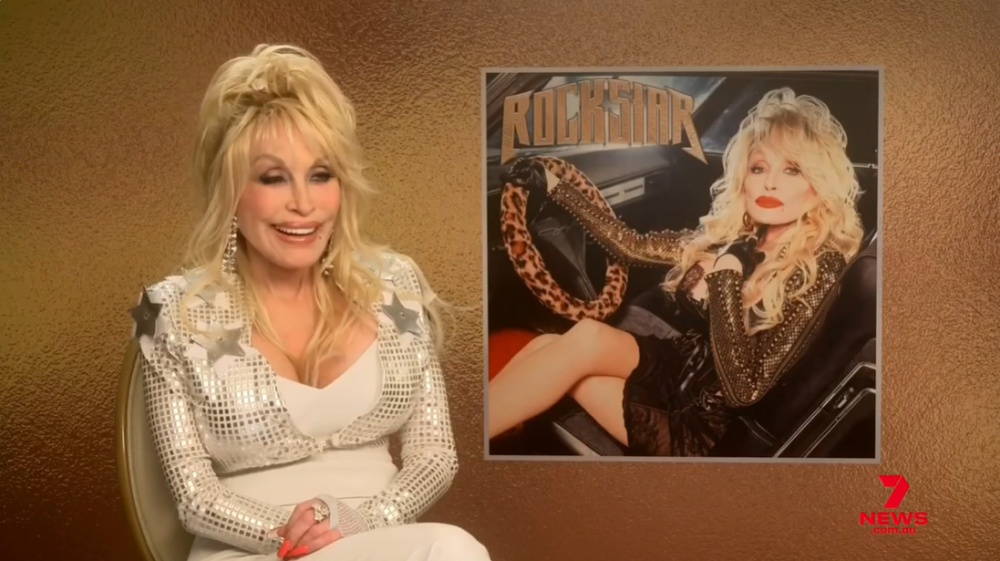
In 2022, Parton was nominated for the Rock & Roll Hall of Fame, whose definition of rock has always extended beyond the genre itself to artists who shaped its development and culture. The Hall saw Parton’s decades of crossover hits, songwriting and influence as qualification enough.
Dolly wasn’t so sure.
She initially tried to withdraw her name because she didn’t believe she had earned the honor. After her induction, she responded in characteristic Dolly fashion: she decided to become a rock star.
“I’m going to be a rock star at 77 years old,” she said while discussing the album that became Rockstar. “I’m like my daddy; if someone is going to give me something, I’m going to earn it.”
So she did. The resulting album paired Parton with some of rock’s biggest names and gave her a credential she arguably no longer needed.
Collaborators included Paul McCartney, Ringo Starr, Elton John, Sting, Stevie Nicks, Steven Tyler, Joan Jett, Pat Benatar, John Fogerty, Steve Perry, Peter Frampton, Debbie Harry, Rob Halford, Richie Sambora, Simon Le Bon, and members of Lynyrd Skynyrd, among others.
Quintessential Dolly: Rockin’ til the cows come home
In the end, she was elected as a performer (as opposed to an influencer) alongside Eminem, Duran Duran, Eurythmics, Carly Simon, Lionel Richie, and Pat Benatar & Neil Giraldo.
Parton supported literacy, education, disaster relief, healthcare, and the economy of her home county. These commitments gave practical form to the compassion that ran through her songs.
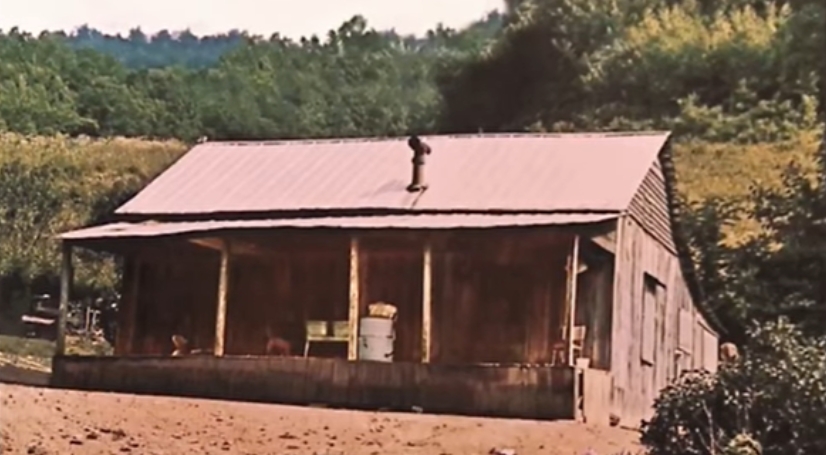
Dollywood carries every mark of a celebrity destination. Parton’s name appears in towering letters. Her music and image fill the park. Visitors can tour a reproduction of her childhood home.
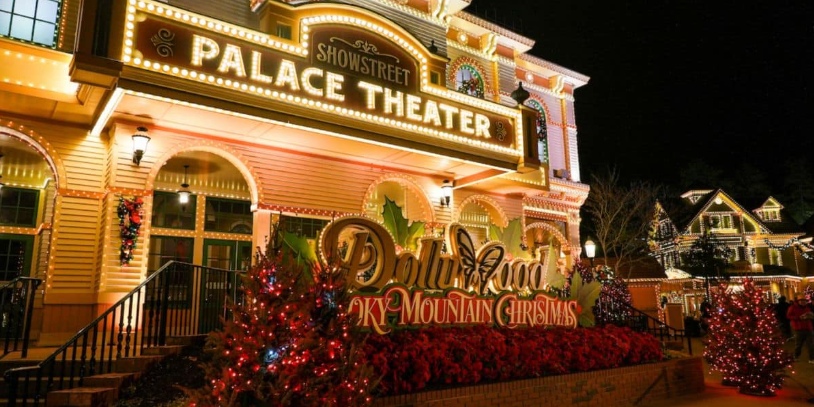
Yet Dolly never meant it to be a monument to herself.
“I always thought, well, it’d be wonderful if I could do something great for my home county, provide jobs for the people in the area because it was a very rural and poor area,” she told Larry King in 2010.
She also wanted local families to have a place to enjoy themselves. The project, she said, “started out in a very sincere way.”
In total, Dollywood is credited with creating more than 23,000 jobs in the region as Sevier County’s largest employer. It generates more than $1.8 billion in annual economic impact.
“When we started Dollywood, that was one of the things I wanted to do for here, in this area,” Parton replied. “Provide jobs for my friends, and neighbors and family.”
With Dolly, the more extravagant the gesture looked, the more ordinary the human motive often turned out to be.
Parton’s father was intelligent and hardworking, but he could not read or write. That inspired Dolly to launch the Imagination Library, which mails books directly to young children, in 1995.
The program began in Sevier County and eventually expanded across the United States and beyond.
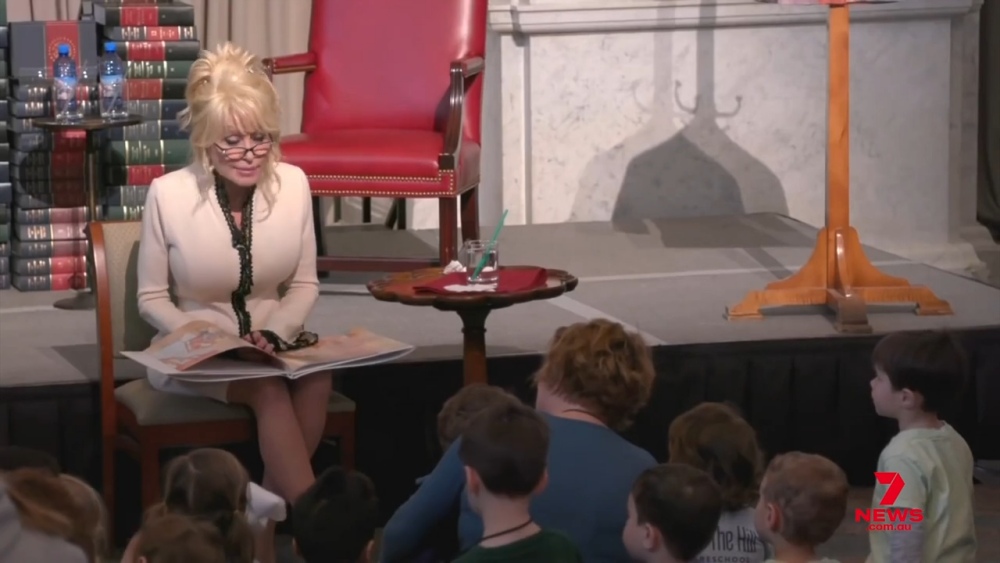
The New York Times reported that the program distributed more than 300 million books during Dolly’s lifetime. Its promise was beautifully concrete: a child receives a book in the mail each month from birth to age 5.
When they aged out of the program, each child received a personalized note from Dolly saying, “I will always love you.”
Parton also offered graduation incentives and scholarships to students in her home county. She organized the “Smoky Mountains Rise” telethon after the 2016 East Tennessee wildfires, raising more than $9 million, and funded grants for families who had lost their homes.
Her giving extended to regional healthcare, pediatric medicine, and infectious-disease research. In 2020, she donated $1 million to Vanderbilt University Medical Center research associated with the development of Moderna’s COVID-19 vaccine.
In a widely shared video, Parton sang a vaccine-themed version of “Jolene” before receiving her shot. In classic Dolly style, a familiar tune earned attention, humor eased the tension, and plain language delivered the message.
Then she rolled up her sleeve.
As a child, Parton reportedly sang into a homemade microphone fashioned from a tin can and a tobacco stick. She imagined herself performing at the Grand Ole Opry long before she stood on its stage at age 13.
See rare footage of 14-year-old Dolly Parton performing in Knoxville
She created “Dolly” from that imagination: a character large enough to carry her songs around the world and deeply rooted in the people and place that formed her. That character became so powerful that she became instantly recognizable by her first name alone.
Yet the character was never at odds with the woman inside. Dolly made aspiration compatible with humble beginnings and glamour compatible with loyalty to working people. Her femininity never required intellectual submission, and her success never loosened her attachment to home.
The persona was artful, but the life made it credible.
“I hope I’ll be remembered as somebody that tried to do some good in the world and left, you know, a few good things.” – Dolly Parton
Start your free Media Shower trial and get personalized insights on your SEO, competitors, AI visibility, and what to do next.