The Better Marketing Blog
Better tips, tools, and tactics for the AI era.
Better tips, tools, and tactics for the AI era.
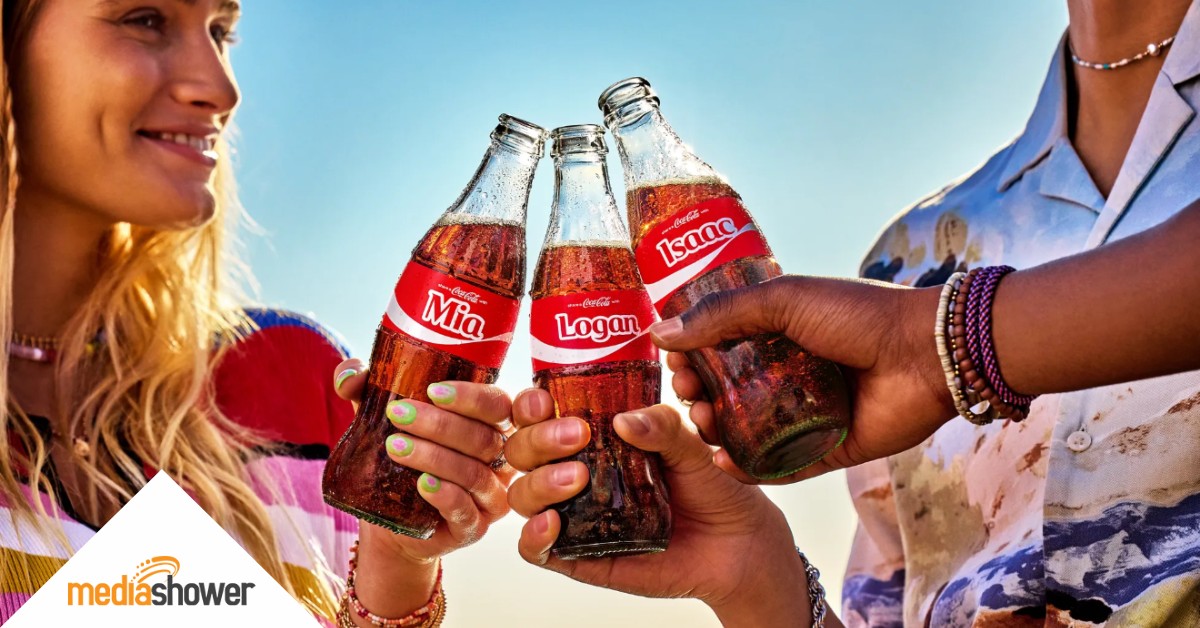
When Coca-Cola launched the “Share a Coke” campaign, they made one of the boldest branding moves in modern marketing history: They took their logo off the bottle.
In its place: Your name. Or your friend’s. Or “BFF.”
It’s where novelty met smart strategy. The move turned mass-market soda into a one-to-one gift, flipped the sales trend among Millennials, and taught the world how to bottle emotional connection at a global scale.
Let’s crack this one open.
By the early 2010s, Coca-Cola was feeling the fizz go flat with younger audiences. Millennials were ignoring sodas and ghosting legacy brands. Coke needed a move that would reconnect emotionally without resorting to nostalgia or gimmicks.
The goal was clear: Reignite brand relevance and boost declining sales by building deeper, more personal connections. And fast.
“Share a Coke,” 2011
Ogilvy Australia pitched an idea that seemed simple, but hit deep: Put people’s names on the bottles. With that, the name Coca-Cola disappeared from the label.
“Share a Coke” began in 2011 with one key move: The company replaced its logo with 150 of the most popular first names in the country. Customers were encouraged to find their own name (or someone else’s) and share the experience, both literally and online.
The campaign rolled out with:
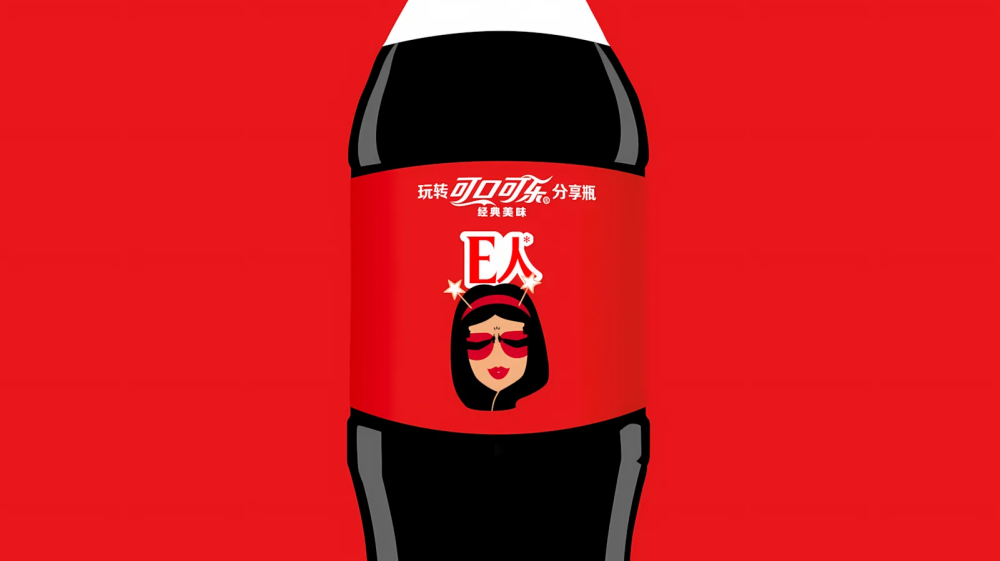
The idea expanded globally and kept its flexible framework. Every country has a unique spin. The U.K. saw names like “Mum” and “Boss.” In China, bottles featured personality-themed names like “The Cat Lover” and “The Foodie” to match local relationship dynamics.
It was a bold move that swapped brand-first marketing for consumer-first connection. And it worked.
Coca-Cola wanted to draw attention, but more importantly, it needed to reconnect. The “Share a Coke” campaign was built to solve a specific set of brand challenges with one surprisingly simple idea. Here’s what it set out to do:
It was a surgical response to slipping sales, social disengagement, and a brand that needed a little spark.
Great ideas are only as good as their execution, and this one nailed it from every angle. From emotional resonance to retail strategy to viral momentum, “Share a Coke” checked every box. Here’s what made it work:
Variable printing allowed Coke to produce hundreds of different names at scale while making the experience feel uniquely personal. That blend of scale and intimacy was the campaign’s secret sauce.
Each bottle became a message, a gesture, a selfie prop. Customers bought a soda and made a statement — and then tagged a friend in it.
“Share a Coke” became the ultimate prompt. To think about someone. To give them something. To say something small but sweet. That emotional angle turned casual purchases into meaningful moments.
Coca-Cola encouraged fans to post photos with their bottles, generating over 500,000 user-generated images in the first year. The campaign became a trending topic worldwide without the help of paid influencers.
Every market received its own name list. That attention to cultural nuance helped the campaign scale across 70+ countries without losing relevance.
The “Share a Coke” campaign was so popular that Coca-Cola rolled it out again in 2025 with a few modern updates for Gen Z and Gen Alpha audiences:
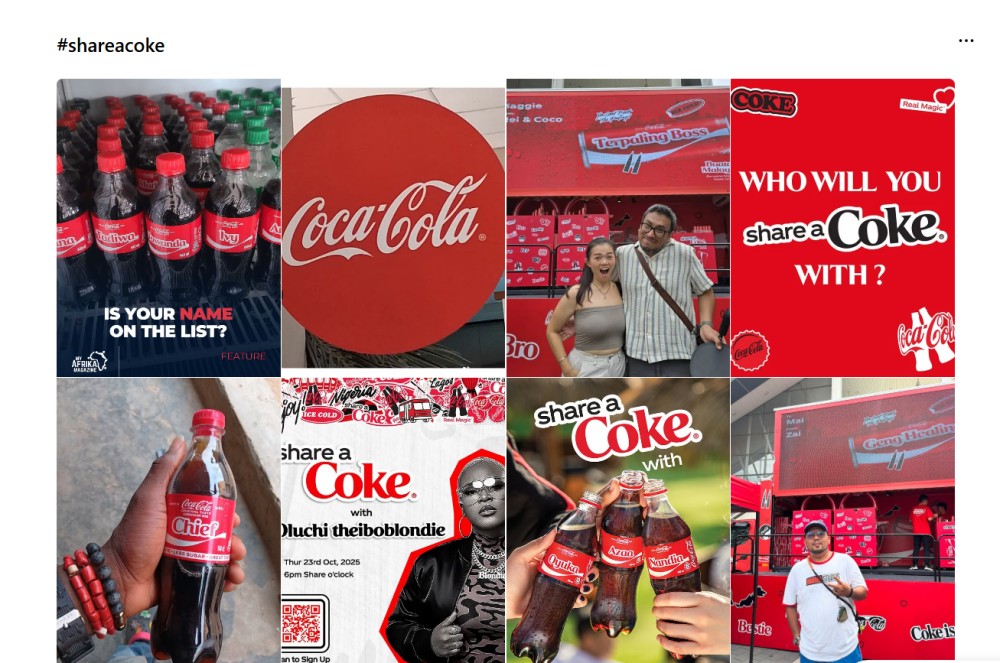
Plenty of brands talk about innovation. Coca-Cola actually printed it . . . on millions of bottles. It was a series of bold moves that pushed the boundaries of what a global brand can do.
Here’s what made the campaign truly original:
It’s hard to overstate how gutsy this was. Coca-Cola’s logo is one of the most recognized symbols on Earth. Replacing it with names was a mic-drop moment in modern marketing.
Coca-Cola flipped the script from brand-first to customer-first. Typically, brands want people to see themselves in the product. This time, they saw themselves on the product.
Before “Share a Coke,” products didn’t create content: Ads did. After “Share a Coke,” each individual bottle had viral potential. The campaign blurred the line between product and media.
Coca-Cola didn’t treat digital and physical as separate channels. The in-store experience drove social content, and the social buzz drove people back to shelves. It was a perfect feedback loop where real-world products powered online conversations, and vice versa.
Custom kiosks let consumers print any name, in any language. This made the campaign more inclusive and added a live, experiential layer to the digital buzz.
A 2025 Reboot
When a campaign is this personalized, the results get personal, too. “Share a Coke” moved product and people. It turned casual shoppers into brand advocates, everyday bottles into social tokens, and a century-old brand into a trending topic.
Let’s talk metrics:
“Share a Coke and Win Big,” Nigeria 2025
Media Shower’s AI-powered platform helps you create campaigns worth sharing. Click here for a free trial.