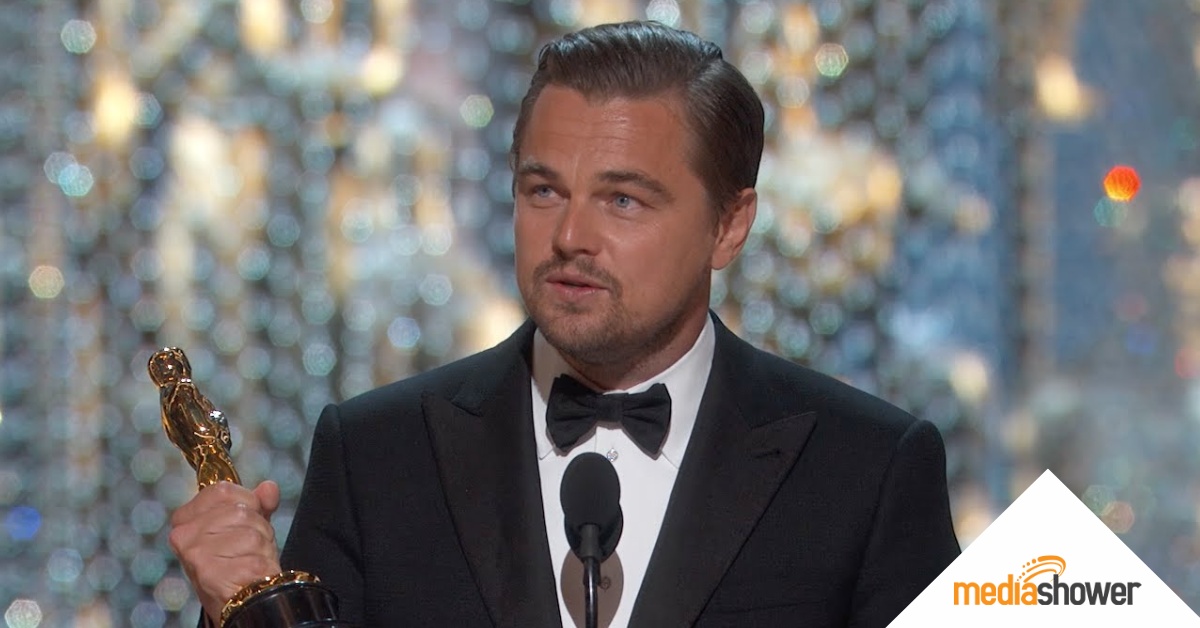
The Oscars aren’t an awards show. They’re a marketing strategy.
Every year, roughly 18-20 million people tune in to watch Hollywood congratulate itself. The ceremony doesn’t just award the best movies; it restarts the conversation about going to the movies at all.
And it works because Hollywood understands how to put on a show.
After all, this is an industry built on stars, glamour, and perfectly timed reveals. The Academy Awards are one the greatest marketing success stories of all time, and the product they’re promoting is Hollywood itself.
Here’s how the Academy Awards evolved from a dinner party into a half-billion-dollar marketing machine, and what marketers can learn.
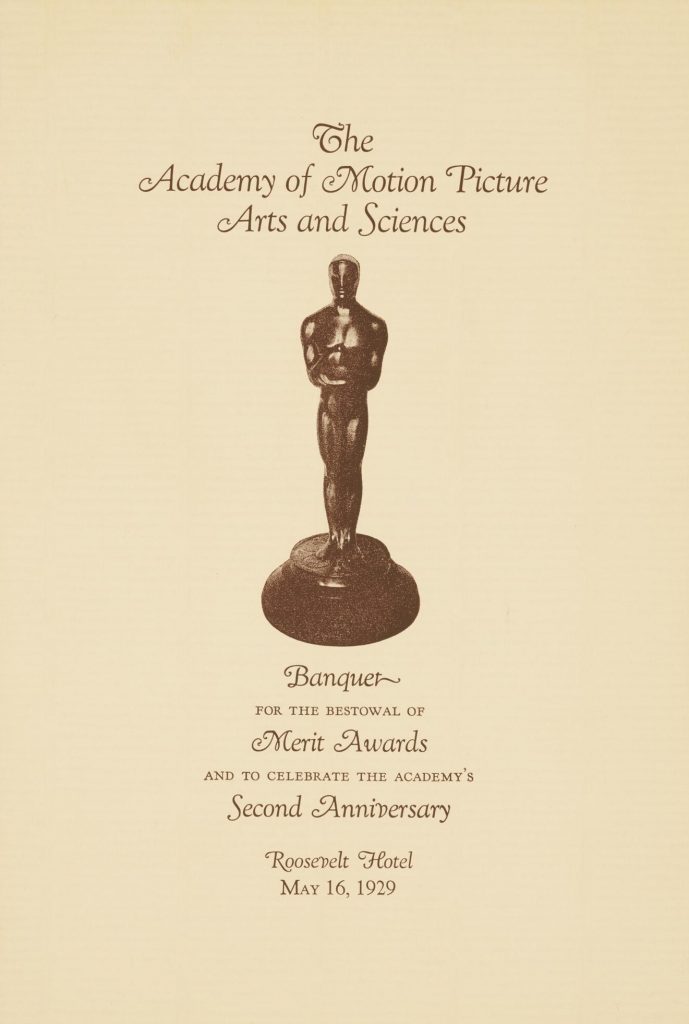
From 270 Guests to a $500 Million Production
The first Academy Awards in 1929 were charmingly uneventful. Two hundred seventy people sat down for dinner. Winners were announced ahead of time. There was applause, maybe some champagne, and then everyone went home.
It was less show and more committee meeting with better outfits.
But as the Oscars moved to live television, they traded committee meetings for cultural chaos. Take, for instance, the 1974 ceremony. When a streaker interrupted David Niven, it could have been a PR disaster.
Instead, Niven’s poise turned it into one of the most famous moments in TV history—proving that in Hollywood, the ‘show’ must go on, even when the script is thrown out.
For decades, Oscar campaigning stayed equally restrained. Studios ran modest trade ads. Mary Pickford hosted a lunch. In 1935, a film ran the first known “For Your Consideration” ad and received zero nominations, which feels like the Academy sending a very clear message.
By the 1950s and 60s, things loosened slightly. Marty hired models to hold promotional signs. Actor Chill Wills ran ads claiming his fictional “Alamo cousins” were praying for his win. Hollywood clutched its pearls, then moved on.
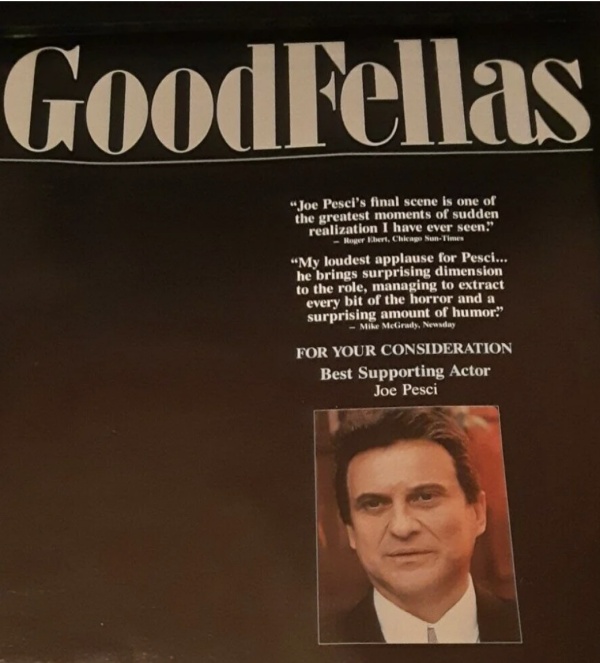
The big shift came in 1969, when the ceremony hit color television. Suddenly, the Oscars became a broadcast spectacle. Campaigning became more visible and screenings more strategic. Ads were more frequent.
Still, it was mostly cordial. Everyone knew the rules and played nice. This was Act One: polite applause with clean endings and no real villains.
Hollywood was warming up.
How Shakespeare in Love Pulled Off the Ultimate Plot Twist
In December 1998, Oscar season felt over before it began. Saving Private Ryan had everything going for it: Steven Spielberg, universal acclaim, and a $547 million global box office.
Harvey Weinstein read that script and rewrote the next act.
Miramax’s Shakespeare in Love was a romantic comedy that landed with a shrug when it first screened for Academy voters. No one considered it a serious threat, except Weinstein.
He treated the campaign like a theatrical production. He hired the first in-house Oscar publicist. Producer Donna Gigliotti handwrote hundreds of invitations to Academy members. Private screenings followed voters to Aspen, Palm Springs, and anywhere Hollywood elites went to relax.
VHS screeners flooded mailboxes. Lavish parties appeared, technically skirting Academy rules discouraging overt gifting.
Then came the move that mattered most: narrative control.
Without fanfare, Weinstein’s team reframed Saving Private Ryan. Not as bad, just . . . uneven. It had a brilliant opening, but the finish was too familiar. Suddenly, the idea that the film might not be flawless felt speakable.
Spielberg refused to engage and took the high road while Weinstein paved a new one.
Talent availability became relentless. Talk shows, Q&As, festivals, screenings. The film was everywhere, all the time.
On Oscar night, Harrison Ford opened the envelope and announced that Shakespeare in Love had won the 2019 Oscar for Best Picture.
Many people in the room were stunned. To others, it made perfect sense. Instead of trying to convince voters the film was “better,” Weinstein had made them comfortable voting with their hearts instead of their sense of obligation.
This ’emotional’ strategy didn’t just work for Miramax; it paved the way for foreign-language films to become mainstream sensations.
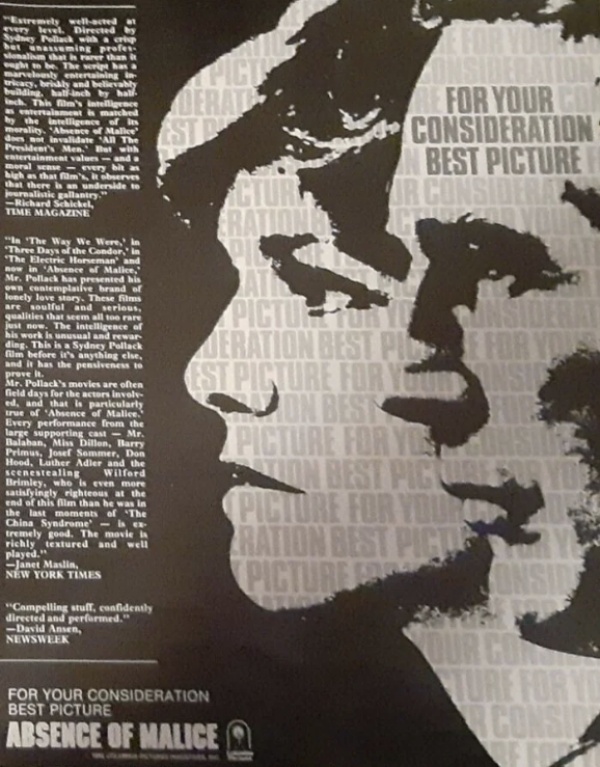
When Awards Campaigns Became Bigger Than Movies
Today’s Oscar campaigns often last longer than the films’ actual shoots. Budgets tell the story.
Today’s Oscar campaigns can easily reach eight figures. Campaigns for major studio contenders in multiple categories have been reported in the $20–30 million range. Netflix is believed to have spent between $25 and $60 million on Roma’s awards push alone.
Even logistics are monetized. Posting a film to the Academy screening portal costs $20,000. Watermarking costs more. Sending an email to voters costs $750 per blast. Saying “please consider” now comes with a receipt.
Every year, Los Angeles becomes a living mood board. Trade advertising alone hit $53 million in one recent year. For Roma, Netflix ads were so ubiquitous that executives joked you couldn’t walk a block without seeing one.
Screenings are paired with experiences, like Gordon Ramsay lunches and live performances.
Then there’s the swag. A Star Is Born campaign sent voters notebooks featuring handwritten song lyrics, vinyl soundtracks, and vintage T-shirts. For Roma, the campaign shipped 200-page books and oversized pillows.
Talent becomes part of the machine. Actors clear their calendars for months, making late-night appearances and touring festival circuits.
Oscar season now looks exactly like what Hollywood does best: a big, meticulously produced spectacle powered by a billion-dollar marketing engine.
Hollywood Math Is Special
On paper, Oscar economics are alarming.
Roma cost $15 million to make and up to $40 million to campaign. It lost Best Picture to Green Book, but Netflix still called it a win.
Historically, Oscar nominations printed money. Shakespeare in Love’s revenue jumped 177 percent. The Schindler’s List box office surged more than 50 percent. American Sniper made the vast majority of its domestic revenue after its nomination.
An Oscar-nominated film signals legitimacy. It tells creators and audiences that a platform belongs at the grown-ups’ table. That signal builds long-term brand equity.
Meanwhile, the gap between popular hits and Oscar favorites widened. Billion-dollar blockbusters earn respectful nods while smaller films dominate awards.
So why keep spending?
Because prestige compounds. “Academy Award winner” increases leverage forever, and agents remember who backed their clients hard.
As one studio executive put it, nothing says “we believe in you” like a full Oscar campaign.
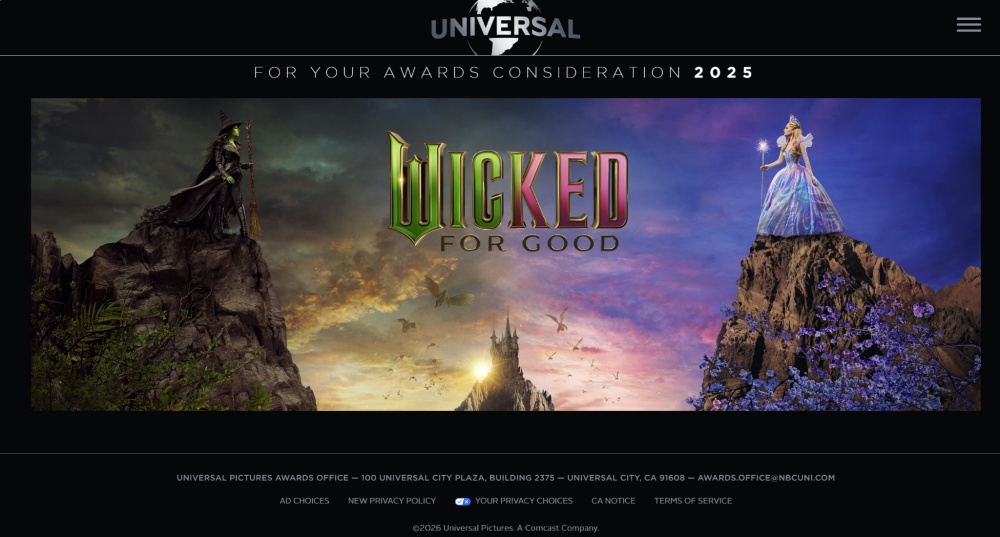
What Goes Into a “For Your Consideration” Campaign?
Modern FYC campaigns typically include:
- Digital screening platforms (secure streaming for voters, costing $20,000-$50,000)
- Billboard advertising along key LA corridors
- Q&A screenings with filmmakers and talent
- Social media integration and targeted digital ads
- Behind-the-scenes featurettes focusing on craft categories
- Conversation videos pairing talent with other celebrities or industry professionals
- Print ads in trade publications (Variety, Hollywood Reporter)
- Physical and digital screeners for guild and Academy members
Viewers Leave, But Budgets Don’t
Here’s the real twist: Oscar viewership has dropped sharply, from more than 57 million viewers in the late 1990s to under 20 million today.
And yet, ad prices keep rising; a 30-second spot now costs over $2 million. It’s like watching a blockbuster tank at the box office while the marketing budget doubles for the sequel.
The real reason is that the broadcast audience isn’t the point.
Oscar campaigns are made for Academy voters, talent, agencies, and the broader industry ecosystem shaped by the Academy of Motion Picture Arts and Sciences.
The Academy’s upcoming move to YouTube simply acknowledges reality. Most people already consume the Oscars in clips. Campaign spending continues because the people who matter are still watching.
The ceremony is just the finale. The real show runs for months behind the scenes.
The 2014 ‘Oscar Selfie’ is the perfect case study for this shift. While the TV ratings were just one metric, the image reached millions who never turned on a television, proving that a single ‘clippable’ moment is worth more than the broadcast itself.
The Stress Test: 5 Moments That Defined the Oscar Brand
If the Oscars are a $500 million marketing machine, these moments are the unexpected “glitches” and “breakouts” that tested the system. They weren’t in the script, but how Hollywood reacted to them—and how the world consumed them—ultimately defined the product.
1. The PR pivot: Handling the unscripted (1974)
When a streaker interrupted David Niven, it was a moment of pure chaos. Niven’s instant, witty recovery is taught in PR circles to this day. It showed that even when the “product” breaks, a strong brand voice can save the day.
The Lesson: Brand poise is your best defense against the unpredictable.
2. The Breakthrough: When passion overwhelms the process (1999)
Roberto Benigni’s reaction to winning was genuine joy. For Miramax, it was the ultimate “proof of concept.” It showed that their strategy of humanizing the awards could create a global emotional connection.
The Lesson: Human emotion is the most “viral” marketing tool in existence.
3. The crisis: The graceful correction (2017)
The Moonlight/La La Land flub was a nightmare scenario for a live broadcast. Yet, the producers’ immediate transition from winners to supporters showed a level of brand integrity that resonated more than a perfect ceremony ever could.
The Lesson: How you handle a public failure defines your brand’s character.
4. The cultural shift: Expanding the market (2020)
Parasite winning Best Picture felt like a seismic shift. While it wasn’t “planned” by the Academy, it was the result of a relentless campaign to convince voters to look past the “one-inch barrier” of subtitles.
The Lesson: Persistence in reframing consumer perception can eventually shatter legacy barriers.
5. The modern spectacle: Designing for the clip (2024)
Ryan Gosling’s “I’m Just Ken” was arguably the only “planned” moment on this list, but its impact was spontaneous. It was designed to live beyond the TV screen, becoming a standalone marketing asset for both the movie and the Academy.
The Lesson: In a fragmented media landscape, create moments that work just as well as a 15-second clip as they do in a 3-hour show.
Oscar for Best Marketing Campaigns
This shift toward “designing for the clip” proves that whether a moment is a lucky accident or a choreographed masterpiece, Hollywood’s real product isn’t just the films—it’s the conversation around them.
When the curtain finally falls, the trophies are handed out not just to the actors, but to the strategists who managed to keep the world’s attention for one more year.
These are the people who taught the world to care about fictional characters, impossible odds, and whether Leonardo DiCaprio would ever win. They understand anticipation, narrative framing, and perfectly timed reveals.
Shakespeare in Love beating Saving Private Ryan was misdirection. Netflix spending triple Roma’s budget was brand positioning. Studios pouring millions into films few people see is long-game thinking.
Yes, viewership is down. Yes, the math makes accountants nervous.
But Hollywood knows how to put on a show. And this one is still playing to a sold-out house, even if that house only seats 10,000 voters.
Marketer Takeaways
- Control the story, not just the product. Shakespeare in Love proved that controlling the story beats having the “best” product.
- Know your real audience. Hollywood optimizes for voters, not viewers.
- Prestige compounds. Awards create leverage that outlasts revenue cycles.
- Think in ecosystems. The best campaigns integrate media, talent, timing, and culture into one arc.
- Match spectacle to brand. When entertainment is the business, marketing becomes part of the performance.
Media Shower’s AI marketing platform helps you craft campaigns worthy of a standing ovation. Click here for a free trial.