The Better Marketing Blog
Better tips, tools, and tactics for the AI era.
Better tips, tools, and tactics for the AI era.
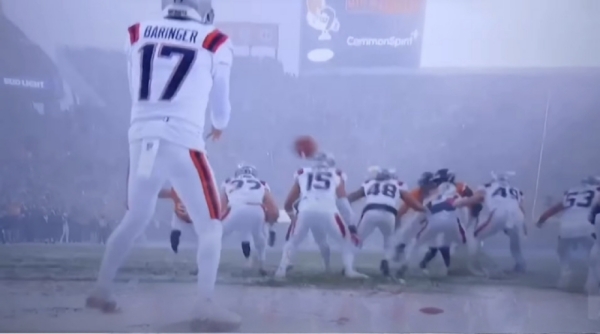
On January 25, 2026, the New England Patriots ground out a gritty 10–7 win over the Denver Broncos in the AFC Championship. They played the game in a white-out blizzard at Empower Field. The weather stripped away the flashy aerial spectacles the modern NFL loves and replaced them with a brutal display of situational football.
This win was the perfect metaphor for the Patriots brand: discipline over spectacle. While the national media chatted about “luck,” the organization leaned on its internal system — defense, field position, and mistake-free execution.
It was the ultimate brand validation, proving that while the faces in the locker room have changed, the Patriot identity is in the franchise DNA.
Before the rings and the global recognition, the Patriots had a business problem. In the decades following their 1960 founding, the team was a struggling regional franchise whose visual identity was holding them back.
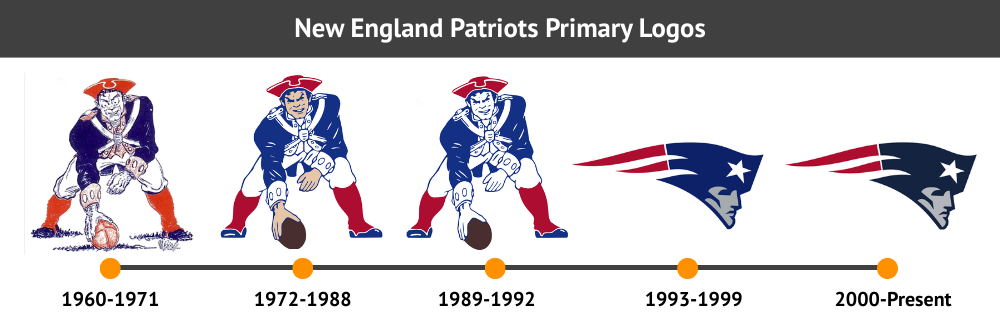
The original logo, “Pat Patriot,” was a detailed illustration of a minuteman snapping a football. It was detailed, literal, and deeply regional. The fans loved it, but it was a marketing nightmare, representing a brand trapped by its own symbolism.
The intricate lines were hard to reproduce on modern merchandise and social-first digital platforms. As the NFL became more national, the Patriots were carrying a logo built for a local audience.
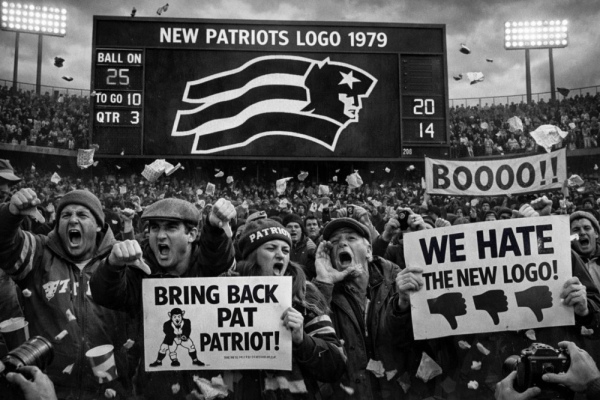
A 1979 rebrand attempted to modernize the look. The fans hated it so much that they booed it out of the stadium, illustrating the painful tension between nostalgia and growth.
In 1993, the organization got it together. They executed what would become the gold standard for sports rebranding: the shift to the “Flying Elvis.” The new logo was sleek, aerodynamic, and built for the TV age.
The simplified logo reduced friction across retail and media. It was a sharp departure from their “lovable loser” past toward a corporate-friendly identity.
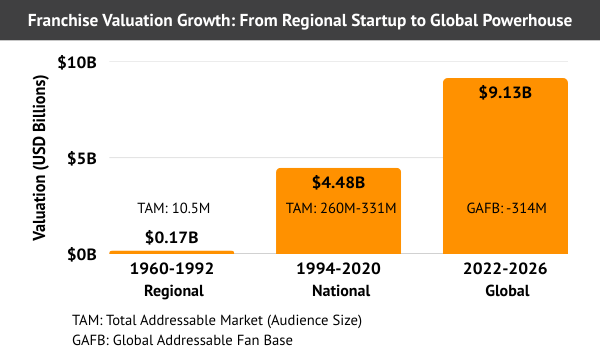
The real shift began in 1994 when Robert Kraft purchased the team for $172 million, a record price at the time. Many critics believed it was an overpayment. Kraft ignored the skeptics and immediately took a fan-first ownership approach.
He removed unpopular policies and invested heavily in the “experience” of being a Patriots supporter.
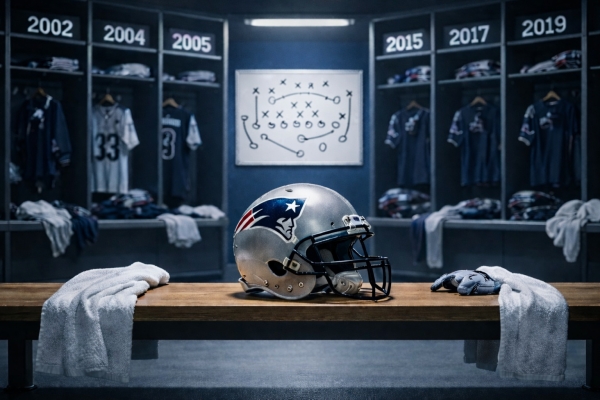
Under Bill Belichick and Tom Brady, the Patriots ceased to be a mere football team and became a high-performance operating system known as “The Patriot Way.”
The genius here was the marketing pivot: They stopped selling individual mascots and started selling a process. While other teams gambled on personality-driven brands, the Patriots built a “system brand” based on preparation and selflessness.
When fans bought a jersey, they were buying into a high-performance culture, which allowed the brand to maintain value even as players came and went.
When the Tom Brady “Deflategate” scandal broke in 2015, most organizations would have moved into damage control and appeasement.
The Patriots chose to lean into their identity, fostering an “Us vs. Them” narrative that turned a public relations crisis into a loyalty-building event.
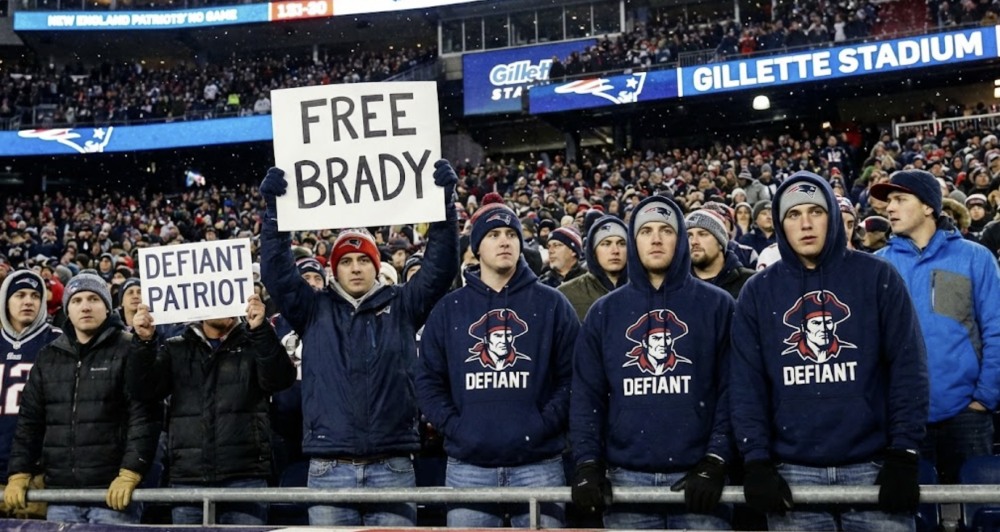
By refusing to back down, the team transformed notoriety into trust among its core base. Merchandise sales spiked and fan engagement intensified as the “Defiant Patriot” became a tribal marker.
Crucially, the team continued to win on the field, proving that product excellence is the ultimate shield against narrative noise. As the controversy unfolded, the franchise’s valuation soared.
Yet, cultural dominance only protects the brand; it doesn’t guarantee year-round revenue. To insulate the business from the inevitable cycles of on-field performance, the organization needed to expand its physical footprint.
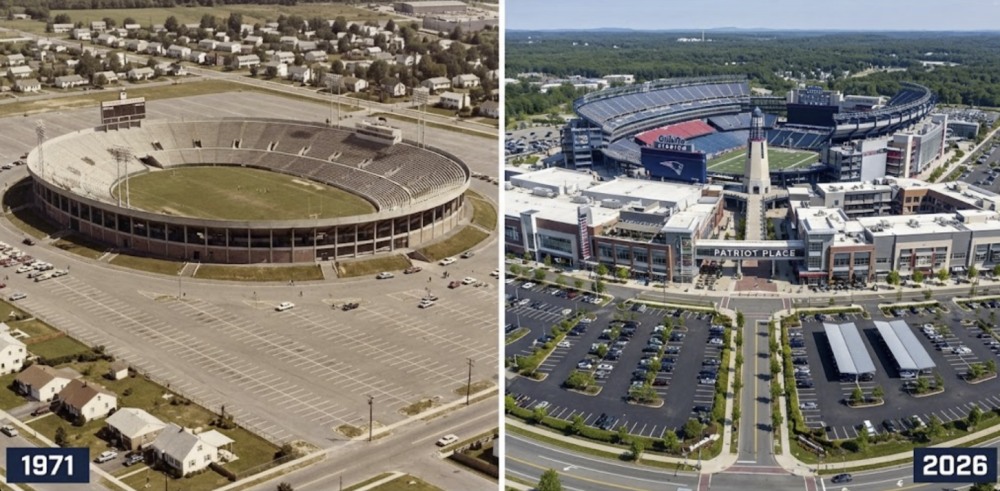
They did exactly that with the development of Patriot Place, a 1.3-million-square-foot destination for retail, dining, and entertainment. The launch turned Gillette Stadium into a 365-day-a-year revenue engine.
By owning the retail, medical, and dining facilities, the Patriots successfully monetized daily foot traffic and decoupled their income from their win-loss record.
The brand also went global. Through the NFL’s Global Markets Program, the Patriots expanded their footprint into Germany, Austria, Switzerland, and most recently, Brazil.
This transition from promotion to participation allowed the brand to build a future fan base through watch parties, football camps, and localized digital marketing far beyond the borders of New England.
They stopped being a “team” and became a platform.
When Tom Brady left for Tampa in 2020, the skeptics were vocal: The dynasty was a two-man show, and it was heading south. Those doubts intensified after Bill Belichick’s departure in 2024.
The world wanted to know if “The Patriot Way” was a blueprint for success or a historical monument to two men.
The answer arrived on the road to Super Bowl LX. In a stunning turnaround, head coach Mike Vrabel took a 4–13 squad and engineered a 14–3 powerhouse in his first year. He won the Pro Football Writers of America (PFWA) Coach of the Year for his accomplishment.
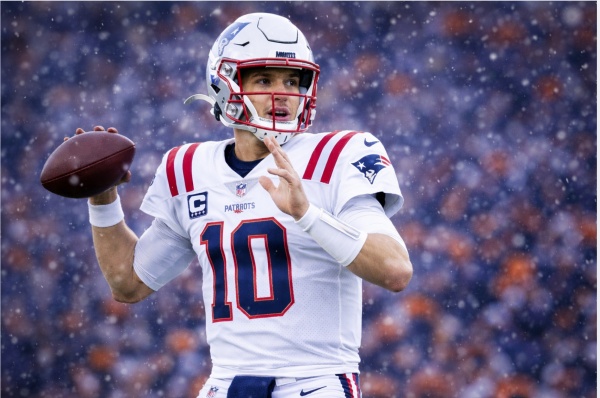
If Vrabel is the backbone of Patriots 2.0, the 2025 MVP Drake Maye is the face of the rebirth. He’s the perfect commercial bridge — a Gen Z icon who plays with the cold, situational discipline that defined the Brady-Belichick years.
He has helped to evolve the Patriots brand, combining the franchise’s trademark “do your job” stoicism with a league-leading 72% completion rate.
By the time he led New England to a 14–3 record and a Super Bowl LX berth, it was clear that the franchise had found a new identity that respected the “old way” while speaking a completely different language.
From a $172 million purchase in 1994 to a $9 billion valuation in 2026, the New England Patriots stand as the ultimate testament to long-term brand thinking. The trajectory shows a brand that has consistently outperformed the NFL average through strategic business decisions as well as on-field success.
When they stopped searching for the “next Brady,” they finally cleared the space to build Patriots 2.0, a more versatile version of their franchise. They protected the core of their brand identity while evolving with the times to turn their football team into a self-sustaining revenue machine — and one of the most recognizable brands in sports.
The Media Shower’s AI marketing platform helps teams score a touchdown with every campaign. Click here for a free trial.
On February 8, 2026, the New England Patriots faced the Seattle Seahawks, a team with their own powerful branding story, at Super Bowl XL. Read How the World-Champion Seahawks Built a Brand by Giving It Away, the story behind the “Beast Quake, “the 12s,” and the power of sharing brand ownership with your audience — a strategy that powered the Seahawks all the way to a 2026 Super Bowl win.