The Better Marketing Blog
Better tips, tools, and tactics for the AI era.
Better tips, tools, and tactics for the AI era.
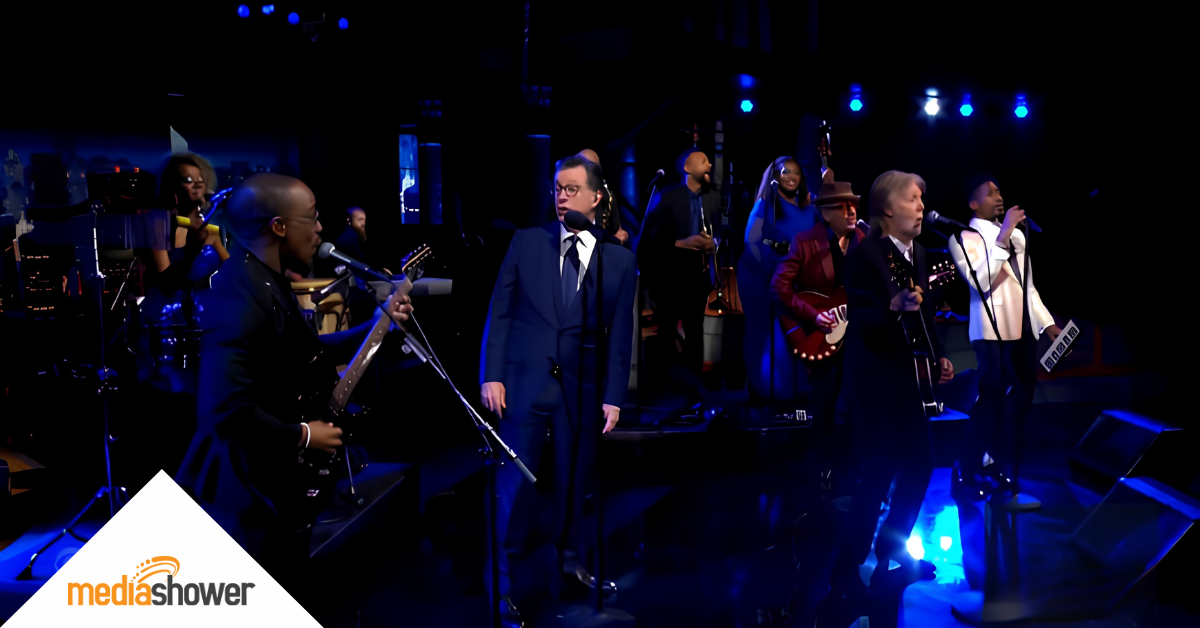
On May 21, 2026, Paul McCartney turned out the lights at the Ed Sullivan Theater, closing the final episode of The Late Show with Stephen Colbert with a fitting song, “Hello, Goodbye.”
The room was packed with celebrities, colleagues, and longtime staff, and 6.74 million people watched from home, making it the most-watched weeknight episode in the show’s history.
The image was almost absurdly perfect: McCartney, standing in the same theater where The Beatles detonated American pop culture in 1964, slowly dimming the lights while Colbert sang beside him like a man trying very hard not to cry on national television.
You could feel the audience realizing, in real time, that they were watching the end of something unusually personal.
That’s the strange thing about late-night television. The format looks disposable until, one day, it isn’t there anymore. Then people suddenly remember how often it sat in the background of their lives: during breakups, election nights, insomnia spirals, pandemics, and random weeknights when the world felt exhausting.
Over 11 years, Colbert became part of that routine. But he also did something much harder. He made viewers feel like the show itself had a moral center, a task that can be nearly impossible with a job that depends heavily on lampooning the news of the day.
Colbert’s monologues could be blistering. He went after politicians, media figures, conspiracy culture, tech billionaires, and whatever fresh absurdity the internet had coughed up that afternoon. But even on the sharpest nights, the show rarely felt cruel.
Somehow, it kept landing in the same emotional place: relief and human decency. That’s what made the “joy machine” work.
And for marketers trying to build a recognizable voice in an increasingly synthetic internet, there’s more to learn from Stephen Colbert than from a 48-slide LinkedIn carousel about authenticity.
Many brands treat positivity like decorative parsley. It’s sprinkled on top after the real messaging is done.
Colbert built his entire show around it.
Colbert spent years discussing elections, social unrest, shootings, corruption, war, misinformation, and the increasingly haunted atmosphere of modern American life. But he understood that people can absorb hard truths if you don’t leave them emotionally stranded afterward.
That distinction shaped the tone of The Late Show. The monologues often started with frustration or disbelief, then wandered through jokes sharp enough to make cable news producers sweat. They slowly bent toward something warmer by the end.
There was no fake hope here. It gave viewers just enough warmth to keep them from wanting to throw their television into the Hudson.
Interviews drifted away from performance mode. Colbert has always been unusually open about grief, faith, and loss, especially the deaths of his father and brothers when he was a child. When guests discussed painful subjects, he didn’t rush to rescue the energy with another joke. He listened. Sometimes he just sat there quietly for a second.
Audiences are good at detecting emotional fraud. Much corporate messaging fails because nobody behind it appears to believe it. Colbert’s viewers trusted him because they could feel an actual person underneath the performance.
Even people who hated his politics often admitted they liked him anyway. It points to something marketers often miss: audiences don’t necessarily need you to agree with them. They need to understand what kind of person is talking to them.
In an industry built on ego and ratings wars, Colbert’s ability to earn admiration across the aisle says something important: audiences aren’t just responding to his jokes. They’re responding to his humanity.
There’s a reason viewers kept returning night after night during heavy news cycles: the show became emotionally reliable. People knew they’d get outrage, perspective, and a little catharsis, all served up with humor that left them feeling better and helped them to get to sleep at night.

One of the clearest signs of Colbert’s communication genius: Even his competitors admire him and love to work with him. In 2023, during the Writers Guild of America strike, he joined Jimmy Fallon, Seth Meyers, Jimmy Kimmel, and John Oliver to produce a podcast called Strike Force Five in an act of solidarity with their show writers.
They have also appeared together many times on each other’s shows, clearly close friends as well as competitors.
Watch any appearance of these five comics interacting, and the love they have for each is unmistakably and unashamedly real.
(Colbert has said that his longtime friend Jon Stewart is the “designated survivor,” joking that the rest of the group may eventually be canceled as he was, and someone needed to remain standing. Kimmel almost lost his show earlier this year but was saved by fan boycotts.)
Stephen Colbert built his reputation on sharp commentary. His monologues often went straight at the day’s politics and culture, and he rarely softened his point of view to avoid discomfort. Viewers expected real opinions, not neutral filler, and guests knew they were talking to someone who took the issues seriously.
But underneath that edge was a clear sense of humanity. Colbert’s comedy grew out of empathy and lived experience, including his own history with grief and faith. He listened when guests talked about loss or fear and let his responses be shaped by care, not just by the next punchline.
That balance changed the emotional texture of the show. The jokes could sting, but the impact was gentle and hopeful. His final message to the audience followed the same pattern: he acknowledged how heavy the world felt, then reminded viewers they had spent 11 years “feeling the news” together and still finding joy in it.
A lot of brands struggle here because they confuse brand voice with posture. They pick a tone — irreverent, inspirational, rebellious, authoritative — then flatten every message into that shape until it stops sounding alive.
Colbert never flattened. Some nights, he was furious, some nights goofy, and some nights visibly emotional. But the underlying personality stayed coherent enough that audiences always knew who was talking.
The result was a loyal audience that trusted him to tell the truth and still leave them a little better than he found them.
Part of what made Colbert’s voice feel so natural was that the machinery underneath it was incredibly disciplined.
Every episode had a familiar rhythm: cold open, monologue, desk bit, interview, music. The repetition created comfort. Ironically, it also created freedom.
Because the structure stayed stable, Colbert could push harder inside it. He could experiment with tone, drift into sincerity, take bigger comedic swings, or spend longer on emotionally difficult material without the entire show feeling unmoored.
Brands often get this backward. They think consistency means repeating the same message endlessly across channels until everybody involved loses the will to live.
But consistency is really about recognizable patterns.
Absolut spent decades reinventing the same bottle silhouette in more than 1,500 visual ads. The Late Show did something similar emotionally. The audience always recognized the shape, even when the details changed.
You can see this in recurring segments like “Meanwhile,” audience call-backs, musical transitions, or the running chemistry with the band. Over time, those rituals stopped feeling like programming and started feeling like shared language.
Today, most brands communicate across fragmented platforms where audiences encounter them in pieces. One LinkedIn post, one TikTok clip. An email subject line and a YouTube pre-roll someone is trying desperately to skip.
Without a recognizable rhythm, brand voice starts dissolving.
Colbert’s show never had that problem. Even a 90-second clip still sounded unmistakably like The Late Show.
Most companies obsess over launches and barely think about exits. But endings linger.
People remember the final interaction they had with a brand long after they’ve forgotten the campaign slogan or quarterly tagline refresh. Restaurants know this. So do hotels. Airlines definitely know it too, although often for the wrong reasons.
Colbert seemed to understand it instinctively.
The final months of The Late Show unfolded under a cloud of cancellation rumors and industry politics. CBS insisted the decision was financial. Critics argued otherwise. Everyone had opinions.
Colbert could have spent the finale settling scores. Instead, he thanked people.
The viewers, of course, and the writers, stage managers, crew and camera operators. He even expressed gratitude to the CBS network. He treated the ending less like a corporate betrayal and more like the conclusion of a long and fulfilling collaboration.
Whether CBS deserved that grace is a controversial question. But strategically, it reinforced the qualities audiences already associated with Colbert: generosity, steadiness, and perspective.
And then came the detail that tied the entire thing together.
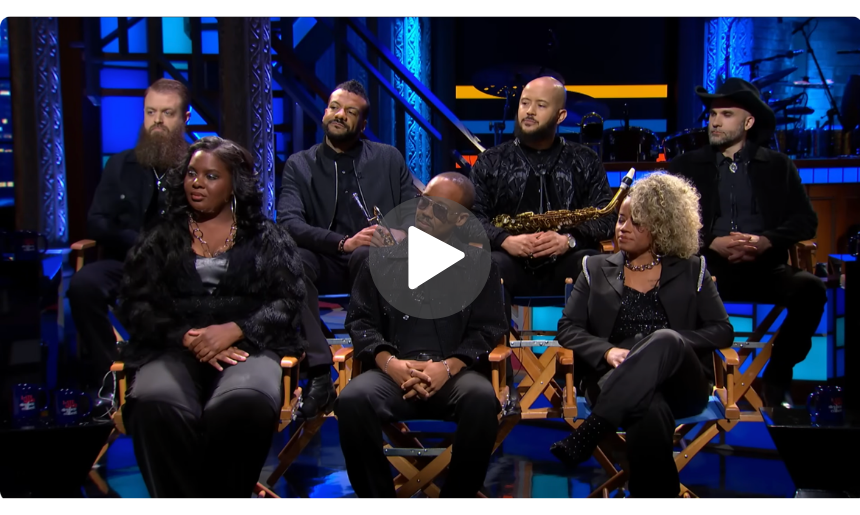
Three months before the finale, the house band changed its name to “Louis Cato and the Great Big Joy Machine.” At the time, it felt like a throwaway joke, but by the final episode, it felt like both a tribute and a promise.
The “joy machine” was never really the desk or the theater or the CBS logo glowing over Broadway. It was the atmosphere Colbert built night after night.
The show ended with the same voice it spent 11 years teaching audiences to trust. In true Colbert fashion, his final message was, “I don’t know why you say goodbye. I say hello.”The lights may have gone out on The Late Show set, but Colbert’s joy machine lives on.
Swan Song: “Hello, Goodbye,” and Paul McCartney turns out the lights
Media Shower’s AI marketing platform helps brands create content with great big joy. Click here for a free trial.