The Better Marketing Blog
Better tips, tools, and tactics for the AI era.
Better tips, tools, and tactics for the AI era.
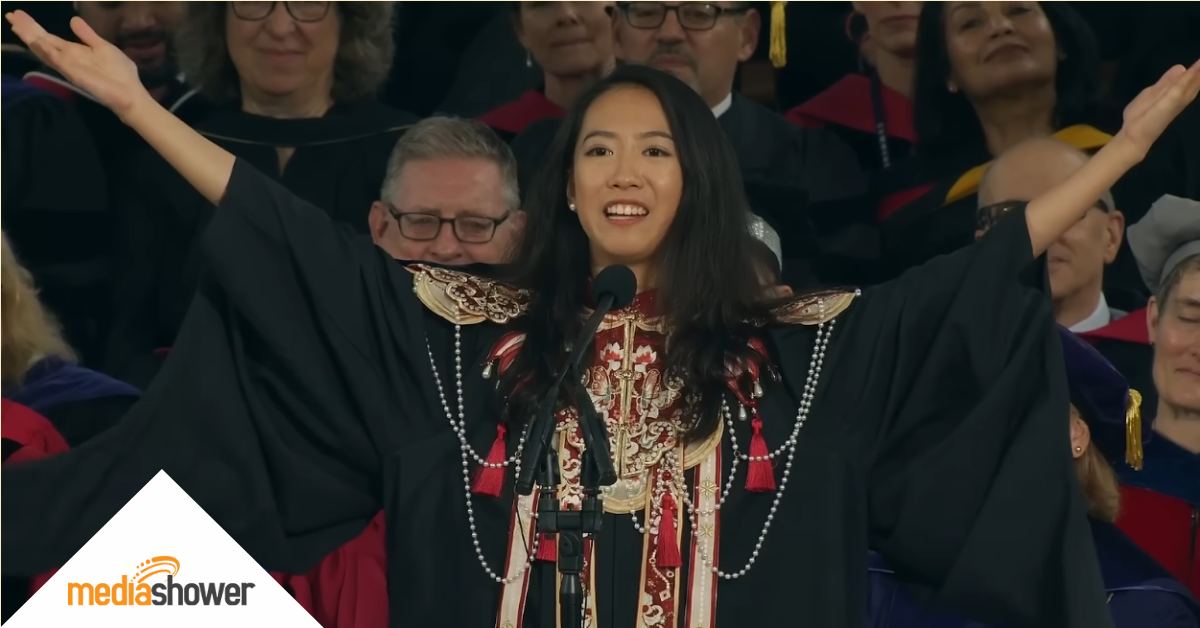
On May 29, 2025, Yurong “Luanna” Jiang stepped onto Harvard’s commencement stage carrying more pressure than most graduation speakers could imagine. She was the first Chinese woman chosen to deliver Harvard’s graduate English address. And she spoke to thousands at a time of challenging political circumstances for both countries.
Her opening move was unconventional: a story about helping friends figure out a washing machine.
What happened next was communication magic. A seemingly simple anecdote about classmates calling from Tanzania with confusion about a Google Translate response became the foundation for a speech that earned a standing ovation and sparked global conversation about finding common ground in divided times.
“Last summer, when I was doing my internship in Mongolia, I got a call from two classmates in Tanzania. They had a very urgent question: how to use their washing machine — because all the labels were in Chinese, and Google kept translating a big button as ‘Spinning Ghost Mode.'”
For marketers facing segmented audiences or impossible circumstances, Jiang’s approach is pure strategic gold—showing how to bridge differences rather than amplify them.
Jiang knew that every word she spoke would be dissected through geopolitical microscopes. The Trump administration had just announced plans to “aggressively” revoke Chinese student visas. Harvard was fighting federal funding freezes. U.S.-China tensions were hitting new peaks daily.
As the first Chinese woman chosen for this honor, Jiang faced something most communicators never experience: Critics were already questioning her selection. Some were calling for her visa to be canceled even before she spoke.
The room couldn’t have been more challenging.
Here’s what made this communication challenge truly brutal. Jiang needed to satisfy several audiences simultaneously, each with completely different expectations:
She told Harvard Magazine that she felt a “moral responsibility” to share a message of “common humanity” while knowing that any misstep could fuel exactly the kind of controversy she was trying to defuse.
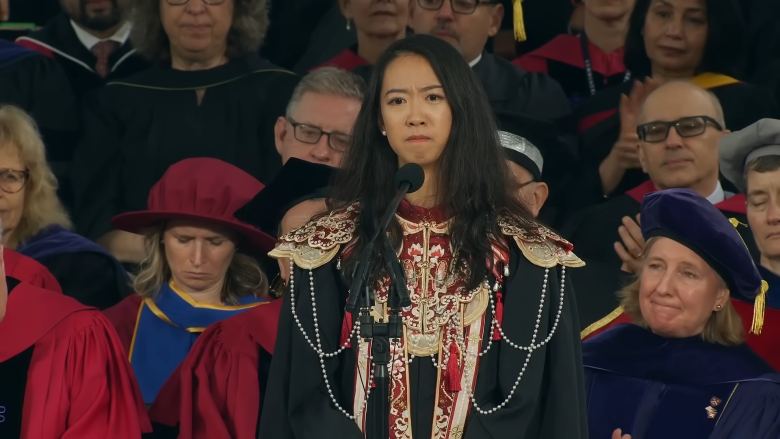
“If a little boy dies in a war that he didn’t start . . . part of me dies with him.”
Jiang showed true communication genius. Instead of diving into political tensions or defending her presence, she opened with something beautifully universal: confusion, friendship, and the absurd comedy of technology failing us at the worst possible moment.
“There we were: an Indian and a Thai calling me, a Chinese in Mongolia, to decipher a washer in Tanzania. And we all study together here at Harvard.”
This single anecdote accomplished something remarkable:
It’s strategic storytelling at its finest—finding the human moment that makes abstract policy debates suddenly feel personal and relatable.
Rather than lecturing about international education policy, Jiang grounded everything in deeply human terms. Her most powerful moment came when she shared:
“If a girl skips school out of fear of harassment, that threatens my dignity. If a little boy dies in a war that he didn’t start and never understood, part of me dies with him.”
This approach let her advocate fiercely for her position without seeming to attack anyone directly. Pure strategic gold.
Multiple reports noted that Jiang’s voice trembled during delivery and she appeared close to tears. In most political contexts, visible emotion gets dismissed as weakness. In Jiang’s case, her authentic vulnerability became her most powerful strategic weapon.
Her trembling voice proved that she meant every word.
The “Spinning Ghost Mode” reference became her speech’s powerful central metaphor, which she mentioned again in her conclusion.
“So, Class of 2025, when the world feels stuck in Spinning Ghost Mode, just remember . . .”
This callback transformed a technical glitch into a symbol for global confusion and division—making her conclusion feel earned rather than imposed.
It was the kind of narrative skill that separates the good speakers from the great ones.
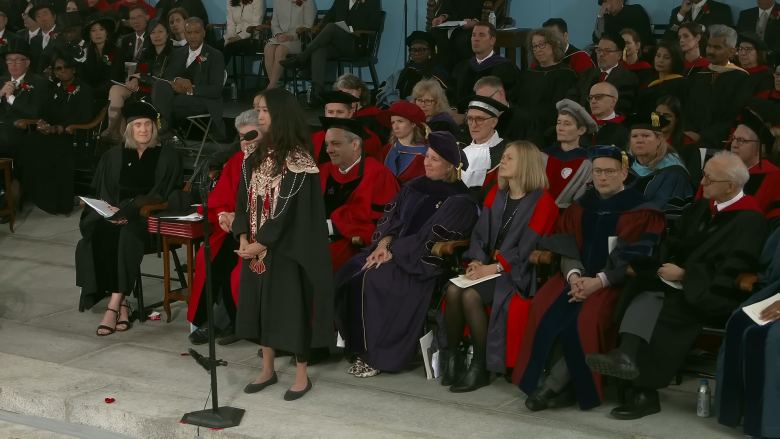
“We rise by refusing to let one another go.”
The commencement audience was already primed to support international students. Harvard President Alan Garber had just received a 34-second standing ovation for declaring the university welcomed students “around the world—Just. As It. Should. Be.”
Jiang could have used this momentum to go full political. But she showed remarkable restraint, making her message feel like a natural extension of the university’s values rather than opportunistic political theater.
Despite facing attacks from multiple directions, Jiang never mentioned President Trump directly or engaged in political combat. This restraint was strategic brilliance. It prevented her speech from being dismissed as partisan rhetoric and allowed her core message to reach much broader audiences.
Her signature phrase “humanity rises and falls as one” was strategic sophistication—echoing both Chinese diplomatic language about “shared future for mankind” and American ideals about global leadership.
Different audiences could hear familiar values in her words without feeling excluded or attacked.
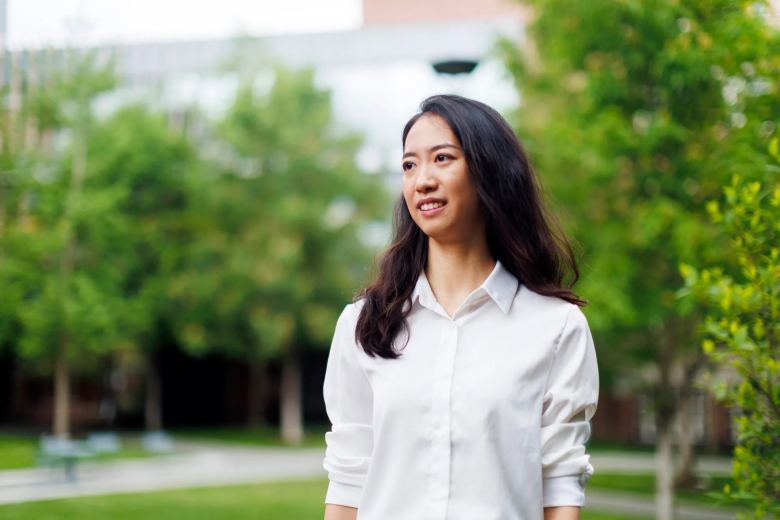
The speech achieved every primary objective:
The speech also triggered intense reactions worldwide. Chinese social media erupted with critics questioning her privileged background and whether she truly represented ordinary Chinese students. Conservative American critics called for her visa to be revoked.
This divided reception actually validated her strategic approach. By speaking to shared human values rather than taking political sides, she avoided being easily categorized by either extreme.
The controversy proved that her message was resonating across traditional boundaries.
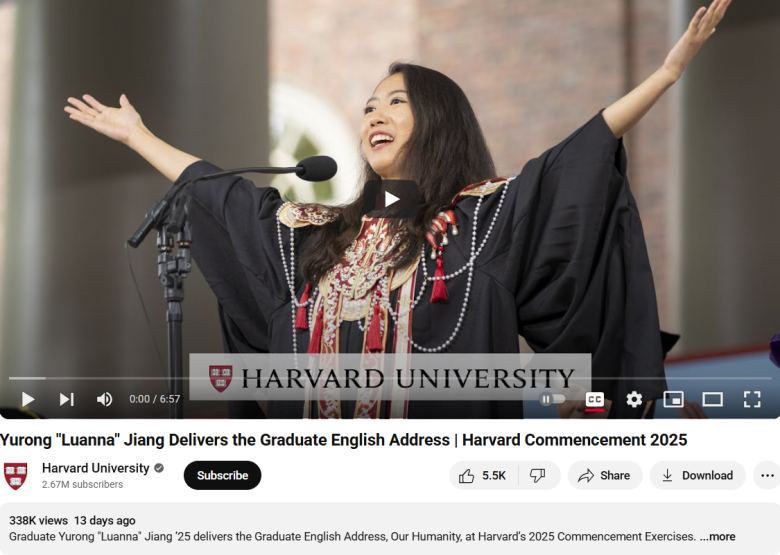
Here are the key strategic insights marketers can apply from Jiang’s masterful communication approach.
Jiang didn’t begin by defending international students or attacking visa restrictions. She started with a moment everyone could relate to: technology confusion and calling friends for help. This approach creates psychological safety before introducing complex themes.
The washing machine anecdote worked because it was simultaneously specific (Chinese labels in Tanzania) and universal (technology failing us when we need it most). This combination makes abstract debates feel immediate and personal.
Jiang’s visible emotion during delivery strengthened rather than weakened her credibility. Her trembling voice convinced audiences she believed every word. It made her advocacy more persuasive than a polished performance would have been.
“Spinning Ghost Mode” appeared in both her opening and conclusion, creating narrative coherence while transforming a tech glitch into a metaphor for global confusion. This technique helps audiences remember and share key messages long after the moment ends.
By refusing to name opponents or engage in direct political combat, Jiang made it nearly impossible for critics to dismiss her message as partisan. Her restraint created space for audiences to hear her arguments without immediately choosing sides.
Jiang successfully addressed American graduates, Chinese observers, university officials, and media critics simultaneously. She achieved this by focusing on shared human experiences rather than group-specific interests—a masterclass in inclusive messaging.
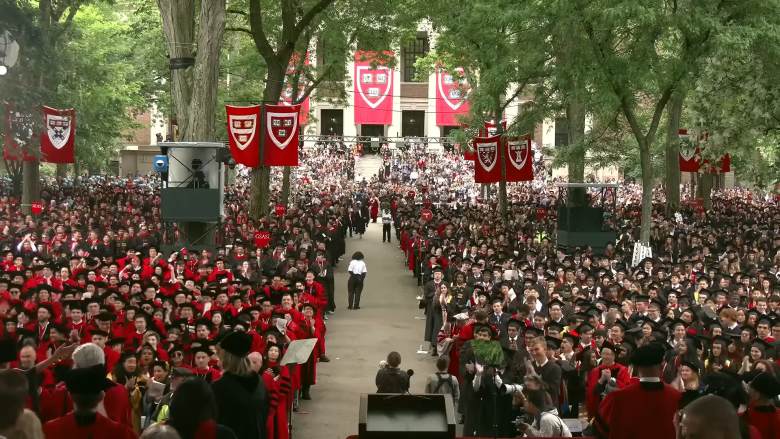
Jiang’s speech earned a standing ovation.
Jiang’s communication triumph demonstrates something powerful: during tense moments, the most effective approach often requires stepping back from immediate conflicts to find deeper common ground.
Her approach reflects lessons from her boxing background, where she trained by sparring with larger opponents.
“You have to look at them eye-to-eye and not be scared—because if you close your eyes, you cannot block the punch you can’t see, and you cannot hit a target you cannot see.”
In communication terms, this translates to addressing challenging audiences directly while staying focused on achievable objectives rather than trying to win every battle.
The speech demonstrated how personal narrative can reshape political conversations when delivered with strategic precision and genuine heart. Sometimes the most powerful way forward is to start with a washing machine and work your way up to changing the world.
Media Shower’s AI marketing platform helps brands spin messages that unite rather than divide.Click here for a free trial.
Start your free Media Shower trial and get personalized insights on your SEO, competitors, AI visibility, and what to do next.