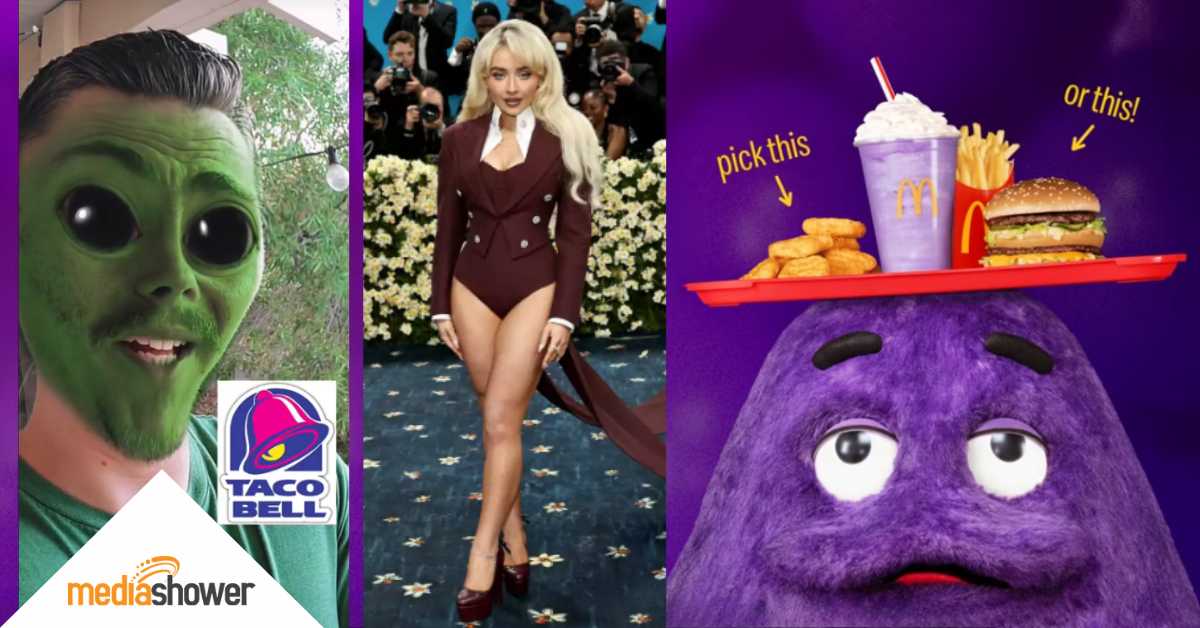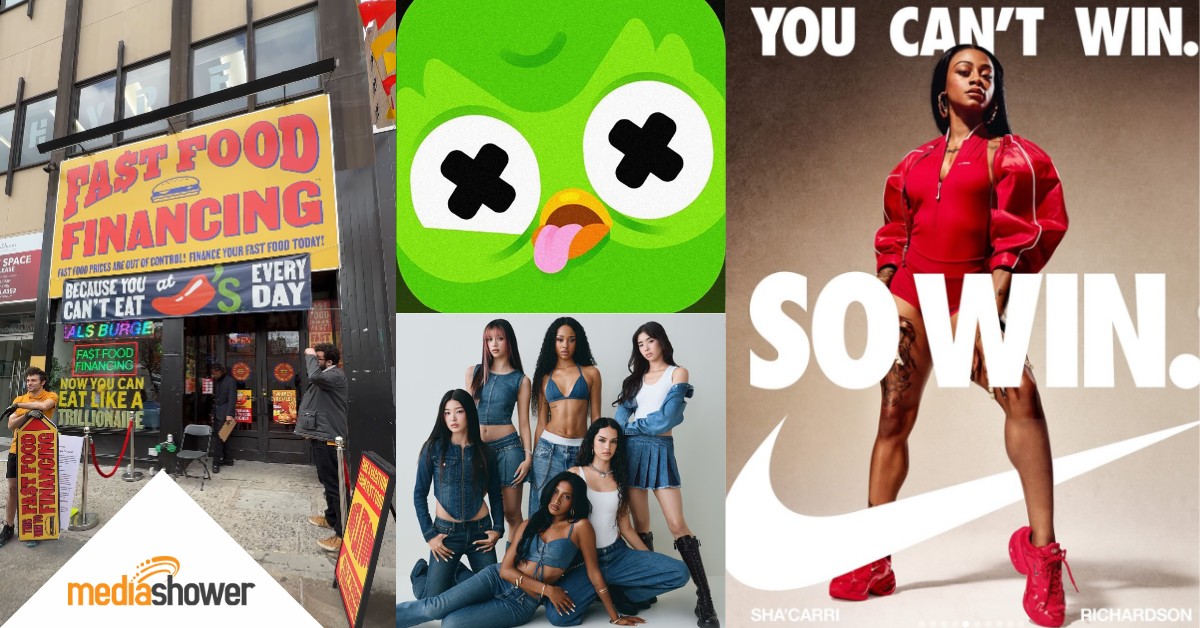
These are the ad campaigns that broke the Internet.
They dominated feeds, crossed platforms, and showed up in group chats, comment sections, and offline conversations. Some were massive pop moments. Others were strange, specific, and impossible to ignore. All of them earned real attention at real scale.
We researched success metrics to bring you the list of the Top 10 viral social ad campaigns of 2025. We then identified patterns and trends to inform your marketing strategy for 2026.
1. Duolingo: “The Death of Duo” (February 2025)
For a brand fluent in internet culture, this was Duolingo’s most ambitious narrative stunt to date. It turned routine app engagement into a shared cultural event with real stakes.
What it was
Duolingo staged the fictional death of its mascot and framed the comeback as a collective mission inside the app. Users were asked to earn XP together to bring Duo back, turning routine language practice into a shared narrative event. The story unfolded across social platforms in parallel, with Duolingo fully committing to the bit.
Why it traveled
The campaign gave users control. Progress felt visible and slightly absurd, which encouraged sharing and status updates. The humor landed because it respected the audience’s fluency with Duolingo’s long-running mascot lore.
The proof
- XP goal reached: Users earned 50.9 billion XP in just two weeks to “resurrect” the mascot (roughly 5 billion lessons completed).
- Reach: Generated 1.7 billion total impressions and over 142 million views on X alone.
- Downloads: Sparked a 38% global spike in Android downloads within 24 hours of the “death” announcement.
- Financial impact: Q1 revenue hit $230.7M (38% YoY growth), with Daily Active Users (DAUs) rising 51% to 40.5 million.
2. Gap: “Better in Denim” x KATSEYE (August 2025)
Gap’s KATSEYE collaboration marked a sharp shift toward performance-led fashion storytelling designed for feeds, not billboards. Denim became the uniform for movement, remixing, and fan participation.
What it was
Gap partnered with KATSEYE to launch a denim-focused campaign built around performance and repeatable visuals. Instead of a single hero film, the work lived in short-form clips designed for remixing, fan edits, and choreography-driven sharing.
Why it traveled
The campaign treated fashion as participatory culture. Fans watched the content, then recreated it, extending its life well beyond Gap’s owned channels. The styling and movement translated cleanly across platforms without explanation.
The proof
- Views and impressions: Surpassed 576 million views and 8 billion media impressions across platforms.
- Sales performance: Contributed to double-digit growth in the adult denim category; Gap brand comparable sales rose 7% in Q3.
- Retail traffic: Store foot traffic increased 2.8% in August, peaking at +8.5% during the launch week.
- Engagement: Became the #1 TikTok search during launch week and Gap’s most-liked social post to date.
3. Chili’s: “Fast Food Financing” (April 2025)
Chili’s continued its strong run of culturally aware humor by leaning into a shared economic reality. The joke was simple, sharp, and instantly legible.
What it was
Chili’s reframed value pricing as a mock financial product, presenting menu deals as if they required long-term planning and commitment. The idea played out through short videos and social copy that stayed calm, confident, and relatable.
Why it traveled
The humor matched the moment. It acknowledged economic tension without commentary or overstatement, making the content easy to share and repeat.
The proof
- Sales growth: Driven by this campaign, Chili’s saw two consecutive quarters of 31%+ same-store sales increases.
- Traffic: Restaurant traffic surged by 21–24%, significantly outpacing the casual dining industry average.
- Digital buzz: Generated more impressions than the 2024 “Big Smasher” launch, which was their previous record-holder.
4. Nike: “So Win” (February 2025)
Nike’s Super Bowl moment extended far beyond the broadcast, living comfortably in feeds where emotion travels faster than spectacle. The work felt immediate and familiar at the same time.
What it was
“So Win” launched during the Super Bowl and expanded into social-first edits centered on athletes, competition, and joy. The campaign favored emotional clarity over scale-heavy theatrics.
Why it traveled
Short-form cuts carried the message cleanly across platforms. The tone aligned with Nike’s familiar voice while remaining native to newsfeeds.
The Proof
- Accolades: Won the 2025 Super Clio Award for the best commercial of the Super Bowl.
- Creative impact: Marked Nike’s first Super Bowl ad in 27 years; the “Winning Isn’t for Everyone” narrative was cited by analysts as “restoring Nike’s brand heat.”
5. GoPro: Susi Vidal Partner Series (June 2025)
This partnership signaled an evolution in how GoPro shows up beyond borders. The camera stopped chasing extremes and started observing life.
What it was
GoPro partnered with TikToker Susi Vidal to document everyday moments, routines, and movement through her perspective. The content felt personal, with the camera integrated naturally rather than highlighted.
Why it traveled
Viewers stayed because it didn’t feel like advertising. The product proved its value through presence and use, not explanation.
The proof
- Partnership reach: Tapped into Vidal’s 4 million TikTok followers to pivot from extreme sports to “lifestyle/cooking” utility.
- Product integration: Showcased the HERO13 Black in home kitchens, leading to a diversification of the user base beyond “adrenaline junkies.”
- Performance: Outperformed previous branded content in engagement and completion rates across GoPro’s social channels.
- Engagement: Viewers spent more time per post compared to traditional product-led videos.
6. Nutter Butter: “Nutterverse” (Peaked 2025)
By 2025, Nutter Butter had fully committed to surrealism as strategy. The Nutterverse was less like a campaign and more like a living comment section.
What it was
Nutter Butter created a loosely connected TikTok universe built through visual fragments, cryptic posts, and relentless comment replies. Narrative coherence was optional; participation was not.
Why it traveled
Confusion created curiosity. Viewers returned to decode meaning or join the chaos, turning comment threads into entertainment hubs.
The proof
- Market penetration: Achieved a 16.5% increase in household penetration among Gen Z and Millennial consumers.
- Earned media: Garnered 3.3 billion+ impressions through 177 media placements (NYT, CNN, Forbes).
- Brand sentiment: Shifted from a “forgotten snack” to a cult favorite with major engagement from Joe Jonas and Trisha Paytas.
- Engagement: Comment threads topped the original posts in both volume and velocity.
7. Beyoncé x Levi’s: “Reimagine” (Fall 2025)
“Reimagine” treated heritage as material rather than nostalgia. The collaboration with Beyonce, dubbed a fellow trailblazer, unfolded with patience and control.
What it was
A chapter-based, cinematic rollout reinterpreted Levi’s legacy through Beyoncé’s creative direction. Each release stood alone while contributing to a broader arc.
Why it traveled
The pacing invited conversation. Rather than flooding feeds, the campaign sustained attention through anticipation and storytelling.
The proof
- Consumer intent: 53% of male viewers reported positive purchase intent (+3 points above the industry norm).
- Cultural longevity: The year-long, 4-chapter film rollout sustained brand engagement far longer than a traditional one-off drop.
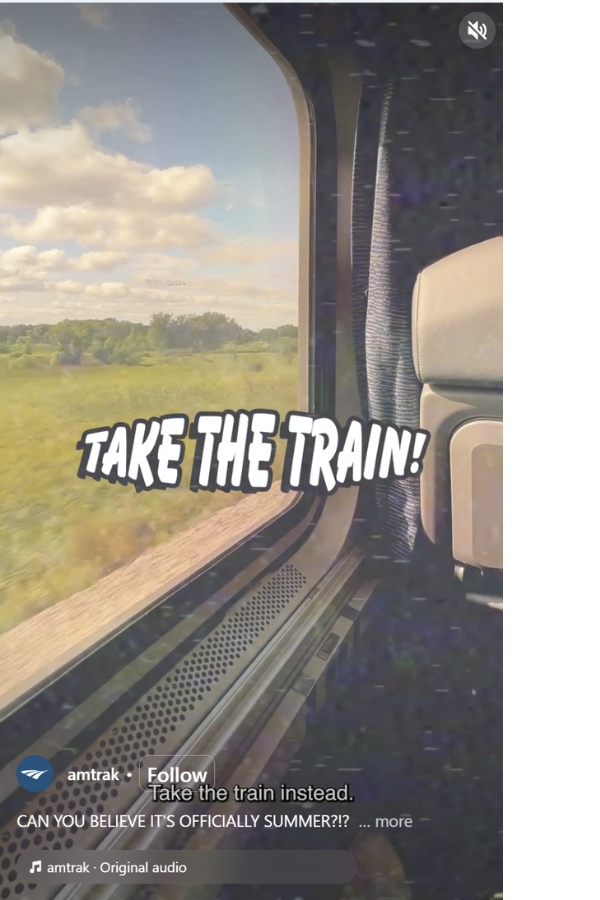
8. Amtrak: “The Unserious Rail” (2025)
Amtrak’s social presence evolved into a full-fledged brand character. Rail travel became a punchline people wanted to follow.
What it was
Amtrak leaned fully into a playful, animated social presence that treated rail travel less like infrastructure and more like a character with a personality. Using custom animations, exaggerated visual gags, and a deliberately unserious tone, the brand created short-form posts that felt closer to internet cartoons than transportation marketing.
Why it traveled
The execution matched the environment. Animation allowed Amtrak to exaggerate everyday travel moments without relying on live action or spokespersons, making the content feel flexible and native to feeds.
The proof
- Follower growth: Gained 60,000+ new followers in a single week following the “Traintacular” video.
- Virality: The “Traintacular” post alone saw 500,000+ shares and 500,000+ likes, helping Amtrak target their 66 million annual rider goal.
9. Little Caesars: “Burn the Burns” (2025)
Little Caesars leaned into chaos with discipline. A popular meme became advertising gold, but the real prize was how the brand treated comment replies as serialized content.
What it was
Little Caesars built a campaign around the reappearance of the now-adult subject of the iconic “Disaster Girl” meme, placing her directly into brand advertising. The campaign staged scenarios that echoed the original image’s tone and cultural memory, with the character calmly present as chaos unfolded around her, now reframed through Little Caesars’ absurdist lens.
Why it traveled
The campaign activated a piece of internet memory that required no explanation. Bringing back a universally recognized meme figure triggered instant recognition and emotional recall, then let the absurdity do the rest.
The proof
Views: The campaign reached 53.6 million views through a mix of organic and “dark” social engagement.
Follower growth: Gained 19,000+ TikTok followers shortly after the teaser released.
PR scale: The absurdist reply strategy generated an estimated 9 billion total impressions.
10. Pop Mart: “Labubu Unboxing” (2025)
Pop Mart’s Labubu became a social commerce engine disguised as a toy. For most brands, unboxing videos are content; for Pop Mart, it was currency.
What it was
A global unboxing phenomenon powered by creators, live shopping, and resale culture became viral campaign fodder. Each reveal carried suspense and status.
Why it traveled
Every unboxing carried real suspense, with rarity and outcome visible in real time, which made each video feel consequential rather than repetitive. Uncertainty became entertainment, and as the format spread, individual reveals became a continuous, self-sustaining loop of anticipation.
The Proof
- Revenue: Labubu dolls generated over $670 million in revenue in the first half of 2025 alone.
- Business valuation: The viral unboxing trend put the Labubu IP on track to become a billion-dollar sub-brand by year-end.

Marketer Takeaways
Here are the patterns we recognized in the year’s most viral campaigns.
- Virality extends beyond a single moment. Many of these campaigns unfolded over weeks or months, rewarding return attention rather than chasing spikes.
- Culture acts as the distribution layer. Comments, remixes, and community behavior carried the work further than paid reach ever could.
- Products frequently power the content. From collectibles to denim to menu items, the object itself anchors the story.
- Tone varies, while commitment stays consistent. Absurd, cinematic, restrained, or playful, each brand stayed fully inside its chosen voice.
- Execution matches the environment. The most effective campaigns behaved like they belonged exactly where they appeared.
Media Shower’s AI marketing platform helps you create your next viral campaign. Click here for a free trial.