The Better Marketing Blog
Better tips, tools, and tactics for the AI era.
Better tips, tools, and tactics for the AI era.
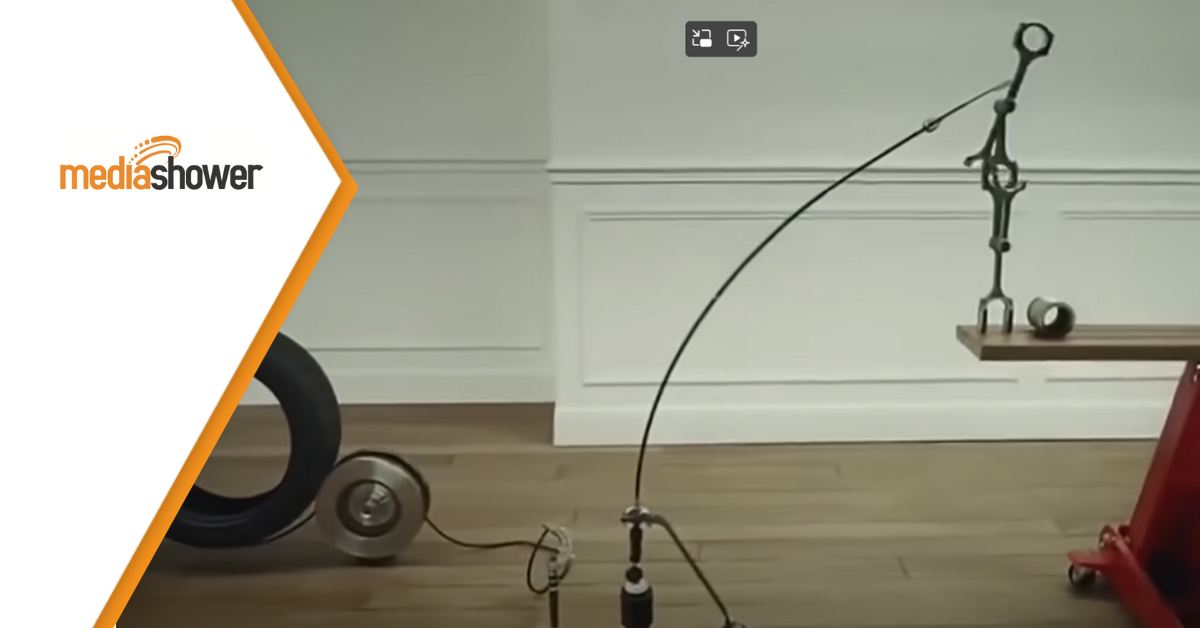
In 2003, Honda released “The Cog,” a two-minute commercial that redefined how brands tell stories. The ad featured a Rube Goldberg-inspired chain reaction using genuine Honda parts to demonstrate Honda’s precision engineering in the most captivating way.
No CGI, no shortcuts—just mind-boggling mechanical wizardry. It took 605 painstaking takes to nail the final shot, but the payoff was a viral sensation that became one of the most awarded ads of all time.
You’ve got to see it to believe it:
Honda, the powerhouse of precision engineering, was on a mission to elevate its brand perception in Europe. While known for reliability, the company wanted to emphasize the meticulous craftsmanship behind every Honda Accord.
Honda turned to Wieden+Kennedy London, a creative agency known for groundbreaking campaigns, to bring this vision to life. The challenge was to create an ad so compelling that viewers would see Honda not just as a car manufacturer but as a master of precision and innovation.

“The Cog” is a two-minute commercial centered on a Rube Goldberg-inspired contraption crafted entirely from Honda Accord parts. Every piece—from the windshield wipers to the transmission—played a role in an intricate chain reaction, ultimately leading to the grand reveal of a perfectly assembled Accord.
The only narration in the ad comes at the very end: “Isn’t it nice when things just work?, as the Honda rolls off to the beat of “Rappers Delight” by The Sugarland Gang.
Directed by Antoine Bardou-Jacquet, the ad was filmed in two continuous takes, stitched together seamlessly.

Here’s what made “The Cog” so memorable.
“The Cog” presented a simple yet ingenious idea: showcasing Honda’s engineering precision through an elaborate chain reaction. Its originality captivated audiences and turned an ordinary product demonstration into a work of art.

At a time when digital effects were becoming the norm, Honda did the unthinkable—they kept it real. By ditching CGI, the brand reinforced its commitment to precision, craftsmanship, and reliability.
Viewers respected the authenticity, making them more likely to trust in Honda’s engineering excellence.
“The Cog” relied entirely on visual impact rather than dialogue, allowing the ad to transcend language barriers. This approach expanded its global appeal while emphasizing Honda’s focus on simplicity and elegance.
Released during the early days of internet virality, “The Cog” became one of the first ads to achieve massive online success. Viewers were mesmerized by its intricacy, sharing it widely across forums, emails, and media platforms to help Honda’s message reach far beyond traditional audiences.
The campaign’s tagline, “Isn’t it nice when things just work?”, underscored Honda’s dedication to precision and quality. It reinforced the idea that every part of the Accord was meticulously designed to function flawlessly.

Several factors combined to make “The Cog” legendary.
With its slow, deliberate pace and hypnotic movements, “The Cog” resembled an art-house film more than a commercial. This elevated the ad to a level of creative sophistication rarely seen in the industry.
The campaign blurred the line between engineering and creativity, showcasing Honda’s technical expertise in an artistic manner that appealed to both car enthusiasts and general audiences.
Pulling off such a complex sequence without CGI was ground-breaking. The ad was a marvel of both engineering and filmmaking, proving that creative constraints often lead to the most innovative solutions.
Honda showed the full 120-second spot only ten times in select, high-profile broadcasts. Then, they rolled out shorter versions with interactive features, inviting viewers to explore more.
They added interactive prompts to the shorter versions, letting viewers watch the entire 120-second ad or order a “making-of” DVD. The DVD also included behind-the-scenes footage, the full music video of “Rappers Delight,” a virtual Accord tour, and other extras.
The interactive versions were a hit. Honda recorded 250,000 interactive engagements and 10,000 direct requests for test drives or brochures.

“The Cog” was an unqualified success, both creatively and commercially.
“Despite only being broadcast 10 times over a 10-day period in April 2003, due to the high cost of such lengthy TV advertising slots, ‘Cog’ is widely considered one of the most ground-breaking, influential and consequently most awarded TV adverts.” – Honda UK Engine Room
The ad picked up over 12 million views within weeks of its release. In an era before YouTube dominance, this number was monumental.
More than 20 years later, “The Cog” remains a textbook example of how to create advertising that transcends its purpose—an ad so influential, it’s still held up today as a benchmark of creativity.

Since “The Cog,” other creatives have drawn inspiration from Rube Goldberg’s concept and pushed it into mainstream culture. Though we can’t prove that Honda was the first, it’s likely that the success of “The Cog” started its own chain reaction.
Three great examples:
In 2007, Guinness created the most expensive ad in their then-80-year history. “Tipping Point” was filmed in the Andes and began with a simple dominoes topple that expanded in spectacular fashion to include items like paint cans, furniture, and even cars, all leading to the reveal of a gigantic pint of Guinness.
This was all done with no CGI—other than a brief pause to represent the break in Guinness’ iconic two-part pour. (We forgive them.)
Red Bull’s over-the-top 2012 version featured real athletes—from skateboarders to racecar drivers—as human cogs on a gigantic chain-reaction course, taking the Goldberg machine concept to a whole new level. The ad has racked up over 37 million views on YouTube alone.
The alternative rock band built an elaborate contraption with a playful feel for their 2010 music video, using ordinary household items. The video has received over 750 million YouTube views.
These examples highlight how a single creative idea can bridge art, entertainment, and consumer engagement.
Honda’s astonishing success with “The Cog” confirms that simple ideas, executed with absolute dedication, can produce massive returns.
Here’s what marketers can learn from the success of this campaign.
Want to engineer your own viral masterpiece? Media Shower’s AI marketing platform can help you design campaigns that just work. Click for a free trial.
Start your free Media Shower trial and get personalized insights on your SEO, competitors, AI visibility, and what to do next.