The Better Marketing Blog
Better tips, tools, and tactics for the AI era.
Better tips, tools, and tactics for the AI era.
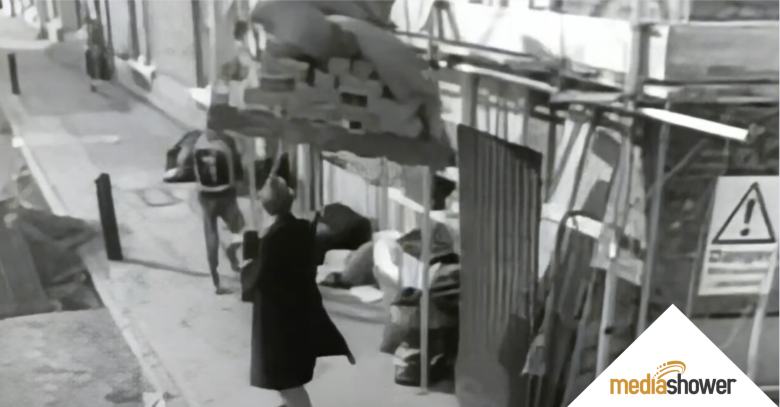
Imagine walking down the street and seeing a man shove someone. You assume it’s a mugging. Now, zoom out. What if you saw that same man pushing someone out of the way of falling bricks? Your perception shifts in an instant.
That’s the magic of leading British newspaper The Guardian’s 1986 “Points of View” ad. In just half a minute, it demonstrated the power of perspective—without a single wasted word. It was a cinematic mic drop.
By the mid-1980s, The Guardian was fighting an uphill battle against bigger, more established UK newspapers. While its competitors focused on sensational headlines, The Guardian wanted to emphasize something different: comprehensive journalism that captured the full picture.
To bring this message to life, the paper turned to the creative minds at Boase Massimi Pollitt (BMP). Under the guidance of legendary ad man John Webster, they crafted a commercial that would make viewers feel the importance of seeing multiple perspectives—rather than simply telling them.
Inspired by Kurosawa’s “Rashomon” and the power of real-life photojournalism, BMP created an ad that didn’t just challenge assumptions; it dismantled them.

The ad starts with what looks like a textbook case of street crime: a “skinhead” lunging at a businessman, a classic ’80s mugging stereotype. But then, the camera angle changes. Suddenly, we see what’s actually happening—our “criminal” is shoving the businessman to safety, just as a wall of bricks comes crashing down.
The final voiceover drives the message home:
“An event seen from one point of view gives one impression. Seen from another, it gives quite a different impression. But it’s only when you get the whole picture that you can fully understand what’s going on.”
It’s simple. It’s brilliant. And it’s unforgettable.

Decades before M. Night Shyamalan and “The Sixth Sense,” this ad mastered the art of misdirection. Viewers thought they knew what was happening—until the camera revealed the truth. That sudden shift made it impossible to forget.
There’s no complex dialogue, no heavy-handed messaging. Just gripping, black-and-white imagery that transcended language and culture. The ad’s message was instantly clear, no matter where or who you were.
At first, you judge the “skinhead.” Then, you realize you were wrong. That emotional whiplash is what made this ad so impactful. It forced viewers to confront their own biases—something few commercials dared to do.

“Points of View” was a cultural moment. In an era of increasing media scrutiny, it served as a reminder that first impressions aren’t always the full story. The ad’s influence can still be seen today in discussions about media bias, “fake news,” and the role of journalism in shaping public perception.
But it didn’t just spark conversations—it won big.

Most newspaper ads in the ’80s were forgettable. This one was a psychological thriller packed into 30 seconds. With tight editing, dramatic visuals, and a perfectly timed reveal, it felt more like a short film than an ad.
The focus of the ad wasn’t about The Guardian. It was about human nature—our tendency to jump to conclusions, to believe what we see at first glance. The ad tapped into something deeper, making it far more than just marketing.
Fake news. Media bias. The dangers of single-story narratives. The Guardian tackled all of these issues before they became mainstream concerns. In today’s world of viral misinformation, its message is even more relevant.

Media Shower’s AI marketing platform helps brands craft unforgettable campaigns. Click for a free trial.
Start your free Media Shower trial and get personalized insights on your SEO, competitors, AI visibility, and what to do next.