It always starts with a straight face.
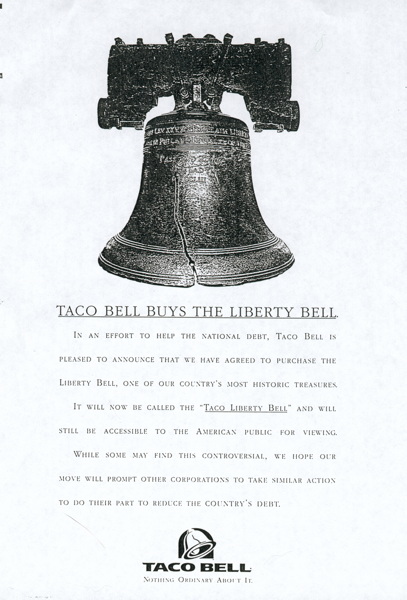
On April 1, 1996, readers of The New York Times learned that Taco Bell had purchased the Liberty Bell and renamed it the “Taco Liberty Bell” to help reduce the national debt.
The idea was just believable enough to spark outrage. Within hours, the story spread far beyond the newspaper. The backlash came quickly, with calls flooding the National Park Service and news outlets rushing to verify the claim.
Then Taco Bell revealed the punchline: it was April Fools’ Day.
That believability is what makes a great April Fools’ campaign work. And the best brands don’t just land the joke, they land the message. Here’s our curated list of the most most effective April Fools’ campaigns ever – and what marketers can learn.
1. Taco Bell’s Liberty Bell (1996)
Taco Bell spent $300,000 on full-page newspaper ads announcing its “purchase” of the Liberty Bell. The ad appeared in the Philadelphia Inquirer, The New York Times, The Washington Post, The Chicago Tribune, The Dallas Morning News, and USA Today.
As the story became a national sensation, White House Press Secretary Mike McCurry even played along, joking that the Lincoln Memorial had also been sold and renamed the “Ford Lincoln Mercury Memorial.”
Not everyone was amused: “To appropriate one of the cherished symbols of our national heritage and use it as part of some cheap, thoughtless advertising ploy is totally disgusting.” – Mark Schoenrock, Washington Times
Clearly, many people didn’t share Schoenrock’s disgust.
The result
- Estimated $25 million in earned media
- $600,000 sales lift the next day
- Exposure to 70+ million Americans
The insight
This campaign functioned as a distribution strategy. By placing the message in credible media and tying it to a national symbol, Taco Bell created a reaction that fueled its own amplification.
2. Burger King’s Left-Handed Whopper (1998)
Burger King introduced a Whopper designed for left-handed customers, with ingredients rotated so condiments would drip from the “correct” side.
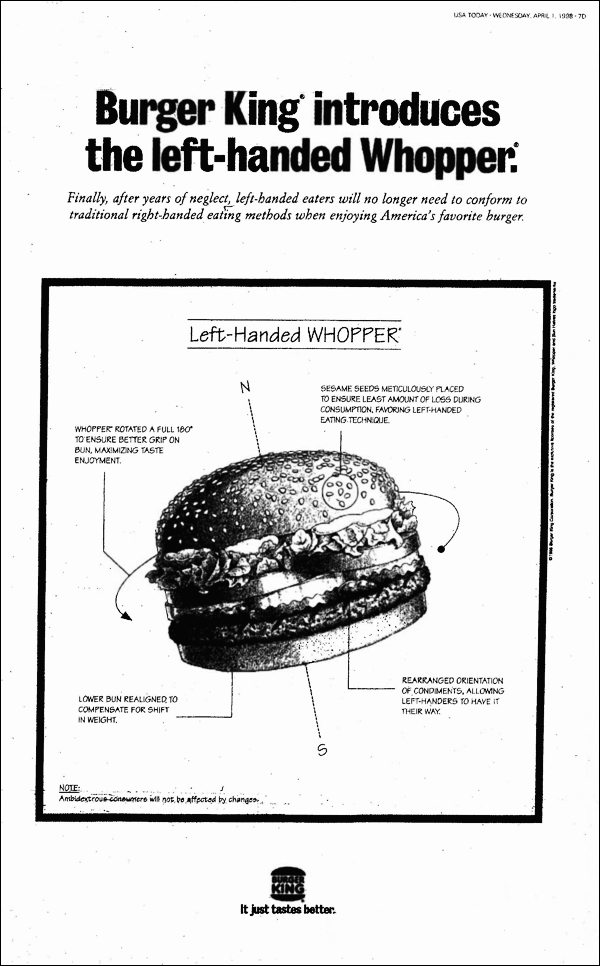
The stunt was so successful that PRNews and other industry outlets have since categorized this campaign as a cautionary tale as much as a success. The prank drove real store visits and international buzz, but also created widespread staff confusion and customer frustration.
The result
- Thousands of customers at Burger King locations the day after specifically requesting the Left-Handed Whopper
- A second wave of customers requesting the “right-handed” original
- International media coverage from a single full-page USA Today print ad, one of the lowest-cost media placements available at the time
- Now cited as one of the most successful and most replicated April Fools’ brand pranks in history.
The insight
Make the joke internally coherent. Explain to your staff beforehand that there is no Left-Handed Whopper.
3. Hamburger Helper’s Rap Mixtape (2016)
Some April’s Fools Day pranks are so good that not making them real would be the bigger missed opportunity. In 2016, General Mills released a five-track rap mixtape under its Hamburger Helper brand called “Hamburger Helper Watch the Stove.”
The Full Mixtape
The campaign presented itself like a prank, yet the music was fully produced and surprisingly good. The tracks included titles like “Feed the Streets,” “Food for Your Soul,” and “In Love with the Glove.”
The result
- 432,660,000 social impressions within the first weekend alone
- 4 million+ SoundCloud plays by Monday morning after the Friday, April 1 release
- 5 million streams on SoundCloud within the first week
- ~9 million combined plays across all tracks shortly after launch — with no traditional ad spend
- 16,000+ retweets on the announcement tweet against a pre-launch baseline goal of just 1,000 retweets
- Trended #1 worldwide on Twitter within hours of the drop
- Earned media coverage in Forbes, Time, BuzzFeed, Billboard,, Adweek, Vice, the LA Times, and more
The insight
Deliver substance after the hook. Also, if the prank is real, is it even a prank?
“This hit us by surprise, we did not expect this kind of reaction. . . . We are six people who just have an interest in hip hop.” – Liana Miller, marketing communications planner and creative lead
4. Google Tulip (2019)
Google Netherlands introduced a system they claimed allowed humans to communicate with plants. The prank was a realistic documentary-style video based on a real Google product — the Google Home Interpreter — with lab settings and researchers.
The ad even included a link to a legitimate research study with findings that plants communicate with each other through their roots.
The result
Google Tulip’s success is more qualitative, seen as more of a creative benchmark than a viral hit. It was widely replayed, cited in marketing roundups for years after, and praised by industry observers for its production quality and use of real science as a credibility anchor.
- Viral reach across YouTube and social platforms
- Cited in marketing roundups for years after
- Widespread press pickup across tech and consumer media, including coverage from Inquirer Tech, Quartz, and trade outlets in the floral industry
- Praise from industry observers for its production quality and use of real science as a credibility anchor
The insight
Production quality makes the joke even more believable. Invest in execution along with production value.
5. SodaStream’s SodaSoak (2018)
The story
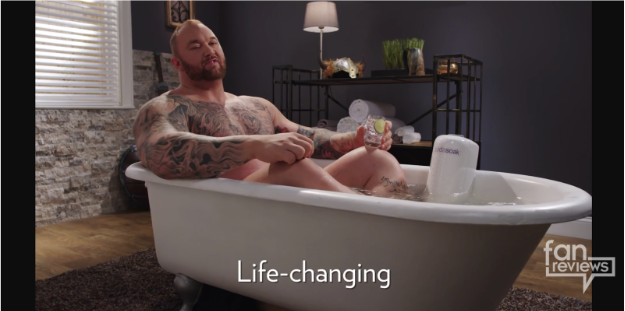
In a hilarious parody of its own product, SodaStream introduced a bathtub carbonation device, complete with celebrities Reza Farahan and Thor Bjornsson, product pages, and retail listings that made the concept feel purchasable (at a 98% discount!).
The ad featured a real product from Bed, Bath, and Beyond, which added credibility. It was retail theater at its finest.
The result
- 238 pieces of media coverage
- 9,814,131,665 impressions
- High engagement driven by realism and celebrity casting
“We had tremendous fun combining forces with our valued retail partner Bed Bath & Beyond, which added realism to the prank.” – Daniel Birnbaum, Chief Executive Officer of SodaStream
The insight
Extending the prank into e-commerce can actually help drive sales.
6. Guinness Cologne (2018)
The story
Serious luxury met deadpan comedy. For April Fools’ Day 2018, Guinness introduced a fragrance described as capturing the taste of Guinness in scent form. The tone remained polished and serious throughout.
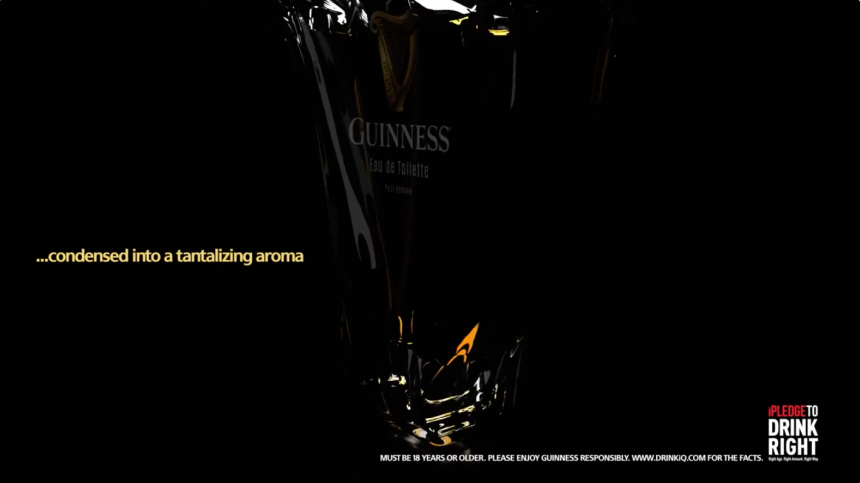
The video presented Guinness Cologne as a real luxury fragrance product with a sleek bottle complete with the Guinness harp logo. It featured genuine luxury fragrance tropes: dim, moody lighting; sultry music. It was all executed convincingly enough to pass a casual first viewing.
The joke is embedded in the copy, with language like “the scent of power, the scent made of more,” a subtle wink at the brand’s famous “Made of More” tagline.
The result
Guinness never meant this ad to go viral; it was a regional campaign designed for social media. Here’s what it accomplished anyway:
- Earned media placement across major marketing industry roundups including Outbrain and PR News, persisting more than six years after the campaign ran
- Viral traction driven entirely by organic shares and embeds with zero paid distribution
- Cultural longevity: consistent inclusion in “best April Fools brand campaigns” lists
The insight
Imitate tone to make your prank seem more believable. A restrained delivery can amplify the humor without any nudge nudge wink wink.
7. Burger King France’s Whopper Toothpaste (2017)
The story
Burger King France introduced burger-flavored toothpaste designed for fans of its signature taste. The concept relied on sensory contradiction, turning a familiar fast-food flavor into something oddly intimate and slightly unhinged.
The 60-second video claimed, “The frame-broiled whopper is so good, some people would do anything to keep the taste in their mouth.”
The result
- Major earned media within 48 hours from Adweek, Forbes, Eater, Mashable, and PRWeek with zero paid PR push
- Social-first virality driven by the Facebook video
- Verbatim tagline recall: The line “keeps your mouth Whopper fresh” is consistently quoted across roundup articles years later
- Inclusion in Retail Brew’s four-decade compendium of retail brand April Fools pranks, indicating lasting benchmark status in the industry
The insight
The brand built the concept specifically for social environments, with a clear visual hook and immediate shareability. Its bold, slightly grotesque premise made it instantly recognizable, even in a crowded social media feed.
8. BMW’s Reverse Psychology (2015)
The story
BMW demonstrates what happens when someone takes your joke as seriously as possible. The carmaker offered a free car to the first person who arrived at a dealership with the ad. Most people assumed it was a prank.
One person acted on the offer, received the car, and became the campaign’s most powerful proof point: a real human being whose action validated the brand’s sincerity and generated far more word-of-mouth than planned media placement could have bought.
The result
- Outsized earned media value as fact that almost no one believed the offer amplified the story of the one person who did
- Organic spread with zero paid media
- Major press coverage, as in this report by ABC
- Brand trust reinforcement, earned by following through with the offer
- Long-term case study status
The insight
You can do a kind of meta-joke by actually following through on the offer, which actually reinforces credibility.
9. Amazon’s Petlexa (2017)
The story
Amazon introduced a version of Alexa capable of communicating with pets, supported by a playful product video. The execution mirrored real product launches, complete with feature demos and use cases, which helped the joke land quickly.
The parody worked because it was indistinguishable in format from a real Alexa announcement. That production discipline turned a simple premise into a shareable piece of branded content that felt native to Amazon’s identity.
The result
- Immediate viral spread
- Broad cross-demographic appeal
- Earned media pickup across tech, consumer lifestyle publications, and marketing publications like Adweek
- Reinforcement of Amazon’s image as a company capable of self-aware humor without undermining trust
- Long-term roundup presence
The insight
Anchor the joke in brand truth that people already know and trust. Familiar territory makes even unusual ideas feel credible.
10. Duolingo Push Campaign (2019)
The story
With this ad, Duolingo turned a meme into a moment. It presented its mascot as an overly persistent owl that physically followed users who missed lessons.
Duolingo leaned into it fully, producing a video that dramatized the meme as though it were a real product feature. The decision to let user culture write the brief gave the campaign instant authenticity.
What made this campaign unusually effective was that Duolingo inherited the joke. The “threatening Duolingo owl” meme had already spread organically across social platforms for years, with users joking that Duo would show up at their door if they skipped a lesson.
The results
- Winner of a Shorty award
- Meme-to-campaign: Duolingo activated an already-viral piece of user-generated culture, inheriting a pre-built audience primed to share and engage
- Massive social amplification driven by fans who recognized their own joke reflected back at them through a high-production video
- Earned media across tech, marketing, and culture press with no paid distribution
- Brand personality reinforcement
- Long-term cultural presence: one of the most cost-efficient brand character plays of the 2010s
The insight
The campaign amplified an existing audience joke. Leverage audience behavior.
Volkswagen’s “Voltswagen” (2021)
The story
To highlight their genuine brand push to electric vehicles, Volkswagen announced a corporate name change to “Voltswagen.” This gave it enough strategic plausibility that major outlets including AP and Reuters ran it as straight news.
What separated this stunt from a typical April Fools’ campaign was its delivery mechanism: Instead of a quirky video or print ad, Volkswagen released what appeared to be an official press release, timed to land just before April 1.
That credibility gap turned a PR stunt into a regulatory incident and a case study in where the line between clever and reckless actually sits.
The results
- Immediate national and international press coverage from outlets including AP, Reuters, CNBC, and the New York Times, all reporting it as real news
- VW stock price increase in the hours after the announcement
- A U.S. Securities and Exchange Commission (SEC) inquiry for possible market manipulation
- Massive earned media with zero paid distribution
- Significant social amplification driven by the absurdity of major financial outlets being fooled
- Reputational double edge that undermined the goodwill it was designed to create
- Consistently cited in marketing and PR literature as the definitive example of an April Fools’ stunt that crossed from clever to costly
The insight
If you’re a public company, be careful with your April Fools’ Day campaigns: a negative impact on your stock price is no joke.

Marketer Takeaways
- Build the idea on a strategic truth. Campaigns resonate when they extend what the brand already represents.
- Plan distribution as carefully as the creative. Media channels and timing shape reach and impact.
- Commit fully to execution. Strong follow-through strengthens credibility and audience trust.
- Balance plausibility with surprise. Believability draws people in, while the reveal keeps them engaged.
- Evaluate risk alongside reward. Cultural relevance can elevate a brand, yet missteps can carry lasting consequences.
Media Shower’s AI marketing platform helps brands craft great campaigns – and that’s no joke. Click here for a free trial.