Public service announcements (PSAs) are a unique kind of advertising. They don’t sell products or drive conversions. They aim to change behavior – whether it’s preventing fires, reducing accidents, or saving lives.
Many PSAs are funded directly by government bodies, especially for public safety or health. So they’re often boring and forgettable.
But a rare few break through. They move beyond campaigns to become part of everyday language and behavior.
These are the PSAs that stayed.
1. Smokey Bear: “Only You Can Prevent Forest Fires”
The mascot who became a moral authority for generations
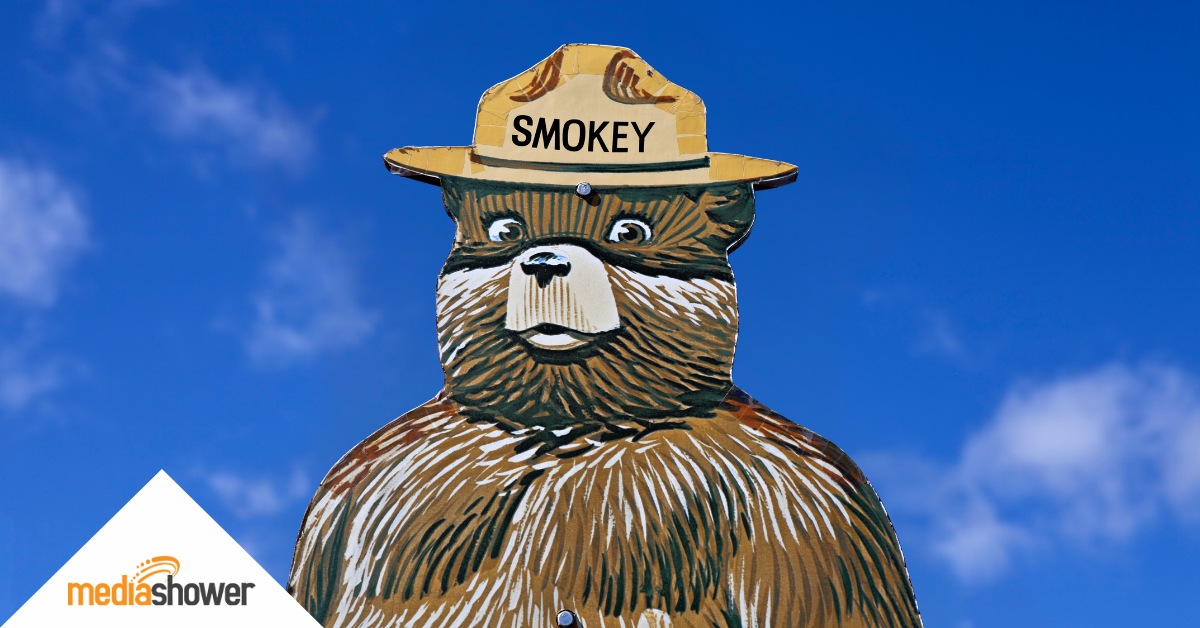
Smokey Bear debuted in 1944 as a cartoon mascot for the U.S. Forest Service and never really left. For eight decades, he has appeared in print, radio, and television with the same direct message: Forest fires are preventable, and the responsibility lands on you personally.
The campaign works because Smokey never changes. Same bear, same hat, same line. That consistency built the kind of recognition most brands spend decades chasing and rarely reach.
Why it stuck
- Singular ownership of the message. Smokey remained the central figure for decades, which built recognition and trust across generations.
- Direct address. The word “YOU” made the message personal and immediate, placing responsibility on the individual.
Impact
- The campaign is credited with helping reduce human-caused forest fires significantly over decades.
- Smokey Bear has achieved over 95% recognition among U.S. adults.
2. Dumb Ways to Die: Metro Trains Melbourne
The safety message disguised as a hit song
Metro Trains Melbourne needed commuters to stop doing dangerous things near trains. Instead of footage of accidents or stern warnings, they commissioned a cheerful animated song about characters meeting spectacular ends through their own stupidity.
A series of Dumb Ways to Die included standing on the edge of a platform, selling both kidneys, and piranha-fishing.
The tone was deliberate absurdity, and felt nothing like a safety announcement. At the height of early viral video culture, it became a massive sensation, watched over 200 million times – and a reduction of rail-related accidents in Melbourne.
Why it stuck
- Entertainment led the message. The campaign earned attention through its format and tone.
- Built for remixing. The song, characters, and structure encouraged parody, covers, and spin-offs.
Impact
- Over 200 million YouTube views within months of launch
- A reported 20% reduction in rail-related accidents in Melbourne
3. “This Is Your Brain on Drugs”: Partnership for a Drug-Free America
1 egg + 1 pan = 1 unforgettable metaphor
A man holds up an egg and says, “This is your brain.”
He cracks it into a frying pan and says, “This is your brain on drugs.”
The Partnership for a Drug-Free America released the ad in 1987. The image lodged itself into a generation’s memory on first viewing and never quite left.
Decades later, the frying egg remains one of the most parodied images in advertising history.
Why it stuck
- Radical simplicity. The metaphor communicates instantly and requires no additional context.
- Visual permanence. The image stays recognizable even without the full script.
Impact
- Became one of the most recognizable anti-drug campaigns of all time
- Continues to be referenced and parodied decades later
4. Crying Indian: Keep America Beautiful
The single tear that defined environmental guilt
In 1971, a lone Native American man paddles a canoe through a river choked with industrial runoff. He walks to a highway overpass, and someone throws a bag of trash at his feet. The camera holds on his face long enough for a single tear to fall.
The PSA relies solely on imagery until a narrator announces at the end, “People start pollution. People can stop it.”
Why it stuck
- Emotional restraint. The message relies on visual storytelling rather than explicit explanation.
- Cultural symbolism. The imagery connects to broader ideas about land, stewardship, and loss.
Impact
- Helped catalyze early environmental awareness movements
- Became one of the most iconic environmental images in advertising history
5. “Friends Don’t Let Friends Drive Drunk”: Ad Council
The slogan that became social policy
The Ad Council launched this campaign in 1983, and within a few years the tagline had moved out of television and into ordinary conversation. People said it to each other at parties. It showed up on bumper stickers.
It became the kind of phrase people repeat, without remembering where they first heard it.
That migration from ad to social norm is the campaign’s real achievement. The line reframed drunk driving as a collective responsibility rather than a private choice, which gave bystanders both the language and the permission to intervene.
Why it stuck
- Peer accountability. Responsibility extended beyond the driver to the social group.
- Conversational language. The phrasing reflects how people naturally speak to each other.
Impact
- Contributed to a significant decline in alcohol-related traffic fatalities since the 1980s
- Became a widely adopted phrase in everyday conversation
6. “Love Has No Labels”: Ad Council
The reveal that reframed identity
Two skeletons appear behind an X-ray screen, dancing together. They embrace, they kiss, they hold hands. When they step out from behind the screen, the audience sees who they actually are: couples of different races, genders, and ages, along with families and friends.
The Ad Council released the video in 2015, and the structure of the reveal did most of the persuasive work. Viewers had already responded to the skeletons before identity became visible, which made the point without argument.
The campaign’s reach was driven largely by people who wanted to share the moment with someone specific.
Why it stuck
- Built-in reveal. The transition from skeletons to real people creates a moment audiences want to share.
- Universal message. The idea applies broadly across identities and experiences.
Impact
- Over 160 million video views across platforms
- Generated extensive social engagement and media coverage
Marketer Takeaways
Here’s what these campaigns have in common, and how to apply it to the work you do every day.
- Clarity over complexity. The message has to land without a manual. If someone needs context to understand it, they’ve already moved on.
- Emotional precision. Vague inspiration fades. A specific emotional moment — a tear, a sizzling egg, a skeleton kiss — gives people something to hold onto.
- Build for recall, not just reach. A line or image that’s easy to reproduce travels further than a media buy. The campaigns people quote are the ones that spread.
- Design for participation. Campaigns that support imitation, parody, or remixing tend to travel further. When people adopt a message as their own, the campaign effectively runs itself.
- Create symbols alongside slogans. Smokey Bear works without his tagline. The frying egg works without its script. Distinct visuals extend recognition long after the original ad stops running.
Media Shower’s AI marketing platform helps you create campaigns that stand the test of time. Click here for a free trial.