
Quick Summary
- Agentic AI shifts work from chatbots to AI “workers.”
- Claude Cowork is the most usable option for marketing teams today.
- OpenClaw is powerful but has real security concerns.
- Perplexity Computer is the new kid on the block.
- Experimentation is needed to determine whether any of this produces useful work.
Most marketers are now familiar with AI chatbots like ChatGPT: helpful for drafting content, or thinking through problems. But what if you need AI to do actual work?
Agentic AI is about creating AI “agents” that go way beyond chatbots. They user your computer to do a sequence of tasks autonomously, with just a simple instruction to guide them. For example:
- “Research this sales prospect, draft a personalized outreach email, and schedule the follow-up meeting”
- “Monitor our competitors’ content and send me a weekly summary of what’s working”
- “Pull last month’s blog traffic from GA4, identify the top performers, and recommend topics for next quarter”
- “Draft a proposal, pull in relevant case studies, and format it as a PowerPoint using our brand guide”
- “Analyze our email open rates and suggest subject line improvements based on patterns”
In theory, you hand AI agents a simple command, and they figure out the steps to get there.
In practice, agentic AI is still very much a work in progress.
Three tools in particular – OpenClaw, Claude Cowork, and Perplexity Computer – have become early test cases for the set-it-and-forget-it workflow within real marketing teams. They look similar on the surface, but they behave very differently.
We looked under the hood of all three to find out which, if any, are ready for marketers.
How Agentic AI Systems Work (for Marketers)
Most AI tools still behave like chatbots: you ask, they answer.
Agentic systems, or AI agents, are different. You give them a goal, and they decide how to get there. They break work into steps, run those steps, and check back when something needs input.
That shift becomes obvious once you use it. Instead of guiding the process step by step, you’re watching the AI work within your browser or PowerPoint. The system is doing the grunt work.
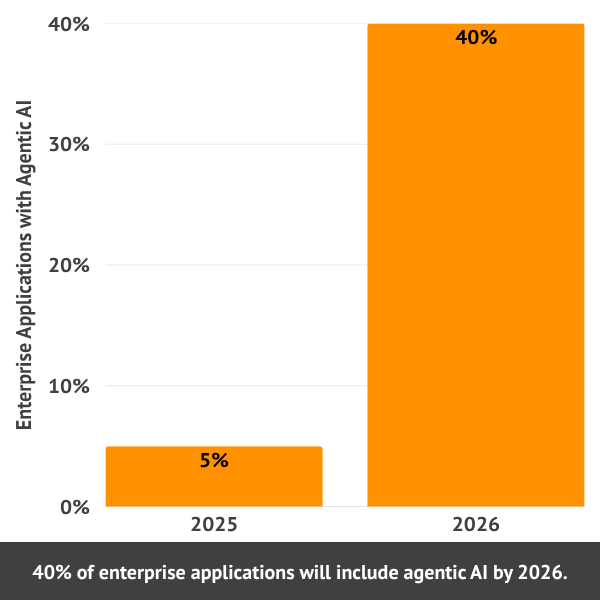
Gartner projects that 40% of enterprise applications will include agentic AI by 2026, up from less than 5% in 2025. That suggests this will move into everyday workflows quickly.
But do they work?
OpenClaw: Powerful, Hackable, and Risky
OpenClaw started as a personal project by Austrian developer Peter Steinberger in late 2025 and went viral fast, with over 100,000 GitHub stars in a single week. (Trust us: that’s fast.)
Think of OpenClaw less as a chatbot and more as a tireless team member: one that reads your Slack, monitors your Gmail, drafts your content, and never asks for PTO. The most enthusiastic adopters are running OpenClaw on dozens of computers, effectively building AI-powered marketing departments from scratch.
The appeal of OpenClaw to many developers and hobbyists is that it’s open source, meaning that it’s free to use. For the average marketer, however, the downside is significant.
What it does well
OpenClaw is a download that runs on your desktop. It connects to tools marketers already use such as Slack, Gmail, and Discord. Just like a human employee, you can set up a dedicated email address for it, and people may never know it’s coming from an AI.
You assign OpenClaw a task, and it handles execution. It can handle tasks like:
- Drafting and scheduling content
- Organizing files and workflows
- Pulling competitive data
- Managing inbox activity
It can also act without prompting. Its “heartbeat” feature monitors conditions and triggers actions when criteria are met.
Early adopters have used it to draft and schedule social posts, manage Gmail workflows, scrape competitive data, and automate file organization. A library of 3,000+ community-built skills covers content production, research, and platform management.
And because OpenClaw is open source, it’s all free to use.
Where it falls short
Even though OpenClaw is free and powerful, experts are warning that it’s not safe. Cisco tested one of the add-ons (called a “skill”) and found that it could:
- secretly send your data somewhere else without telling you
- manipulate what the AI does behind the scenes
In other words, it could act like spyware.
And it gets worse. At one point:
- About 1 in 8 skills in the official library (ClawHub) were dangerous.
- More than 30,000 setups of OpenClaw were exposed on the internet, meaning they could potentially be accessed by outsiders.
Why this matters for marketers
Running an agent with access to local files, accounts, and workflows requires a level of trust that most marketing teams can’t justify, especially when client data is involved.
The setup also requires technical expertise that most marketing professionals don’t have without dedicated IT support.
(For a deeper look at what OpenClaw is and how it works, see our full OpenClaw overview.)
Claude Cowork: The Best Entry Point for Marketing Teams
Claude Cowork started as a happy accident.
Anthropic noticed people were already using their incredible Claude Code tool for everyday tasks, having it code custom software for planning trips, building decks, drafting strategies.
So they launched a separate project, Claude Cowork, which does all that for you, while keeping the code invisible for non-developers.
Cowork launched in January 2026 and is the first agent that fits into a marketing workflow without much translation.
What it does well
Cowork runs inside the Claude Desktop app. You give it access to a folder, assign a task, and it works through the steps in a contained environment.
- Plans multi-step work
- Executes tasks in sequence or in parallel
- Pauses before actions that require confirmation
- Keeps data local to your machine
It connects to tools like Google Drive and Gmail, with responsible dialog boxes asking if you want to grant Cowork permission to access files or email.
Anthropic reports the following from its own marketing team:
- Ad creative production dropped from 30 minutes to 30 seconds, about a 97% reduction.
- Time to create a case study went from 2.5 hours to 30 minutes.
- They saved more than 100 hours per month on scripts and content workflows.
Those changes affect how much work a team can realistically handle.
Source: Anthropic, “How Anthropic Uses Claude in Marketing,” January 2026
Where it falls short
Cowork is powerful, but it’s not perfect.
- Complex spreadsheets can break.
- Browser automation is inconsistent.
- Some integrations are still developing.
- You are limited to Claude models.
Why it matters for marketers
Cowork is not the most advanced system, but it is the one that’s easiest to adopt in the enterprise. For most teams, that matters more than raw capability.
It also costs far less than Computer to get started. Full Cowork access starts at $20/month on the Pro plan. Heavy or daily use will bump you into the Max tier, priced at $100 or $200 per month, depending on how much headroom you need.
To use Claude Cowork, you need Claude Desktop, which you can download from Anthropic for Windows or Mac.
Perplexity Computer: Ambitious Multi-Agent Model
Most AI workflows are limited by the strengths and weaknesses of a single model (ChatGPT or Claude, for example). Perplexity Computer can switch between models.
It breaks your goal into subtasks and routes each one to a specialized sub-agent running the best available model for that particular job.
What it does well
You define an outcome. The system breaks it into subtasks, assigns each to a model, and runs them at the same time. For example, it may call on the latest Claude version for core reasoning, Gemini for deep research, ChatGPT for lighter tasks, or specialized models for images and video.
Where it falls short
Computer is expensive and not available as a standalone tool. You have to subscribe to Perplexity Max at $200 a month.
The Max plan gives you access to 19 AI models and the Computer agent itself, but it runs on a credit system. Heavy use can increase costs beyond the base subscription price.
The bigger question is trust. Perplexity is a three-year-old company asking enterprise marketing teams to route sensitive business data through its cloud infrastructure. For some teams working with client data, that’s a hard pass.
Why this matters for marketers
This multi-model system is great for marketing roles that do a lot of research. Tasks like industry reporting, multi-source content synthesis, competitive analysis, even graphics and videos, will always be handled by the model that was built for it.
For research-heavy work, the upside is clear. For sensitive data, the decision is more complicated.
In internal testing across more than 16,000 queries, the company reports:
- Work equivalent to 3.25 years completed in four weeks
- Around 1.6 million dollars in labor savings
Even if those numbers are optimistic, the structure points to a lot of potential, and a very different way of working.
At the time of this writing, Perplexity is offering a free trial of Computer with enough credits to complete several sizable projects.
You Still Need Humans
Like all tools, agentic AI models are only as good as the humans who operate them. Agents with clear direction from a human team see strong results. Agents without it get faster versions of average work.
The data backs that up. Companies report an average ROI of 171% from agentic AI deployments, three times higher than traditional automation. However, 40% of agentic AI projects fail due to weak foundations.
The teams seeing real returns right now define precise goals, hold tight quality control, and supply the creative thinking that agents can’t replicate yet.
All three of the tools we profiled here represent real progress, but all three depend heavily on human judgment to produce anything worth publishing. The team that best combines human judgment with AI speed, wins.
The question is no longer whether autonomous agents will reshape business operations, but how quickly the transformation will unfold and who will emerge as the winners. — Gartner, Agentic AI in Enterprise 2026: $9B Market Analysis
Marketer’s Takeaways
- OpenClaw offers maximum flexibility but serious security concerns.
- Claude Cowork is the most accessible entry point for marketing teams.
- Perplexity Computer’s multi-modal model points toward where enterprise AI is heading.
- Agentic AI still depends on human strategy and editorial judgment to produce quality results.
Media Shower builds custom AI tools for marketers, no matter which platform you use. Click here for a free trial.