The Better Marketing Blog
Better tips, tools, and tactics for the AI era.
Better tips, tools, and tactics for the AI era.
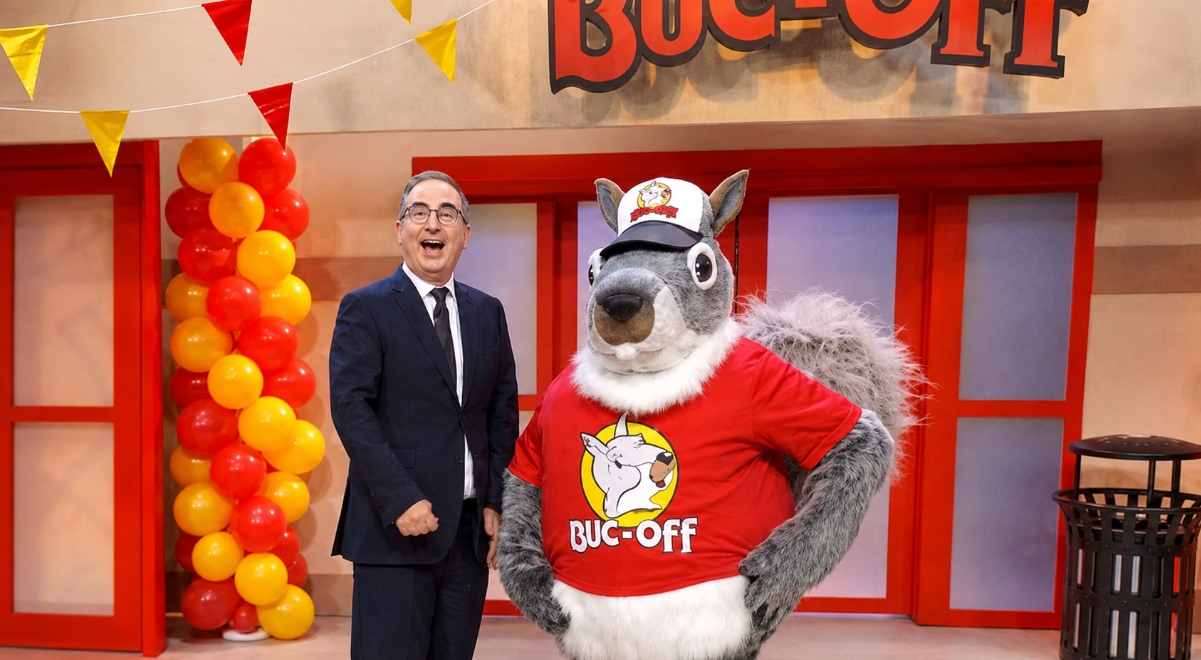
A squirrel is waiting to be sued.
His name is Mr. Nutterbutter. John Oliver, host of HBO’s Last Week Tonight, created the suspiciously Buc-ee’s-like mascot after the Texas convenience-store chain went after smaller businesses over its beaver trademarks.
Oliver’s response was characteristically elaborate: he opened a Buc-Off merchandise store, donated the proceeds to Hunger Free America, and challenged Buc-ee’s to pick on someone with HBO-sized resources.
The lawsuit never came. But the stunt raised nearly $500,000 for charity, and Mr. Nutterbutter remained available for the next beaver fight.
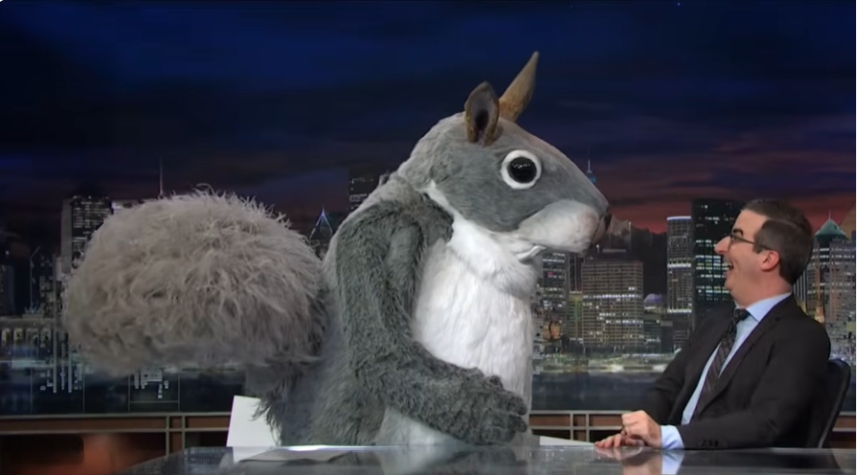
Political satire has a long history of influencing public opinion, but Oliver adds a social prank to the joke. His best campaigns turn an argument into something people can vote for, buy, donate to, submit, or carry into another setting.
By participating in the prank, audience members become fellow activists.
Scholars writing for the National Communication Association have described his approach in terms of raiding, memes, transmedia storytelling, and irreverent behavior. A Last Week Tonight segment may begin on television, but the stunt often gives viewers a way to continue the story somewhere else.
The following campaign examples show what happens when they do.
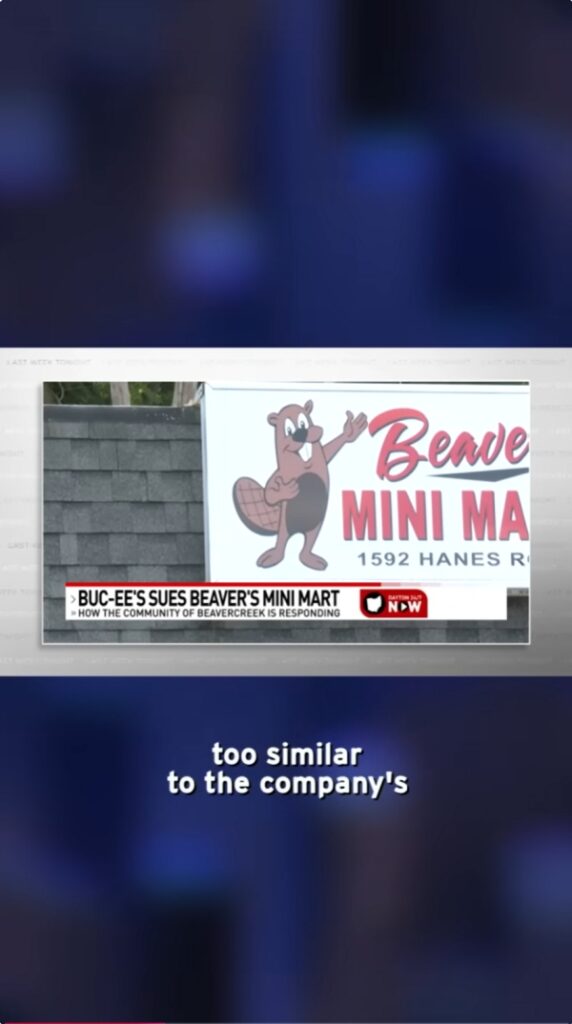
The Buc-ee’s joke became more than a visual gag. The prank found a second life when Buc-ee’s later sued Beaver’s Mini Mart. The mascot, store, and argument were already waiting, so Oliver didn’t need to invent a new response.
Colorado Public Radio connected the new dispute back to Oliver’s original challenge.
Outcome: Nearly $500,000 reportedly raised for Hunger Free America, followed by renewed relevance when another trademark dispute emerged.
Marketer takeaway: Create campaign assets durable enough to become useful again when the story gets a second act.
Watch the Net Neutrality segment (NSFW)
Net neutrality is not an obvious comedy premise. In 2014, the Federal Communications Commission was considering new rules governing how internet service providers could treat online traffic, including a proposal that raised concerns about allowing companies to pay for faster delivery of their content.
Oliver spent nearly 13 minutes explaining why that mattered, arguing that an internet divided into faster and slower lanes could favor companies able to pay for preferential treatment.
Then he turned a dry regulatory proceeding into a public campaign.
At the end of the segment, Oliver pointed viewers toward the FCC’s public-comment system. More specifically, he called on the internet commenters and “trolls” he’d spent much of the segment mocking to temporarily redirect their considerable capacity for online outrage toward the FCC.
Outcome: Oliver’s viewers joined a much larger wave of public comments opposing internet “fast lanes.” The FCC ultimately abandoned that approach and, in 2015, adopted stronger net-neutrality rules banning paid prioritization, blocking, and throttling.
Those federal rules have since been repealed and reinstated more than once, underscoring how politically contested the issue remains.
Marketer takeaway: When an audience cares about the issue, give that energy a consequential destination.
Oliver campaigns for the pūteketeke on The Tonight Show
Every year, New Zealand conservation organization Forest & Bird holds a Bird of the Year contest to raise awareness of the nearly 80% of their native birds on the threatened species list.
They repackaged the contest for 2023 as the Bird of the Century, and the contest caught Oliver’s attention from half a world away. When he learned that votes were welcome from all over the world, he picked a favorite and joined the fun.
Oliver chose a favorite — the pūteketeke (poo-TECK-ee-teck-ee), an unlikely-looking orange-mulleted bird that eats and vomits its own feathers — and treated its candidacy with the seriousness of a multinational political campaign, but with hilarious moments.
The campaign included billboards and promotions around the world. But the audience assignment remained beautifully simple: vote.
And vote they did.
Outcome: The pūteketeke won Bird of the Century after a record-setting international response. Forest & Bird reported more than 350,000 verified votes from 195 countries, with 290,364 for the pūteketeke alone. That compared with 51,856 verified votes in 2022.
Marketer takeaway: The strongest participation mechanics let the audience help determine the outcome.
Watch Marlon Bundo segment
In 2018, the family of then-Vice President Mike Pence was preparing to publish a children’s book about their pet rabbit, Marlon Bundo.
The timing gave Oliver an irresistible target. Pence had a long record of opposing LGBTQ rights. As a congressman, he opposed same-sex marriage and a federal ban on workplace discrimination based on sexual orientation.
So when Oliver devoted a segment to Pence, his team responded to the family’s wholesome bunny book in exactly the same medium: another children’s book starring Marlon Bundo, released one day before the Pence version.
In Oliver’s version, Marlon falls in love with another male rabbit and wants to marry him. The joke was pointed, but the form mattered just as much. Oliver had transformed a television rebuttal into something people could buy, read to their children, give away, place in a classroom, or donate to a library.
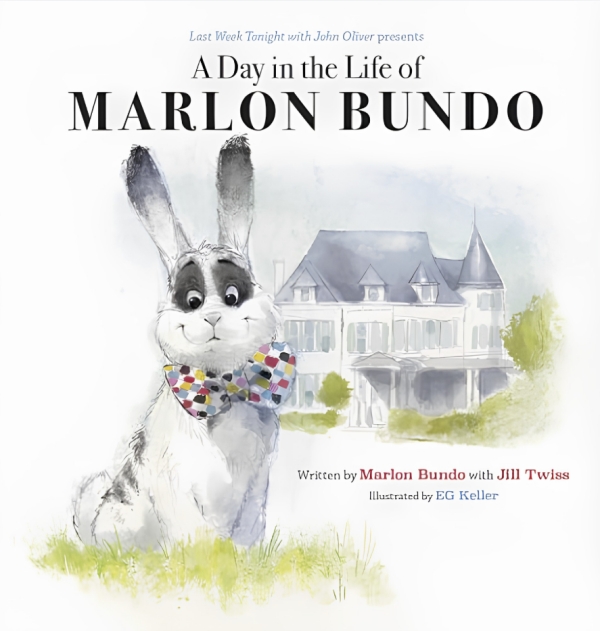
Outcome: As TIME reported, the book became a bestseller, with proceeds benefiting The Trevor Project and AIDS United. It is still available for purchase and continues to circulate far beyond the original broadcast.
Marketer takeaway: Give an argument a form people can carry into places your original content will never reach.
For a segment about televangelism and tax-exempt religious organizations, Oliver did more than describe the rules he found troubling. He set out to prove how easy it was to gain tax-exempt status by seeing whether he could create a church of his own, solicit money from viewers, and operate within those rules.
He created Our Lady of Perpetual Exemption, an actual church, with himself as its decidedly untraditional pastor. (The church is now closed, but the website remains with a characteristic notice from “Pastor Oliver.”)
The prank changed the nature of the argument. Instead of simply telling viewers what the rules allowed, Oliver built a working demonstration and invited them inside it.
Viewers participated by sending donations, including some distinctly nontraditional offerings. The church’s archived website states that monetary donations were ultimately forwarded to Doctors Without Borders.
Outcome: Oliver turned an argument about permissive rules into an operating experiment viewers could participate in, with monetary donations ultimately going to charity.
Marketer takeaway: When possible, let people see your argument operate in the real world instead of explaining it one more time.
In 2016, Oliver turned his attention to the debt-buying industry, where companies can purchase portfolios of delinquent debt for pennies on the dollar and then try to collect from the people who originally owed it.
To show how easy it was to enter the business, Last Week Tonight spent $50 to create its own Mississippi debt-buying company: Central Asset Recovery Professionals, or CARP, named for the bottom-feeding fish.
CARP was soon offered nearly $15 million in medical debt belonging to almost 9,000 people. The price for the entire portfolio was less than $60,000.
Instead of trying to collect the money, Oliver worked with a nonprofit to forgive the debt.
The stunt made his argument tangible: viewers could see both how cheaply millions of dollars in debt could change hands and what that system meant for the people whose information came with it.
Later, the idea acquired a second life. Participants in a Michigan class-action settlement later agreed to direct their award toward eliminating more than $38 million in medical debt.
Undue Medical Debt described the decision as inspired by Oliver’s precedent.
Outcome: Nearly $15 million in medical debt was reportedly forgiven for almost 9,000 people, and Oliver’s example later helped inspire a separate effort eliminating more than $38 million.
Marketer takeaway: A demonstration becomes much more powerful when it produces the change you’re arguing for—and leaves behind a model others can use.
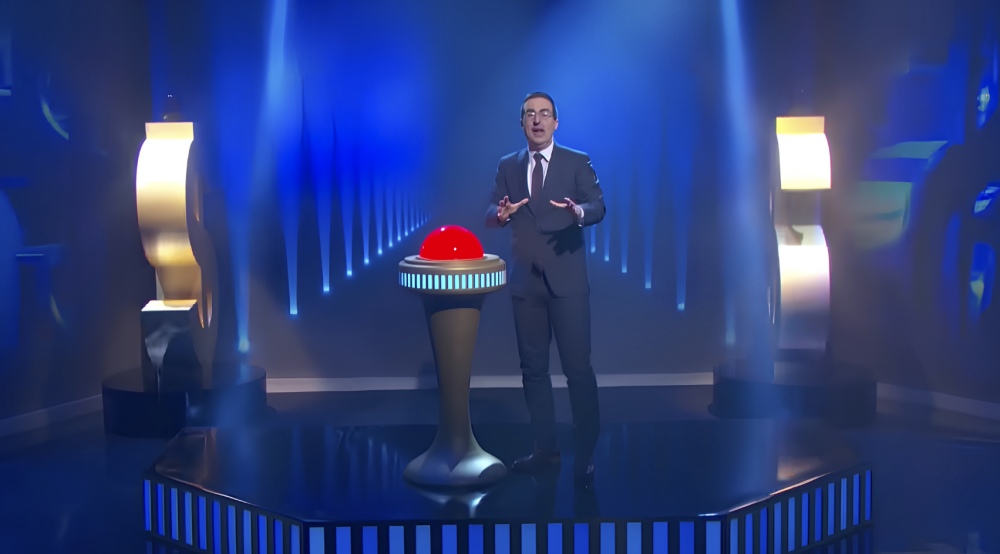
Oliver has a television show, a huge audience, experienced researchers, and considerably more production budget than the average marketing team. The useful part to borrow is not the scale.
It’s the shift from message to participation.
Great campaigns don’t have to end when the content stops running. Give people something meaningful to do with the idea, and they may carry it farther than you can.
Media Shower’s AI marketing platform helps brands create social campaigns that can’t be stopped. Click here for a free trial.
John Oliver combines broadcast reach with stunts audiences can act on across digital and real-world channels. Viewers may vote, buy, donate, submit comments, or help create measurable outcomes that extend the campaign beyond television.
Prank activism uses satire, parody, provocation, or an unexpected public stunt to expose a problem and invite participation. In Oliver’s campaigns, the prank often becomes a product, character, institution, or mechanism that demonstrates the argument.
Yes, but reach alone rarely creates change. Campaigns become more consequential when they connect attention to a meaningful action and use participation to produce measurable results, original evidence, or independent follow-on activity.
An effective social change campaign presents a clear argument, gives the audience a consequential role, establishes ethical boundaries, and creates a mechanism for participation to generate outcomes beyond the launch.
Marketers can turn awareness into action by giving the central argument a portable form and connecting it to a specific behavior. The action should change an outcome, create evidence, or help the campaign travel into a new setting.