The Better Marketing Blog
Better tips, tools, and tactics for the AI era.
Better tips, tools, and tactics for the AI era.
Podcasting has quietly become one of the world’s most valuable media businesses.
Once considered a niche format for hobbyists, podcasts now command audiences that rival television shows, produce multimillion-dollar licensing deals, and create media personalities whose influence stretches far beyond audio.
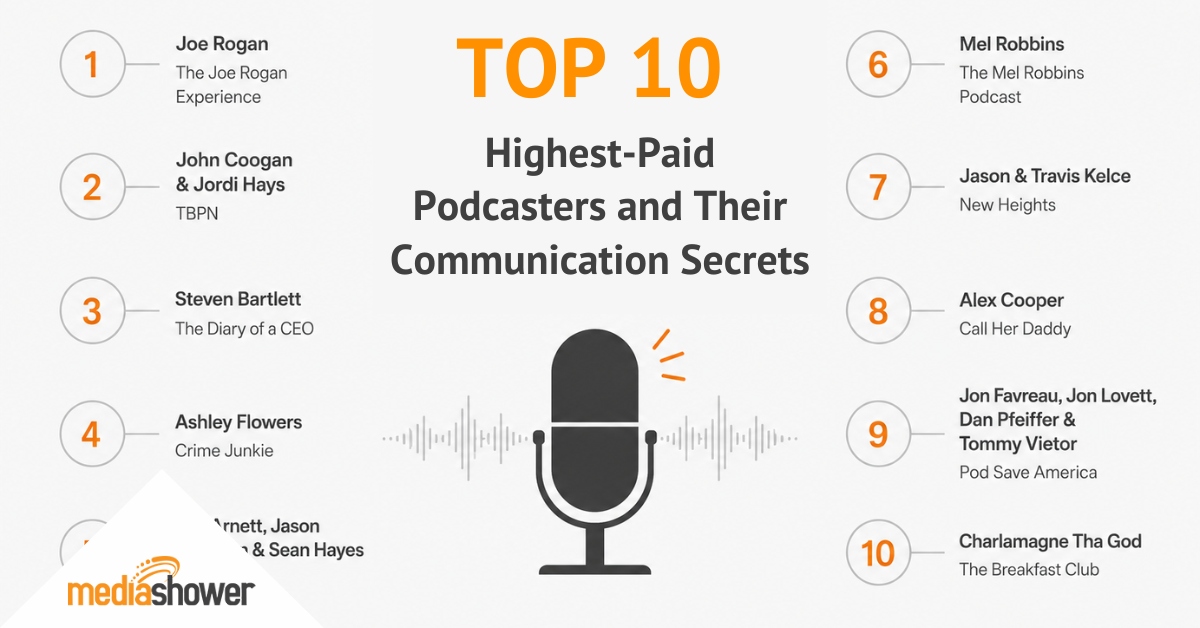
According to Forbes’ Highest-Paid Podcasters of 2026, the top ten podcasters earned hundreds of millions of dollars collectively through advertising, platform partnerships, subscriptions, merchandise, touring, and media businesses.
The money tells an interesting story, but the conversations tell an even better one. Here are the 10 highest-paid podcasters of 2026, along with our take on the communication secrets behind their success.
Joe Rogan has built one of the world’s biggest podcasts by making conversations feel genuinely exploratory.
Instead of steering guests back to prepared talking points, he follows whatever idea seems most interesting. Rather than trying to control the discussion, Rogan allows one idea to lead naturally to another and giving the guest plenty of time to talk.
Rogan frequently translates expert explanations into everyday analogies, offers examples from completely different fields, and asks the same questions many listeners are already thinking. Instead of demonstrating his own expertise, he positions himself as the curious stand-in for the audience.
Communication secret: Great interviewers don’t rush to the next question. They stay with the most interesting idea long enough to draw the listener in. Curiosity keeps conversations moving in unexpected and memorable directions.
Communication secret: Curiosity scales better than expertise. Rogan succeeds by asking the questions many listeners would ask themselves, then giving guests enough time to produce genuinely interesting answers.
Episode: Joe Rogan Experience #2517 – Taylor Sheridan
Taylor Sheridan and Joe Rogan discuss elite focus, ADHD, and why extraordinary performers often become obsessed with one craft.
Technology Business Programming Network (TBPN) approaches startup coverage like a live sports broadcast.
Instead of polished interviews or heavily edited explainers, the hosts react in real time to breaking AI announcements, venture capital news, product launches, and founder interviews. Coogan contributes deep technical knowledge while Hays approaches stories from an investor’s perspective, giving viewers two complementary lenses.
Fast pacing, recurring visual graphics, internet humor, and livestream energy distinguish TBPN from traditional business journalism.
Communication secret: Take a familiar format and apply it to your vertical. By borrowing the pacing and visual language of sports television, TBPN makes complex technology stories feel entertaining instead of intimidating.
Episode: TBPN with Airbnb CEO Brian Chesky
Hosts Coogan and Hays alternate between product questions and business strategy.
Steven Bartlett has become one of podcasting’s premier interviewers by slowing conversations down.
His interviews emphasize silence, empathy, and carefully layered follow-up questions that encourage guests to move beyond rehearsed talking points. Rather than chasing headlines, Bartlett searches for the emotional stories underneath business success.
The show’s packaging reinforces that strategy. Titles, thumbnails, and short clips promise highly personal conversations about ambition, health, relationships, and failure, making emotionally vulnerable moments easy to discover and share.
Communication secret: Emotional honesty creates memorable interviews. Audiences remember conversations that reveal something unexpected about the guest, especially when thoughtful editing helps those moments travel beyond the full episode.
Episode: Davina McCall: The Brain Surgery Experience That Changed My Life
Bartlett pauses before asking a thoughtful follow-up, allowing the guest to elaborate naturally.
Ashley Flowers helped transform true crime into one of podcasting’s biggest genres by making complex investigations feel conversational.
Each episode follows a tightly scripted narrative while preserving the feeling that Flowers and co-host Brit Prawat are discovering the story together. Brit frequently asks the questions listeners are likely asking themselves, creating natural moments for Flowers to clarify timelines, motives, and evidence.
The show’s recurring language also reinforces its identity. Phrases like “be weird, be rude, stay alive” have become recognizable slogans within the Crime Junkie community, extending the brand well beyond individual episodes.
Communication secret: Familiarity gives suspense a reliable frame. Listeners recognize the show’s language, rhythm, and conversational roles, which lets them follow an unpredictable story without losing the thread.
Episode: 8 Episodes That Define Crime Junkies
Highlights from multiple episodes showing Crime Junkies’ consistent storytelling style.
SmartLess began when three Hollywood actors – real-life friends Jason Bateman, Sean Hayes, and Will Arnett – wanted a way to stay in touch during the pandemic. Since then, the franchise has grown beyond their wildest dreams.
The show has a clever premise: only one host knows who the guest will be before recording. The other two discover the guest in real time, forcing genuine reactions and unscripted questions. Their decades-long friendship creates easy chemistry filled with interruptions, jokes, and playful teasing that makes listeners feel like one of the gang.
Even major celebrities become part of the conversation instead of the sole attraction.
Communication secret: Great conversations don’t have to sound polished. Genuine surprise often produces more memorable moments than perfect preparation.
Episode: Amy Poehler on SmartLess: The hosts reacting to the guest reveal before settling into an improvised conversation.
Mel Robbins brings a personal-development coaching style to podcasting.
Every episode translates complicated psychological ideas into practical advice listeners can apply immediately. Rather than discussing abstract concepts, Robbins introduces memorable frameworks, scripts, checklists, and action steps that simplify difficult conversations, workplace challenges, and personal growth.
Her direct style creates momentum. Listeners finish an episode knowing exactly what they should try next.
Communication secret: Action beats inspiration. Audiences remember advice they can use immediately.
Episode: How to Communicate With Confidence & Ease: (From Harvard Business School’s #1 Professor)
Robbins converts expert advice into a simple communication exercise.
The Kelce brothers turned football analysis into mainstream entertainment by letting their relationship drive the show.
Jason brings the perspective of a recently retired All-Pro center, while Travis contributes the viewpoint of one of the NFL’s biggest active stars. Their constant teasing, storytelling, and willingness to disagree make technical football conversations accessible to casual fans.
The audience becomes part of the community through recurring segments, inside jokes, and the nickname “92 Percenters.”
Communication secret: Authentic relationships are powerful storytelling tools. Chemistry is difficult to manufacture, but audiences know it when they hear it.
Episode: Tom Brady on Favorite Super Bowl, Kelce v Gronk, Belichick Debate & Why the NFL is Hard | EP 198
The Kelce brothers combine football expertise with sibling humor during their interview with Tom Brady.
Call Her Daddy originally attracted listeners with frank, sexually explicit conversations about dating, relationships, and Cooper’s own experiences. Cooper later broadened the show into celebrity interviews and more serious discussions of careers, mental health, relationships, and public criticism without abandoning its candid voice.
The larger scope brought a larger audience. The show rose from fifth place on Spotify in 2020 to second place in 2024, and Spotify describes it as its most-listened-to podcast among women. Those figures cannot prove that Cooper retained all her original listeners, but they show that the format change expanded the show’s reach.
Cooper often shares something personal before asking a guest to do the same. Her openness lowers the formality of the interview and encourages guests to move beyond familiar promotional answers.
Communication secret: Vulnerability encourages vulnerability. By revealing something real first, Cooper makes personal questions feel like part of a candid exchange rather than an interrogation.
Episode: John Mayer (Full Episode)
Cooper moves naturally from humor into a deeper personal conversation.
Pod Save America describes itself as a conversation about politics led by former Obama aides. The hosts translate political news through the perspective of former practitioners who understand speechwriting, campaign strategy, political messaging, and national security communications.
The multiple-host format also distributes authority. Favreau and Lovett bring a speechwriter’s sensitivity to language, Pfeiffer analyzes campaign and media strategy, and Vietor adds experience in press operations and national security communications.
Rather than presenting themselves as detached anchors, they make their political viewpoint explicit. Their humor, frustration, and strategic disagreements give policy discussion the rhythm of a group conversation.
The multiple-host format also distributes authority. One host may explain the message, another the campaign implications, and another the governing or foreign-policy context.
Communication secret: A clearly stated perspective can strengthen trust when the audience understands the hosts’ experience and assumptions. Multiple expert voices also prevent analysis from becoming a lecture.
Episode: The hosts answering an audience question from complementary strategic and policy perspectives.
Charlamagne Tha God has built his reputation by asking the questions many interviewers avoid.
His interviews balance directness with humor, cultural awareness, and preparation. Guests know difficult subjects are likely to come up, yet the conversations rarely feel hostile because Charlamagne gives people room to explain themselves.
Alongside DJ Envy and Jess Hilarious, Charlamagne benefits from the energy of a live morning show. Their reactions, audience participation, and recurring segments make listeners feel like they’re joining an ongoing conversation rather than consuming a standalone interview.
Communication secret: Tough questions earn trust when audiences believe they’re fair. Directness works best when it’s paired with genuine curiosity and careful preparation.
Episode: The Breakfast Club FULL SHOW 07-31-26
Charlamagne asks a thoughtful question about Bresha Webb’s career while DJ Envy and Jess Hilarious naturally build on her answers.
Advertising remains the foundation of most podcast businesses, but it rarely explains the full picture behind today’s biggest earners.
The highest-paid podcasters diversify their revenue across multiple channels, turning successful shows into broader media businesses rather than relying on a single income stream.
Common monetization strategies include:
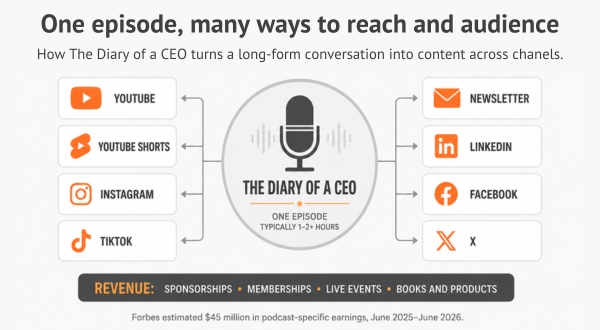
Many top creators also repurpose each episode into dozens of smaller pieces of content. A single interview can generate YouTube clips, Shorts, TikTok videos, Instagram Reels, LinkedIn posts, newsletters, blog articles, and email campaigns, dramatically increasing both reach and revenue opportunities.
The podcast isn’t the product; it’s the engine that powers an entire content ecosystem.
Media Shower’s AI marketing platform helps you build marketing that people will want to hear. Click here for a free trial.
The largest podcasts combine sponsorships with subscriptions, merchandise, live events, platform licensing, books, affiliate marketing, and other revenue streams rather than relying on advertising alone.
Successful podcasters develop a distinctive communication style, publish consistently, and create a recognizable experience that listeners actively seek out.
Video podcasts, AI-powered recommendations, better discovery tools, and multi-platform distribution have made podcasts easier to find and more valuable to advertisers.
Communities create loyalty. Listener questions, recurring segments, live events, and inside jokes encourage audiences to become long-term fans rather than occasional listeners.
Video-first publishing, AI-assisted production, creator-owned media companies, premium subscriptions, and diversified monetization models are likely to drive the next stage of podcast growth.