The Better Marketing Blog
Better tips, tools, and tactics for the AI era.
Better tips, tools, and tactics for the AI era.
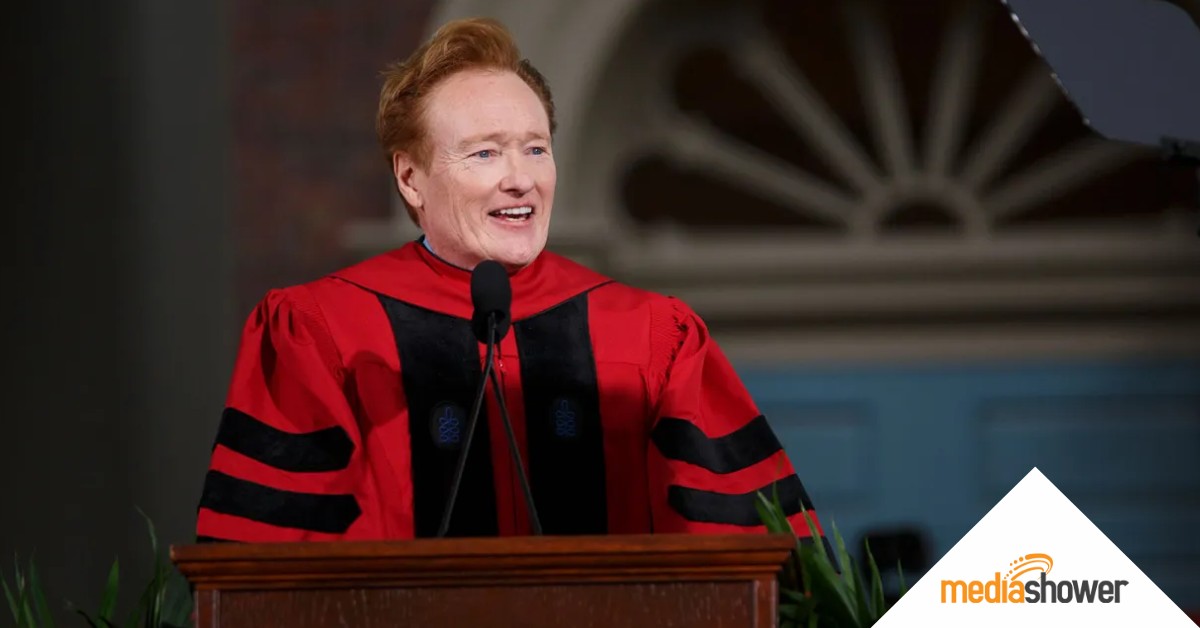
Commencement speeches are usually boring. A successful graduate returns to address the next generation, and most of the audience fall asleep.
Not so with the recent Harvard commencement speech from Conan O’Brien (sorry, Dr. Conan O’Brien).
Everyone knew Conan would be funny. But again and again, Conan redirected his humor toward himself, toward the ceremony, or toward the peculiar absurdities that accompany success.
At one point, after encouraging graduates not to become overly attached to titles and achievements, he acknowledged the contradiction sitting in plain sight. He was standing on stage accepting an honorary doctorate from Harvard.
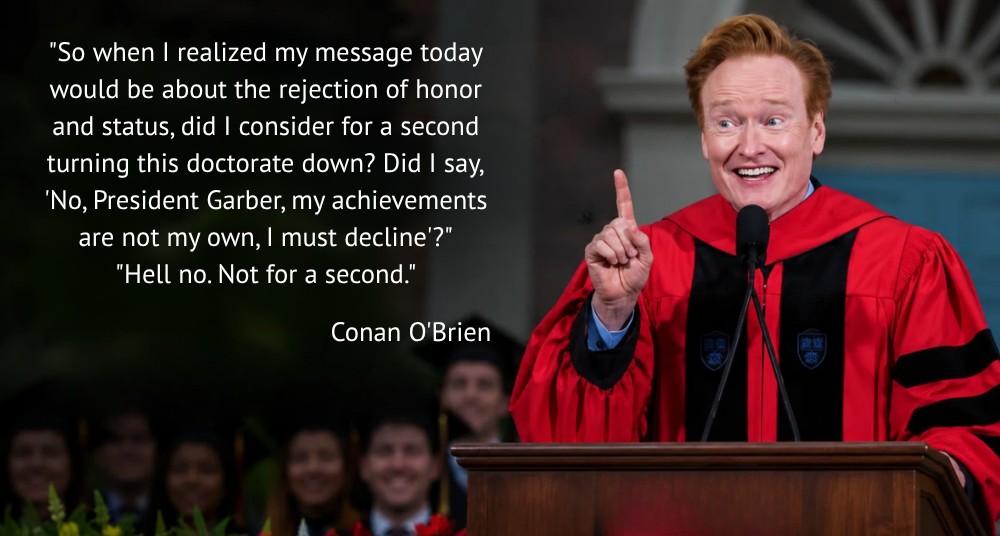
The audience laughed because the contradiction was impossible to miss. Rather than stepping around it, Conan walked directly into it, treating the tension as part of the material instead of something that required explanation.
One of the more unusual things about Conan’s public persona is that every increase in prestige seems to be accompanied by an equal and opposite effort to puncture it. The more impressive the setting becomes, the more likely he is to remind everyone that he once rubbed hot sauce on his nipples for the internet.
The instinct shows up throughout the speech. While many commencement speakers present themselves as finished products, Conan seemed more interested in presenting himself as a collection of detours, mistakes, embarrassing moments, and lucky breaks, including the loss of The Tonight Show, a job that meant the world to him.
By the end, the speech felt less like a lecture from a successful alumnus than a conversation with someone who happened to be wearing academic robes.
“I am aware that I am telling you to transcend your glories as I stand on this stage accepting a doctorate I didn’t really earn while dressed like a 12th-century pope.”
Harvard wasn’t an exception. If anything, the speech felt like a concentrated version of a pattern that has been visible throughout Conan’s career.
His travel segments often begin with the assumption that Conan is out of his depth. Whether attempting traditional dance, navigating unfamiliar customs, or wandering through a foreign city with misplaced confidence, he usually occupies the least knowledgeable position in the scene. The comedy comes from participation rather than expertise.
The same dynamic appears in his podcast. Conan O’Brien Needs a Friend has generated hundreds of millions of downloads, yet the show’s appeal has never depended on Conan acting like the smartest person in the conversation.
Guests arrive carrying accomplishments, credentials, and carefully constructed public identities. Conan arrives carrying curiosity, self-mockery, and a willingness to follow an interesting tangent wherever it leads.
When late-night television began losing audience share to podcasts, streaming, and social media, Conan adapted. The format changed, but the posture remained remarkably consistent.
Whether interviewing a movie star, visiting a foreign country, or accepting an honorary doctorate, he keeps returning to the same role: the person willing to look slightly ridiculous so everyone else can relax.
At one point, Conan pushes back against the idea of success as an individual achievement, widening the frame to include collaborators, lucky breaks, mentors, family members, and chance encounters.
“I contain a breakfast sandwich and an iced coffee from Tatte, but whatever I have achieved has been with the help of an infinitely packed clown car of multitudes.”
In this setting, where commencement speeches often celebrate achievement, Conan seemed more interested in broadening the definition of success.
Yet, Conan’s speech wasn’t an argument against achievement. It was an argument against letting achievement become the entire story.
Brands face a similar challenge. Most spend enormous effort establishing credibility, and for good reason. Expertise matters. Trust often begins with competence. Nobody wants to buy software from a company that seems incapable of building software.
The harder question is what happens after credibility has been established. Many organizations continue communicating as if their primary challenge is proving they are impressive. Awards accumulate, certifications multiply, and case studies expand. Every message reinforces authority.
A customer may already believe a company is capable. They also want to know if that company feels approachable, human, and trustworthy enough to engage with.
“If you carry your victories lightly, other qualities, kindness, originality, courage, humor, and humanity, have room to emerge.”
Near the end of the address, Conan described a recent trip to Amsterdam in which he dressed as Vincent van Gogh and attempted to claim compensation from the Van Gogh Museum on behalf of the long-dead painter.
Security removed him, visitors laughed, and the plan failed in every practical sense. But Conan described the outing as a success because it made people smile.
The story feels almost too perfect for a commencement speech about status. Standing on one of the most prestigious stages in America, accepting an honorary doctorate from one of the world’s most prestigious universities, Conan chose to talk about being thrown out of a museum while dressed as a nineteenth-century painter.
Later in the speech, he offered what may have been the clearest expression of the idea running beneath all the jokes.
“Maybe my wish for you is not that Harvard becomes the last thing people know about you, but instead that Harvard becomes the least important thing people know about you.”
Coming from Conan, it felt less like advice than a description of how he has spent much of his career: treating status as capital to spend rather than an asset to protect.
Media Shower’s AI marketing platform helps brands turn authority into connection. Click here for a free trial.