A great advertising jingle is not just an earworm; it’s a brainworm.
A great advertising jingle lives in the space between catchy and cringe. It bypasses your better judgment, lodging itself in memory and refusing to leave. Years later, someone starts singing it to you, and your brain finishes the chorus before you can stop it.
“1-877-Kars-For-Kids, donate your car today!”
That kind of recall is worth more than most marketers realize. A few seconds of melody can do marketing magic, lodging your brand deep into your customers’ subconscious.
The jingles that earned a place on our list each marked a turning point in how marketers thought about sound, from the earliest mascot-driven melodies of the TV era through the sonic logos that now close out global campaigns.
Here’s how the craft evolved, and why the best examples still hold up decades later.
The 11 Best Commercial Jingles of All Time
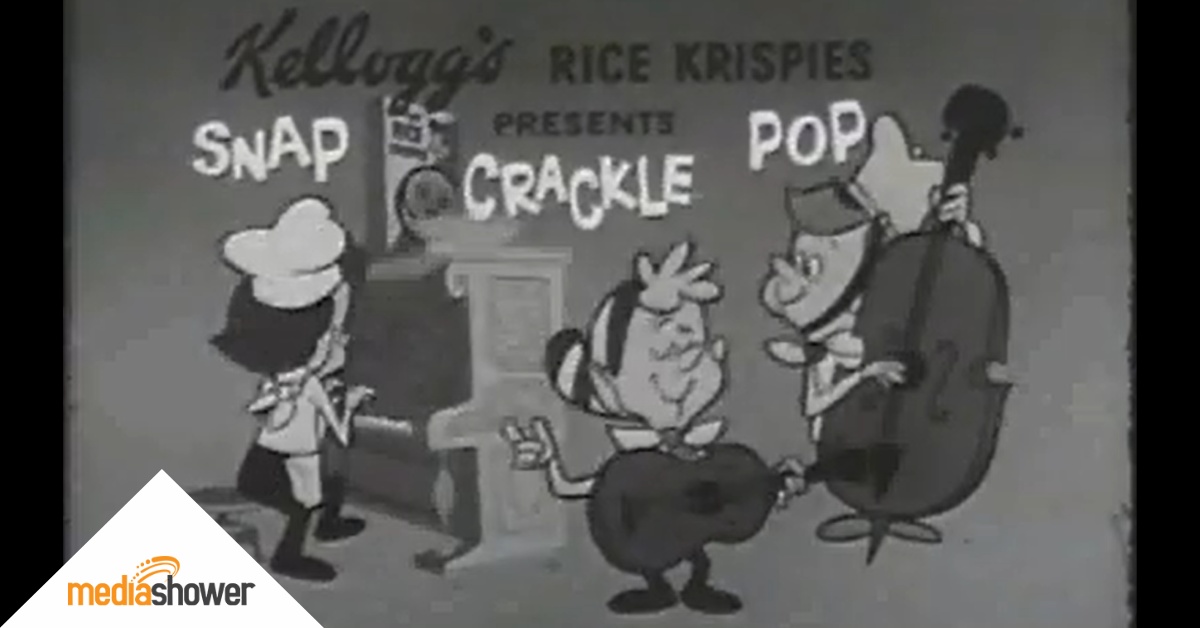
1. “Snap, Crackle, Pop” — Rice Krispies (1930s)
“Snap, Crackle, Pop” is one of the oldest audio brand signatures still in active use, originating in the 1930s when most advertising was extremely wordy, and character-based branding was rare.
The jingle was unique because it created the sound first, then named three characters after it.
The characters are still in use nearly 100 years later: the three names are the jingle, the mascots, and the product demonstration all at once. Few brands have ever compressed that much identity into three words.
2. “Me and My Choo Choo Charlie” — Good and Plenty (1950)
Rice Krispies gave its mascots a reason to exist by personifying the sounds the cereal made. Good and Plenty invented a character with no logical connection to the product at all.
Charlie the train engineer is just a kid-friendly character with a catchy name and a song, which turned out to be enough.
The jingle worked because the story was more interesting than the product. Along with the candy, kids were buying into Charlie’s world, a creative strategy that predates modern brand storytelling by several decades.
3. “Gimme a Break” — Kit Kat (1986)
Kit Kat used a jingle to brand a behavior people were already repeating every day. “Gimme a Break” took the existing ritual of stepping away for a few minutes and gave it a melody and a product to reach for. It traces back to mid-century break culture, with the now-famous musical version gaining traction in the 1980s.
4. “Nationwide Is On Your Side” — Nationwide (1960s)
Insurance is not something we associate with emotional warmth, which makes this jingle particularly effective. Nationwide introduced the slogan in the mid-1960s and later set it to music as television advertising expanded.
The jingle creates an emotional shortcut: instead of explaining reassurance, the brand expresses it through just two measures of melody.
5. “Hot Dogs, Armour Hot Dogs” — Armour (1967)
This is a classic, in part because of its weirdness. A Pied Piper-type figure leads kids into the unknown, singing a jingle about hot dogs, and how much kids love them.
In lyrics that would never fly today, the jingle lists all the types of kids that love Armour Hot Dogs, including fat kids, skinny kids, and kids with chicken pox. (Because what better disease to sell your hot dog?)
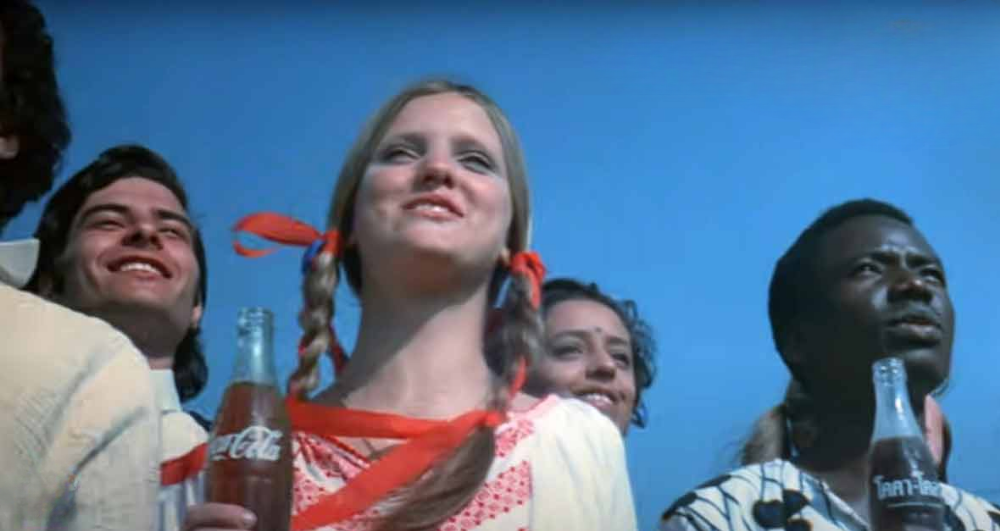
6. “I’d Like to Buy the World a Coke” — Coca-Cola (1971)
This jingle moved beyond advertising into culture. Coca-Cola’s 1971 “Hilltop” ad turned a soft-drink jingle into a mass sing-along with surprising emotional range. It felt earnest and slightly corny, but it’s widely considered one of the greatest ads of all time.
The ad generated more than 100,000 letters, while radio stations received heavy requests for the song. And of course, it featured prominently in the series finale of “Mad Men.”
7. “Like a Good Neighbor” — State Farm (1971)
Barry Manilow wrote this jingle in 1971 as a work-for-hire assignment. State Farm has been running it ever since, which makes it one of the longest continuously active jingles in advertising history.
Like the Nationwide jingle, it skips the policy language and goes straight to the emotional promise. Four words and a catchy melody bypass the reasoning mind and go right to the emotional hook: “I guess Nationwide really does look out for me.”
8. “My Bologna Has a First Name” — Oscar Mayer (1973)
Oscar Mayer’s bologna song adopted a child’s point of view, including the clever gimmick of spelling out the brand name. Decades later, the jingle is still unforgettable, and marketers continue to hold it up as one of the best of all time.
9. The Intel “Bong” — Intel (1994)
Is it a jingle? We think so.
Intel introduced its five-note audio signature in 1994, designed as a concise, recognizable sound that could work across every media format. No lyrics, no narrative, no character: just a three-second signature that told you an Intel chip was inside your PC.
It opened the sonic logo era in earnest and demonstrated that a brand could own a sound the way it owns a visual identity. Every major sonic logo that followed owes something to Intel.
10. “I’m Lovin’ It” — McDonald’s (2003)
McDonald’s launched “I’m Lovin’ It” as part of a global effort to modernize the brand. The line had pop structure and celebrity lift, and the company reported 6.4% U.S. sales growth in 2003 and 11% total systemwide growth that year.
What makes it a standout asset is the five-note sonic tag that closes it out. “Ba da ba ba baa” has become one of the most recognized audio signatures in the world, rivaling Intel for sheer global recall. More than 20 years later, it’s still actively running.
BONUS JINGLE: 11. “We Are Farmers” — Farmers Insurance (2009)
Note: There are three insurance company jingles on this list. When you have to sell something as unsexy (and intangible) as insurance, talking about the product itself isn’t going to sell many policies.
Like the others before them, Farmers didn’t even try. This ad doesn’t explain a thing about insurance. Instead, it’s a rhythmic chant that repeats the brand name with enough sonic weight to make it impossible to unhear.
Arriving after the Intel and McDonald’s sonic logo era, the Farmers jingle functions almost as a hybrid. It has lyrics, but the chant structure makes it behave more like a sonic logo than a traditional jingle.
Coda
Some jingles make history, and some just make the rent.
In 1963, a scrappy London band with one minor hit to their name recorded a Rice Krispies radio spot, reportedly for £5. That’s right: jingle work was so commercially dominant in the early 1960s that even the Rolling Stones recorded a Rice Krispies jingle to get work.
That was 1963. Audio branding has never been more accessible, yet most modern brands underestimate what a few notes can do.
The Case for Sonic Branding
Ipsos found that audio assets appear in less than 10% of ads in its dataset, yet audio was 3.4 times more likely to show up in high-performing creatives. Sonic brand cues were 8.5 times more likely to appear in those ads.
Nielsen reports that podcast ads can deliver 71% aided recall.
These findings point to a clear conclusion: distinctive audio remains underutilized despite its effectiveness. A memorable sound can move across retail, social, podcast, video, and live events with minimal friction.
Each jingle doubles as a reusable brand asset, built for instant recognition in a crowded feed. As content volume increases and attention spans shrink, that kind of efficiency only gets more valuable.
Marketer Takeaways
- Build for recall, not just reaction. A memorable phrase that audiences can retrieve later creates lasting value beyond immediate engagement.
- Own a moment beyond the message. Associating the brand with a recurring habit increases mental availability every time that moment occurs.
- Keep it portable. Effective jingles translate across multiple channels without losing their core identity.
- Prioritize distinctiveness. Slightly unconventional phrasing or melody makes a jingle memorable. Chicken pox. A train engineer named Charlie. A five-note bong. None of those choices were safe, and all of them worked.
Media Shower’s AI marketing platform creates content so good your competitors will be humming it. Click here for a free trial.